
As part of a countdown campaign leading up to release, we’ll be updating the “Oto-geki Chart Committee Bulletin” every day until launch day.
A new message from the chart team will be posted around 3:00 PM each day, so if you’re interested, be sure to check it out.
Contents
3/24 ものくろっく
3/24 はっぴー
3/25 アマリリス
3/25 Techno Kitchen
3/26 うさぎランドリー
3/26 小鳥遊さん
3/27 みそかつ侍
3/27 ロシェ@ペンギン
3/28 緑化委員長
3/28 rioN
3/29 譜面-100号
3/29 一ノ瀬 リズ
3/30 音撃譜面部
3/30 Revo@LC
No. 1: Monochlock
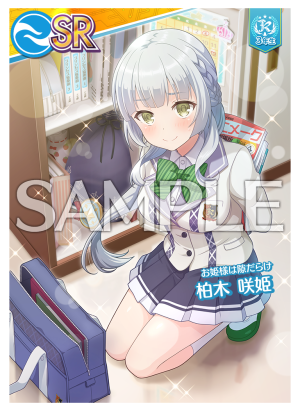
Favourite card: Saki Kashiwagi [“The Princess Is Wide Open”]
Nice to meet you here—I’m Monochlock!
For a quick intro: on Ongeki I mainly serve as something like a chart quality leader. My core role is giving feedback—especially on structure—on charts made by the team, helping raise their overall fun factor.
More specifically, I handle things like balancing each month’s song lineup, deciding when to introduce chart gimmicks or new elements, setting chart difficulties (we’re not throwing darts, I promise!), and managing everyone’s schedules. Basically, if it’s chart-related, I’m probably involved.
My favourite STGs include Ketsui, ○!○!○!, DoDonPachi DaiOuJou, ○ター○ォース, and Koz○○yangu Za○○o. If you can identify all of those, you’re impressive—I’ll praise you! (thud!)
Time really flies—it’s already been over two years since Ongeki launched.
Within the team, we’ve built up a lot of history, and when I look back, it’s amazing how much the charts have evolved compared to the early development days.
Don’t you think so too? It might sound like I’m bragging, but each chart has developed a sense of narrative, and the game’s potential to directly hit players on an emotional level is just incredibly strong.
At the beginning, we didn’t even have a clear direction, and it was difficult just to make something that functioned as a proper rhythm game chart. But now, it feels like creating Ongeki charts is the most fun thing we could be doing—that’s the impression I get from the team atmosphere as well.
With that reflection in mind, I’d like to talk about one of Ongeki’s “five core elements”—danmaku—and the LUNATIC charts centered around it, along with some others I’ve worked on.
No Remorse
About ten years ago, I got deeply into STGs—clearing around 100 titles, even taking a top score in a certain game. So it’s kind of surreal that I’d end up creating something like a bullet-hell STG using music from the game I’ve played the most. Life really is unpredictable.
That said, when I actually got started… I had no idea how to place bullets!
Fixed center? Straight lines? Offsets? I couldn’t understand anything the chart editor was telling me!!
I’m the type who reads manuals later, so I just brute-forced it by tweaking numbers—and that alone took two full days.
Eventually I got bullets placed, so I tried throwing in some rough spread patterns…
→→→ There’s no way anyone can dodge this!!
Well, maybe dodging while hitting quarter notes is doable…
→→→ Of course it’s not!!
It took several more days just to figure out what was realistically possible in this game, all while resisting the urge to rip out the lever and replace it with an arcade stick.
Next came the structure. That part actually went smoothly—I wanted players to experience a “pseudo final boss” in a single credit, something you normally couldn’t even properly fight. I think the gameplay ended up pretty close to that vision.
That was the location test version I released in December.
…But I kept thinking about the game I love.
There’s no way I could be satisfied with something at that level. The game I love is cooler—better—than this!
So I pushed the visuals as far as I could, pouring in the effort to make something that even fans of the original would accept. That’s the version that ultimately made it out into the world.
In the end, it strayed quite far from a traditional rhythm game, and I was genuinely worried about whether players would accept it. But so many people took on the challenge—and some even went on to play the original game. Seeing that brought up emotions I can’t really put into words.
Hibachi
With such a charismatic track, I honestly wondered whether I should even be the one charting it. But there was one concept I refused to compromise on: making it a “pure memorisation game,” something that borders on being unacceptable as a rhythm game.
If players could clear this boss after just a few tries, it would feel disrespectful to the original game’s history of painstaking pattern memorisation.
So first, I made it so you could hardly get through without using the lowest speed setting.
Then I added high-speed bullet patterns—including the infamous “washing machine” barrage—using bullet types we’d avoided before.
And I kept recovery via bells to an absolute minimum.
After finishing it, I asked Roshe—our best dodger—to test it.
His response: “It’s not that hard.”
…What?!
As someone who’s terrible at bullet dodging, that was devastating. It really drove home how difficult balancing STGs can be. Even if this is technically a rhythm game.
In the end, Roshe stepped in and handled the final difficulty tuning. I’m incredibly grateful.
Danmaku charts tend to have unusual structures. Normally, rhythm games shift patterns every 8 or 16 bars—but for these charts, I intentionally ignore that, varying the structure unpredictably to create a disconnect between the music and the chart.
That separation actually helps players focus more on the bullets themselves.
If you’re making danmaku-style charts, maybe give that approach a try.
Toa -O.N.G.E.K.I. MIX-
I’ve always wanted to play a rhythm game chart based on an STG stage track, and after a lot of trial and error, I somehow made it happen by creating a Stage 1 medley.
This time I was involved from the composition stage, making full use of how the ship select and Stage 1 BGM connect seamlessly. We even added sound effects and the result screen BGM for extra flair. The sound team at CAVE suggested including ship select voices and boss explosion sounds, which really pushed the authenticity to another level.
For the stage section, I focused heavily on the opening ship deployment, adding little references like when you’d normally activate Hyper or where hidden items might appear. I also tuned things to reduce stress between rhythm gameplay and bullet dodging.
In particular, I adjusted things so you don’t need to change your speed setting—even at around 10x speed, it should feel comfortable. What did you think?
That said, to be honest—when building charts focused on danmaku, it takes an enormous amount of time to get bullet patterns and balance to a satisfying level. And personally, dodging bullets continuously for two minutes can be pretty stressful.
Going forward, I might lean more toward separating rhythm gameplay and danmaku so that charts remain comfortable even without speed adjustments.
For now, I consider this approach to danmaku charts a kind of “completed form.” But sticking to one style too long leads to stagnation, so I’ll keep experimenting and bringing new ideas.
Other LUNATIC Charts (Briefly)
Happy Typhoon
After hearing someone rave about how good this track was live, I gave it a listen—and got completely hooked.
For MASTER, I wanted something approachable, but also had a strong urge to go all-in on complex rhythms—so I unleashed that fully in LUNATIC.
The intro and outro—especially the A-melody—are packed with what I consider the absolute best parts of rhythm games. It’s the kind of chart I could play forever without getting bored.
I Can No Longer See Epicurus’s Rainbow
This is more from a tuning perspective, but when the first draft came in during the PLUS era, the team’s play scores were… terrifying. It really felt like the creator was living in the future.
Honestly, I don’t even remember how we managed to adjust it into its final MASTER form. But I wanted players to experience that same feeling, so we released the LUNATIC version as a sort of “vault chart.”
Closing Thoughts
LUNATIC difficulty is a true melting pot—danmaku charts, Re:MASTER charts, hidden charts, and all sorts of concept-driven creations thrown together.
That said, mixing so many styles made it harder to distinguish from Re:MASTER charts, which is something I do regret a bit.
As a rough guideline:
- Re:MASTER charts generally have a corresponding MASTER chart and clearly identify their creator (with some exceptions).
Expanding the Re:MASTER category further is… difficult for various reasons—sorry.
That said, the new default “Recommended Order” sort groups things fairly clearly, so I encourage you to make use of it.
Next time—if there is one—I might introduce a series of charts where I went full-on obsessive fan mode. Stay tuned… maybe?”
No. 2: Happy (Dog)
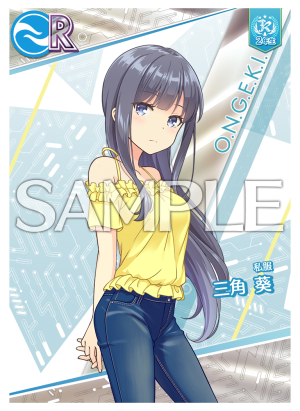
Favourite card: Aoi Misumi [Casual Outfit]
Hello, this is the Chart Support Center.
So, you’re saying the chart you played was “trash.”
Could you tell us what specifically made it feel that way?
“Finger patterns that are too difficult for the level, making SSS+ hard to reach.”
Understood. I’ll pass that along to the 담당.
Thank you for your inquiry.
Hello, this is the Chart Support Center.
You’re saying the chart you played was “trash.”
Could you tell us what specifically made it feel that way?
“The structure lacks contrast and doesn’t feel satisfying.”
Understood. I’ll pass that along.
Thank you for your inquiry.
Hello, this is the Chart Support Center.
You’re saying the chart you played was “trash.”
Could you tell us what specifically made it feel that way?
“It’s too easy.”
Understood. I’ll pass that along.
Thank you for your inquiry.
Hello, this is the Chart Support Center.
You’re saying the chart you played was “trash.”
Could you tell us what specifically made it feel that way?
“It’s too hard.”
Understood. I’ll pass that along.
Thank you for your inquiry.
…These exchanges didn’t actually happen (this is fiction), but when I see so-called “trash chart” reactions while ego-searching, I often notice that the meaning varies a lot from person to person.
Before just thinking “Well, guess that didn’t land,” I sometimes stop and wonder: what part of it did this person find frustrating?
If someone regularly posts their results, I might even scroll through their media to get a sense of what they struggle with or what kinds of charts they enjoy (yep, I really do that).
Charts are made by people, after all—so some degree of ego inevitably comes through.
Things like:
- “This part is piano, so it has to be finger patterns!”
- “Lots of players will try this, so let’s keep the difficulty a bit lower.”
- “It’s a boss track, so it needs to feel challenging!”
- “Quarter-note grooves are the best!!”
- “The jacket is green, so let’s use lots of green notes.”
- “It’s a mellow song, so let’s build something emotional using only subdued elements.”
- “At a live show, people would shout here—even if there’s no sound!”
- “This is a bit of a weird gimmick, but it’d be fun if it works!”
That kind of thinking happens because this is a game where you’re free to interpret the music—not just strictly “perform” it.
On the flip side, players might respond with:
- “Finger patterns are hard, so it’s trash.”
- “Low difficulty isn’t engaging, so it’s trash.”
- “High difficulty is just excessive, so it’s trash.”
- “Why didn’t you chart this melody? Trash.”
- “Too much green, visually boring—trash.”
- “It’s a rhythm game but there’s no hype—trash.”
- “I don’t go to lives, I don’t do call-and-response—these extra sounds are pointless, trash.”
- “I couldn’t handle it on first try—trash.”
…In other words, things like mismatched preferences, lack of clarity in intent, or differences in interpretation all get bundled into the single phrase “trash chart” on social media.
These are personal impressions—likes and dislikes—so it’s not like we can say “you have to find this fun.” And going around explaining intent to every individual would be a bit much.
So, to everyone reading this:
You can probably see how difficult it is to infer the full reasoning behind someone calling something a “trash chart.” We’re not mind readers.
That said, I’m not saying “don’t post that kind of feedback.” It’s still valid opinion.
But if you do share it, try adding a bit more detail instead of just saying “trash chart.”
That extra context can make your feedback far more useful for the development team.
We really do want to understand why something felt bad, and learn from it.
Rhythm game charts still have a lot of unexplored potential. Through trial and error, we sometimes create things that challenge whether players will accept them.
So let’s work together—developers and players alike—to keep improving chart quality.
…Wait, what was I talking about again?
By the way, when people say “a lovable trash chart,” it often means something like:
“I get what you were going for, but there’s no way I can actually do this!”
That kind of thing can be loved because it isn’t a mismatch in interpretation.
↓ If you use this tag on social media, it might be easier for us to quietly find your posts:
#GekiChuMaiChartSupportCenter
I did wonder if this was the right kind of thing to post in a countdown feature, but since I had the chance to share something freely without unlock conditions, I went for it.
Anyway—I’m a dog who loves guitar girls, and a big fan of Riku. (Yes, the featured card is correct.)
No. 3: Amaryllis
Nice to meet you—I’m Amaryllis from the Ongeki chart team.
I usually work on chart creation, stare down massive Excel sheets, and handle various tasks related to Ongeki. On the more unusual side, I also got to create the blackboard writing used in the background of a card illustration—from selecting the teaching material onward.
The lesson was “Takasebune” by Mori Ōgai, aimed at first-year high school students, with the objective of “becoming familiar with historical kana usage.” Try to find which card it appears on!
Let me talk about a few charts I’m particularly attached to.
“Ongeki Zenith ★ Akane-sama?”
Since it’s a track featuring my favourite character, I put a lot of energy into making it.
I also had fun sneaking in various little gags, like the “Extreme Morning Assembly Zone” and the “All-You-Can-Drink Premium Grape Juice Zone.”
As an aside, the EXPERT chart for this song by Roshe-senpai is also really fun, so if you usually stick to MASTER charts, I highly recommend giving it a try.
“Donut Hole”
I packed in the rhythms that, to me, define this song.
This was around the time my charting style started to solidify, and I also got to use an idea I’d been sitting on for a while—a six-lane chart played while holding the lever throughout. It’s one I’m especially attached to.
“Transparent Voice Colors”
This chart was all about expressing the song’s atmosphere—like vivid colours spreading across a clear, transparent canvas.
I think I was able to capture something uniquely “Ongeki” in how the chart behaves at the moments when the sound drops out.
“R’N’R Monsta”
This chart introduced a new type of damage note, so I paid very close attention to when, where, and how those “bullets” appear.
Since it’s a collaboration between two artists I personally love, I also wanted to fully convey the groove and intensity of the track.
After the high-speed dash section across the island, I intentionally kept the main phrase simple, so the raw speed of the song could really shine through.
“Onegai Muscle”
I started with the idea: “Wouldn’t it be fun if the muscles bounced rhythmically right from the opening vocals?”
While working on it, I had multiple images of bodybuilders up on my monitor as references for poses like the side chest—people walking by definitely got a laugh out of that. A great memory.
“YAMINABE☆PANIC ~All-You-Can-Eat Full Course~”
I designed this chart so that the player’s movement, the character animations, and the song’s shifting style all align as closely as possible.
It’s a track with constant changes in tempo and tone, but honestly, these high-energy, dynamic songs are the most fun to chart.
This doesn’t affect your score, but if you press your hands together in greeting right before the chorus, it feels both polite and stylish—give it a try.
Charts in rhythm games are tricky—there are as many “correct answers” as there are players. I have my own sense of what’s right, just as you have yours.
All I can do is turn what I find fun into charts—but I’m always working hard to shape that “fun” into something that resonates with as many people as possible.
Thanks as always for your support of Ongeki.
No.4 Techno Kitchen
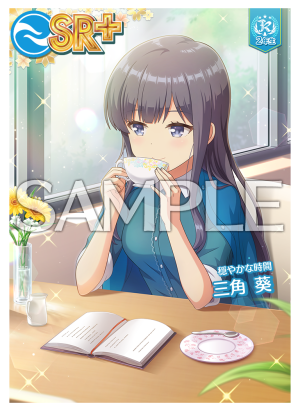
Favourite card: Aoi Misumi [“Peaceful Moments”]
I’m Techno Kitchen.
There’s something I was never able to say, and I’d like to take this opportunity to share it.
Two years ago, I lost someone very dear to me.
They were a friend from before I even started making charts at this company—someone who encouraged me when I was unsure about applying to work in this field.
Whenever I told them about a chart I’d made, they would go out of their way to visit the arcade, actually play it, and even call me afterward to share their thoughts.
“That part was really fun! But maybe this section could be improved like this,”
they’d say—pointing out both what worked and what didn’t.
When I heard they had passed, I rushed over and stayed with them until the very end.
Their family told me,
“They hadn’t been able to walk for quite some time… but they kept going out and playing right up until the end.”
The moment I heard that, I couldn’t stop crying.
Normally, you’d say, “You should rest,” right?
But they still made the effort to go to the arcade—to play.
At that moment, something settled firmly in my heart:
There are people who think,
“That song’s in the game now—maybe I’ll go try it,”
or “Money’s tight, but I kind of want to play just a little.”
For the people who make that trip to the arcade, I want them to have a full, satisfying experience.
I want it to become a memory for them—that time they chose to come and play.
There are definitely people like that.
And I want to make charts for them—for those people to enjoy.
That’s what I decided that day.
With those feelings in mind, I’d like to introduce a few of the charts I created.
Jingle Bells (EXPERT)
Before I started working on this EXPERT chart, the person who made the MASTER chart—No. -100 (who sat next to me at the time)—said:
“If there are 49 bells, each one’s worth 1224 points. Whether you go for it or not is up to you.”
Of course I went for it.
So the chart became: grab that one bell, dodge the bullets, and save Christmas.
It made me really happy to see that some players actually noticed.
On a more serious note, even after placing that one bell, I struggled with the urge to just chart the intro normally…
You want to use holds, right? You want to play with lanes, right? I did!
But it’s 1224 points.
It’s Jingle Bells.
You have to go for it.
LiftOff (MASTER)
Before starting, the target difficulty was set at level 13.
Even before charting, I declared: “I’m going to chart all the 24th notes in the chorus.”
So I did—finger-played 24ths, then arm-based 24th streams later on—while keeping the visuals as clean as possible.
But I had concerns:
“There aren’t many notes… each miss is too punishing!”
“I’m charting a ton of 24ths—does this really fit level 13?”
Then Monochlock took a look and said something like:
“I’d rather just call this a 14—so let’s push the first half a bit more.”
Thanks to that, I could keep the chorus as-is while enhancing the first half with red-blue patterns and walls, making it fully reflect my personal style from start to finish.
In the end, it became a chart where the perceived difficulty changes depending on what you’re aiming for—a bit of a unique position.
The track itself is a fantastic trance piece. Sometimes it’s nice to play rhythm games with this kind of music.
Personally, I especially love the section from measure 67 onward—after the chorus, where things settle briefly before building back up.
Structurally it’s similar to earlier parts, but the energy and emotional “temperature” feel completely different.
Sparkle (MASTER)
With limited sound elements—and working within trance—I had to think about how to make it interesting.
What I came up with was placing taps of a different colour inside hold notes:
- Blue taps inside red holds
- Red taps inside blue holds
At first glance, it’s probably confusing. But if you think of the five lanes as three for your left hand and three for your right, it becomes clear which hand should hit which notes.
That said, everything outside of that idea was a real struggle. I went through a lot of trial and error—honestly, a bit of chaos—before getting help from Ichinose Rizu.
They helped shape the overall structure, especially from around measure 35 where the chart takes on that distinctive curved flow, while still preserving the big climax I wanted at the end.
Thanks to that, I think the essence of “Sparkle”—that unique trance feeling—comes through.
And just to clear up a rumour: Ichinose Rizu isn’t me.
They helped me a lot with this chart, so I treated them to gyoza that day—true story.
Pan-fried, deep-fried, boiled—every kind was great.
Try them with vinegar and lots of black pepper—it’s delicious.
What I learned from that process also fed into LiftOff in various ways.
That’s how I’ve been able to create freely within Ongeki.
Normally, you’d be told things like:
“Start with standard charts before developing your style,”
or “Use that chart as a reference.”
But here, they listened to what I wanted to do and supported it—and as a result, I was able to release something very close to my original vision.
I’m really glad I worked as a Chunithm quality leader—well, former.
If even one player feels
“That was fun,”
“I’m glad I picked that,”
“I enjoyed it,”
“I came to like the song,”
then that makes me happy.
I hope those feelings reach my friend, too.
And I hope they’d be glad.
With deepest respect, I offer my condolences.
No. 5: Usagi Laundry
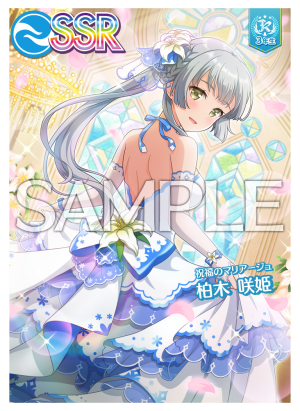
Favourite card: Saki Kashiwagi [“Blessed Mariage”]
Nice to meet you. I’m Usagi Laundry.
I support Saki Kashiwagi and the Marching Pockets.
These days I’ve been working on charts while also reviewing and fixing other people’s EXPERT charts, and helping select artists who create original songs for Ongeki. I also often end up having “otaku discussions” with Monochlock-senpai sitting next to me.
After several years on the team, I’ve finally been given a chance to share a comment like this with everyone. I was thinking about what to write—“probably something about charts,” I thought—and after consulting with my relative Al-mi’raj, I decided to talk about something a bit more niche, like a side topic.
About the “Field” in Ongeki Charts
First of all, the “field” is, of course, part of the chart itself. We expand or shrink it depending on the song. When you think about it, it’s actually pretty unique for a rhythm game to have something like a “playfield” as a design element.
In Ongeki chart creation, this field is extremely important. It’s not just a tool to encourage lever movement—it’s also closely tied to how we build momentum and structure across a song.
Example structure for a song
- A-melody: calm section → narrow field, minimal lever movement
- B-melody: slightly wider field → more motion and bullets, gradual buildup
- Chorus: full field expansion → 6 lanes, more inputs, energetic feel
- Outro / drop section: more emotional presentation → restrained movement, more atmospheric field design
In this way, we use the field to express the song’s structure and energy flow.
Things like “increased note density,” “distinct rhythmic emphasis,” and “chorus-like intensity” are all reinforced through field design.
That said, this is just one example. Sometimes we actually do the opposite—making the field visually intense during calm parts, or simplifying it during choruses. The same structure can serve completely different expressive roles.
We also use fields to create unique identity for each song, improve readability, or ensure playability. Honestly, the number of possible patterns is endless. Every chart starts with serious consideration of field design.
Personally, I often wonder how many players are consciously aware of the field while playing. My guess is not many—and I think that’s perfectly fine.
When you’re dodging bullets, hitting taps, catching bells, and managing the lever, you’re not exactly in a position to analyze field structure in real time. Even I think that.
So if the field works on a subconscious level—making gameplay smoother or more enjoyable—that’s ideal.
Of course, I hope memorable fields leave an impression too.
By working these subtle elements into charts, we aim to make gameplay feel better without players necessarily noticing why. If someone reading this is a chart enthusiast, I’d be happy if you sometimes think: “Why was this field designed like this?” while playing.
That’s it for now. I’d also like to talk about individual chart creation stories someday, if there’s another opportunity.
Thank you, and please continue supporting Ongeki.
No. 6: Takanashi-san
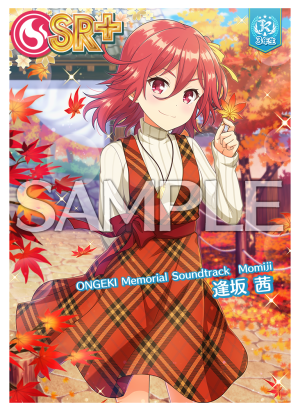
Favourite card: Akane Ousaka [“ONGEKI Memorial Soundtrack Momiji”]
Hellooooooooooooooooooooooooo!!!!!!!!!!!!!!!
I’m Takanashi-san—someone who always plans to put my absolute favourite collaborations into Vice Captain and Captain slots!!!!!!!!!!!!
Since I’ve been given a chance to talk about various things related to Ongeki, I thought I’d introduce my thoughts about the charts I’ve made!!!!!!!!!!!!
I also secretly talk about this on CHUNITHM-NET, but for difficult or cool tracks, I feel like the name “Takanashi-san” doesn’t quite fit, so I use “Phoenix” instead!!!
So actually, I’ve been involved since pretty early Ongeki days—kind of nostalgic!!!!
Alright!!!!!!!!!! Let’s go!!!!!!!!!!
Dolphika
This is the first time I really went all-in on the idea of “hitting SIDE notes in sync with quarter-note kicks feels AMAZING!!!!!!!!”
The SIDE notes themselves feel great, and the act of hitting them feels great too, so I’ve used that idea a lot ever since.
SIDE notes are the best.
Everlasting Today
This is the first time I used the name “Phoenix.”
When I was told “make this a level 14,” I thought: what can I even do at BPM 148?
And the result was that signature 5-lane layout.
In Ongeki, if you only use the standard red/green/green/blue 4-lane setup, your hands get locked into fixed patterns.
But if you go all the way to 6 lanes, it can end up feeling flat.
So I think 5 lanes are the sweet spot—taking the best of both worlds and allowing for lots of interesting movement.
(Though technically it’s almost 6 lanes because red and blue overlap in the center.)
Opfer
BOSS TRACK!!!!!!!!!!!!!!!
This was basically me unleashing all the keyboard-style patterns I’d been building up—DOOOOOOOON straight into the chart.
I’m pretty good at keyboard-heavy rhythm gameplay, so being able to go wild in Sega’s first keyboard-style game was endlessly fun.
With 6 keys, 24th-note 6-key patterns feel especially good—it’s a perfect match for the system.
Fun fact: I ended up placing so many keyboard patterns that the central bullet section was later adjusted by Panther.
And after that, Monochlock-sensei and I went back and forth endlessly… and somehow it ended up even harder than the original. Good memories.
MEGATON BLAST
Yep, more SIDE-note bass work.
I really tend to go hard on kick-heavy songs—but it’s just fun!!!!!
There’s a section in the middle where you hit SIDE notes on quarter notes while dealing with dotted 8th double taps—and I’ve never seen anyone actually execute the intended hand transition at the arcade… tragic anime moment.
But if you do it correctly, the 16th-note 4-hit pattern flows cleanly into the flick afterward.
Viyella’s Tears
This is probably my personal favourite chart I’ve ever made.
When people noticed that the mid-section bullet pattern was recreating Akari’s bow attack, I was extremely happy.
The song’s atmosphere and my preferred design style matched really well, so the chart didn’t change much from the first draft to the final version.
Change Our MIRAI! (Our 7 Lights)
Irodorimidori is the best!!!!!!!!!!!
I really love this song—it hits emotionally in such a strong way.
For the intro, I wanted to place “nothingness,” so I experimented with layered lanes and colour changes—and it actually worked!!
The red/green colour identity of the Tsukisuzu sisters fit perfectly, so the interlude is built entirely from red and green.
I’ve even heard people referencing this chart’s colour design elsewhere now.
The yellow composition lane is: red, green, green, green, green, green, blue.
Viyella’s Scream
I’ve never stood on a national finals stage myself, but I’ve had many chances to watch friends compete there—and I’ve always supported them with everything I had.
And then suddenly, in that finals setting, an unknown incredibly cool track appears. Every time, it was deeply moving.
This time, I was on the side creating that feeling.
I built it while heavily referencing “Viyella’s Tears,” but also packed in elements unique to this song.
If it inspires even a little feeling like “I want to stand on that stage someday,” I’d be very happy.
(Phoenix)
This is Al-mi’raj speaking.
I handled adjustment duties for this chart, which was packed with everything Takanashi-san wanted to do. (As with previous collaborations, I was in charge of tuning.)
Since this was Ongeki’s first national tournament, we needed something with strong impact that nobody could predict. I refined the structure and helped shape a new field system that had been carefully developed over time. (Yes, I also added beams.)
Did it surprise you? I couldn’t hear your cheers, which is a little unfortunate—but if it managed to excite you, that’s more than enough.
Game tournaments are always incredibly intense to watch. Unlike concerts or stage events, tournaments are driven by the players themselves—their performance and cooperation are what create the excitement.
So I hope this chart contributed even a little to that kind of competitive atmosphere, inspiring players and motivation for future tournaments. Please enjoy it a lot.
(Al-mi’raj)
That’s it!!!!!!!!!!!!
I talked a bit more about older charts this time, but I’d like to share more newer ones in a future opportunity!!!!!!!!!!!!
Bye!!!!!!!!!!!!!!!!!!!!!!!!!!!!!!!
No. 7: Misokatsu Samurai
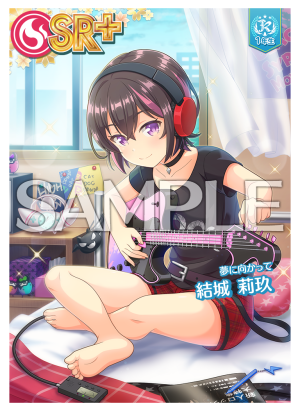
Favourite card: Riku Yuki [“Towards My Dream”]
Nice to meet you—I’m Misokatsu Samurai.
I feel like I’ve been here since the previous installment, but that’s probably just my imagination. Let’s blame the virus.
I don’t often get the chance to speak directly to all of you like this, so I’m glad to be able to share a few things during this countdown. If you were expecting the usual countdown illustrations, I’m sorry about that.
Let’s get started.
◆ Daydreama (MASTER)
My very first chart.
I actually worked on a red chart in SUMMER PLUS, but in terms of creation order, this came first.
On my first day in the chart team, I was shown the song list for Ongeki R.E.D.’s launch and told, “Pick one.”
I saw HiTECH NINJA’s name and immediately decided.
While my seniors were subtly hinting, “Are you sure you don’t want something safer like pop tracks?” I was fully in “go big or go home” mode.
First impressions matter.
The moment I heard the song, I instantly pictured a burst of 1-beat chord streams in the chorus—and that idea barely changed from the first draft to release.
I felt Ongeki didn’t have enough stream-heavy sections even though they’re fun, so I wanted to push that angle. The “dopamine rush” of hitting those patterns cleanly is real.
About Ongeki chart philosophy (then vs now)
Before joining, I learned that earlier Ongeki charts avoided “recognition difficulty”—keeping TAP notes visually separated to make the game more approachable.
Especially in the original and PLUS era, there was clearly care taken not to make the game too demanding.
But recognition difficulty, while hated by some, also creates incredible satisfaction when read correctly.
So I sometimes wonder—maybe it’s time for more of that… or maybe not yet.
The middle bullet section was the hardest part.
I was told by Monochlock-sensei:
“Make the chorus the peak.”
So I couldn’t just overload it with TAPs or it would overshadow the chorus itself. I also wanted light bullet patterns, but couldn’t get it right at first.
Creating TAP-based rhythm is easy.
Creating bullet-based rhythm is not.
That’s something I really learned.
Eventually I came up with the “amoeba-like” pattern used in the final version. I hope you enjoyed it.
Overall, I think this chart shows a bit too much personality—but it was my debut, and I gave it everything I had.
It also apparently has one of the lowest average scores among level 13+ charts.
Maybe I went a bit too far.
◆ RAIKIRI (MASTER)
Concept: “Make Ongeki feel like maimai.”
I wanted something with large, physical movement patterns—something accessible for players who struggle with high-difficulty maimai charts but enjoy Ongeki.
Due to the virus situation, I couldn’t test it on an arcade machine for a while. The first draft… was discarded.
When I finally tested it properly, the flow felt bad. What I thought was fun wasn’t fun at all. That was a hard lesson.
For example, a fast alternating pattern in the chorus was originally a staircase pattern—but it broke the momentum completely. I replaced it to preserve flow.
Stairs are interesting: they’re easy to survive but hard to perfect.
In the end, repeated revisions led to something I’m very satisfied with. It’s a bit tough, but I hope you try it—and maybe feel a bit sweaty by the end.
◆ Reach for the Stars (MASTER)
Instruction: “Level 13+ please.”
I saw a 16th-note snare at the start and instinctively placed notes there.
I added high-speed bullets for Sonic-style energy.
I used patterns I imagined a CHUNITHM/maimai designer might make.
I made the player physically “perform” the backbeat with wall notes.
Then I finished it with chaotic movement in the final chorus.
Monochlock-sensei played it and said:
“…Yeah, it’s good.”
That’s the whole story.
◆ Ironic Life Game (MASTER)
This was actually the second chart I ever made after Daydreama, even though it was released later.
The ideas here are straightforward, so there isn’t much hidden meaning.
Because we were working remotely at the time, I couldn’t consult the team easily, so I had to reuse past chart assets for references—even though I felt bad about it.
I also referenced older patterns like Six Trillion Years and Kamisama Nejimaki, and it somehow turned into a kind of Ongeki “sports festival” chart.
I wasn’t confident before release, but it was surprisingly well received.
It also happened to be in a “ONE BULLET LEFT” stream, so there were some brutal first-time traps… sorry if you got caught.
Difficulty was meant to be 13, but it ended up with a “+” somehow.
Let me be clear: chart creators do NOT decide difficulty alone.
(So please don’t blame -100.)
Difficulty philosophy (briefly)
There’s no strict formula for SSS or SSS+. It’s based on overall judgment:
- short bursts → may lower SSS+ rating
- low note count → tighter scoring → higher rating
- heavy first-time traps → higher rating
- “Ongeki-like” mechanics → higher rating
- pure technical speed without Ongeki identity → sometimes lower rating
Ongeki is highly individualistic. Player skill, scoring standards, and even perception of difficulty vary widely.
Also: there is no “clear” system, so variation is expected.
Difficulty is decided by a single lead—not a committee—so please allow some flexibility when expectations differ.
We do read feedback though—it helps adjust future decisions.
◆ Don’t Fight The Music (MASTER)
A boss chart.
I wanted to make something high-difficulty right away. YURUSHITE.
Originally, I was supposed to handle the second half while my senior handled the first. But my initial draft was rejected for lacking “Ongeki identity.”
I was told:
“It should feel like Akari and Setsuna are fighting.”
So I ended up using red/blue holds as a battle system.
Most of the structure was then rebuilt with my senior’s help.
Honestly, I probably only did 20–30% of the work, but the final result is strong.
However, making a level 14+ chart is harder than expected:
- too simple = boring
- too dense = unreadable
- too extreme = becomes bad design
- even one weak section ruins perception
It made me realize rhythm game design is more delicate than I thought.
◆ Robot Planet Utopia (LUNATIC)
This one was actually me.
It was a memory-based chart.
Inspired by a TV game show where participants memorized light sequences. As a kid I always thought: “I want to try that.”
This chart was originally just a side project I made for fun outside work hours, but I managed to get it included before release.
The first version was too hard—testers kept failing—so it was significantly toned down.
The difficulty gradually increases toward the end, so even players without strong memory skills can still enjoy seeing how far they can go.
I don’t plan to make more memory charts soon, but I’d like to again someday.
◆ Red and Blue and Green (LUNATIC)
Yes, it’s me again.
I like absurd charts.
This one went back and forth between me and -100.
It was difficult because:
- Ongeki’s red/blue layout is reversed compared to Arcaea
- Arcaea-style arcs don’t translate well to Ongeki gameplay
Eventually, I ended up making parts of the chart descend from below.
We also added lots of laser effects later to improve visuals.
At one point, the song broke internally during development—but thankfully it was fixed before release.
The final goal was:
“Looks chaotic, but actually playable.”
That’s everything for now.
There’s more I could talk about, but this is already long enough.
Thanks for reading this far.
Maybe we’ll meet again somewhere.
Until then—goodbye.
No. 8: Roshe @ Penguin
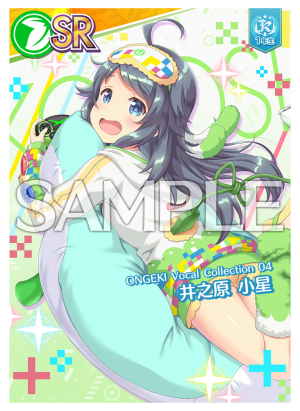
Favourite Card: Kotose Inohara [ONGEKI Vocal Collection 04]
Hey there, it’s Roche!
I’m the guy inside the penguin you sometimes see on livestreams. I’ve been given another chance to write comments for ONGEKI, just like I did for CHUNITHM. Nice!
I really love characters who seem laid-back, but completely change when it comes to things they care about and enjoy them with full intensity! Someone like Kotose, who stays devoted to what she loves, has an irresistible charm.
Depending on the day, I might want to rely on Aoi or Haruna, get energy from Akari or Chinatsu, go otaku-ing with Saki, or even get teased by Tsubaki!
…Right, I was supposed to talk about charts.
I still remember charts that were hard enough to even finish during location tests. Even now, the “common sense,” rules, and systems we take for granted in-game were things we constantly struggled with before release. I think that’s true for ONGEKI, and honestly for any rhythm game or game in general.
We really wrestled with questions like:
Should we keep bullets flying nonstop to make it nearly impossible to avoid damage?
Or should we design patterns that are generally avoidable?
Through trial and error, we eventually settled into the current direction of chart design, allowing us to deliver something many players can enjoy.
Without the location tests, and without teammates who shared the same vision, ONGEKI as it exists today wouldn’t have been possible. Thank you so much to everyone who participated back then.
(That said, those early test charts had their own charm… I kind of want to release them someday.)
One thing about ONGEKI charts: things that feel “fine” while designing them often turn out awkward or harder to play in actual gameplay. Small adjustments in lane positioning or visibility can dramatically change how comfortable a chart feels. We’re still constantly experimenting with that.
We test things repeatedly, take advice from the quality lead, and have many people try them out before finalizing anything.
Now, here are some comments and explanations for charts I worked on:
■ Purple Rays (EXPERT)
“The two intertwined fates” → two lines intertwine.
“With the two of us, it’ll be fine” → two holds synchronize.
“The stage becomes just for the two of us” → purple lines expand, notes disappear leaving only walls, the field turns purple.
■ I Will Absolutely Eat Mint Chocolate, Aoi-chan (EXPERT)
The back-and-forth between the characters and their hesitation is shown through wavering holds.
“Beautiful blue form” lures you in, but leads to damage.
At “Sooi!”, you slam the lever forward like throwing the ice cream.
■ Pakupaku☆Girl (EXPERT)
Since Arisu is a big eater, I filled the chart with lots of bells to represent her happily munching away.
At “Itadakimasu,” the converging hold represents hands coming together in thanks.
■ Ryouran Otome † Musou Geki (EXPERT)
Lanes appear in sync with the characters’ opening dialogue.
Walls match “Hai! Hai!” like a live performance.
At “We’ve taken ONGEKI’s throne,” you literally “take” the throne.
“Don-don-doko-don!” draws many triangles like ⊿TRiEDGE using walls.
I originally thought the “throne-shaped bell pattern” would only be used here, but it ended up appearing in other charts too. I guess I really like thrones.
■ Link with U (MASTER)
Distance in “No matter how far apart” → notes spread out.
“I believe we are connected” → notes merge into one.
“Shining” → notes light up.
“Once more I want to touch you” → green hold is approached by red/blue holds.
“Reach out” → walls appear on the opposite side, forcing a reach.
“Exposed heart” → notes are shown raw without field changes.
“Link with U…” → everything converges like linking with characters.
C-section colors represent each character’s world. (A bit forced in places, maybe…)
■ Adabana Necromancy (MASTER)
I’m really looking forward to a rematch.
Nearly the entire chart uses hold colors matching the singing characters.
If you noticed that, your perception is incredible.
■ Doll’s Destiny (MASTER)
Thank you so much for the collaboration—this was a dream come true.
When I heard it was confirmed, I probably jumped up and shouted.
This chart opens with the DOLLS logo.
Smiles become bullets and bells.
Holds wrap around bells like happiness.
At “I open the door of fate,” walls are struck like a door opening, forming nine lanes.
The field flips to a darker world as the tone changes from idol stage to military organization.
We drew many elements like Pygmalion and Monoliths.
Colors shift to green and blue for Misaki and Shiori.
Three holds converge at “Let’s sing together.”
The field splits at “Cut through.”
Holds pierce the walls at “Piercing power.”
CR taps blink at “Sparkle!”
Wavering holds at “Flickering impulse.”
Jagged holds at “If I raise my voice to destiny.”
At “The world will change,” the field expands again into nine lanes.
Back then, layering line colors to create new colors wasn’t really common, so the three-color system represents team structure.
The background stage was beautifully finished by the design team—it was truly moving to see. Even the audience glowsticks match DOLLS colors. Please play it like you’re at a live concert.
■ Eternal Memory (MASTER)
The opening DOLLS logo appears.
Converging holds were widely praised for their emotional feel.
At choruses, please “offer your feeling” along with them.
“Opening the prologue” expands the field.
“Thank you for pushing me forward” → gently push the lever.
“The too-blue sky” → the entire lane turns blue.
The ending rises like light into the sky, concluding the purification live.
■ Contrail ~Trajectory~ (MASTER)
I was moved to tears by the anime’s emotional climax.
The goal was to create a feeling of flying through the sky.
Curved holds spread across the field, evoking motion and flight.
Red and blue holds represent two characters fighting in the sky.
“Break through the blue!” expands blue holds.
“Draw closer” brings holds together.
“Fly high circus” gradually speeds up and adds scoring effects.
■ Hidden Command That Brings Happiness (MASTER)
The field itself forms directional arrows.
At “Rotate once,” try rotating your arms.
Midway, heavy pressure appears in the form of bullets.
There was a lot of debate about simultaneous top/bottom inputs.
Eventually, after discussion, the starting point was moved from “う” to “ど”.
■ GEOMETRIC DANCE (MASTER)
Designed to match the technical drum rhythm of Yamamoto Mao.
From the very start and end, intense patterns appear at full speed.
At the part where you hold walls while hitting across six lanes, try extending your arm like playing drums with a selfie stick.
We even got scolded for adding paper-airplane bullets here.
■ STARTLINER (LUNATIC)
Lane colors match Akari, Yuzu, and Aoi.
Some patterns are synced to the choreography from the live performance.
■ Jingle Bells (LUNATIC)
Only red and green notes. Combo count is 1225!
We originally wanted 5000 bells, but performance issues reduced it to about half.
Even this version pushed the hardware to its limits.
■ Calamity Fortune (LUNATIC)
We drew shapes and stars from the video using bullets.
This was extremely difficult to create—repeatedly testing and adjusting at the cabinet.
With more self-targeting bullets, the density increased significantly.
It became so difficult that no-damage clears felt almost impossible… but players always exceed expectations.
These are just some of the charts I worked on. I had a lot more I wanted to talk about, but I’ll leave it here for now.
Thanks for reading all the way through.
Hope we meet again somewhere.
See you.
Chairperson of the Greening Committee
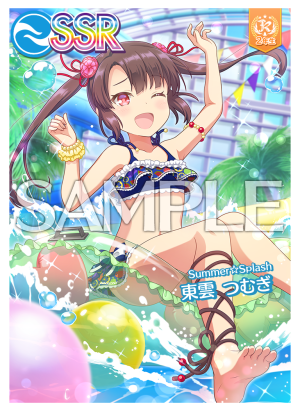
Featured card: Tsumugi Shinonome [Summer☆Splash]
My favourite words are “baton,” “low bass,” and “tickets have been prepared,” and I’m the head of the greening committee.
I’m the one who came up with this project and also edited this article. I’m open to feedback on the project and suggestions for what you’d like to see next. I do read ego-search tabs. I did mention there was a character limit (though about half of people still exceeded it), so here’s my personal commentary.
<SAKURA>
This was the first chart I ever made. I remember thinking at the time that in this game, you can carry things through on “emotional impact” even if the note density is low, so I tried a lot of different ideas. During the falling chorus, try hitting the right wall in a motion-like style. For the ending, those who were deeply engaged when this song appeared on the other side might feel something a bit special about it. I certainly do.
<Take Me Away / Lock Me Up / Do As You Like>
I remember that the three KonoSuba character songs were each created very freely by different authors (difficulty requests were also “FREE”). For this one as well, I was able to pack in a lot of playful elements that aren’t strongly tied to difficulty, which made it really fun to design. I did get told off for making the character fly off-screen during the opening “take me away” section.
<Grand Symphony>
Episode 3 was also amazing. I created the initial version and handed it to -100, and it came back about 98% modified. After that, with guidance from Monokurok, we eventually managed to settle the difficulty into a reasonable state.
<Perfect Will>
This was extremely popular within the team at the time, and creators were competing over it. (For reference, the most requested song ever was Animal☆Paradise.) It’s truly a great song. Duet and call-and-response patterns are one of the highlights of Ongeki. What are your favourite call-and-response charts?
<High Free Spirits>
This is probably in my personal top 5 most-played songs in my life (number 1 being something I worked on in CHUNITHM). Because of that, I volunteered to create all four difficulties. The MASTER chart is something I’m especially proud of, as it solidified my design philosophy for POPS & ANIME MASTER charts. Songs with off-beat vocal entrances and accents like this are actually very hard to design at low difficulty levels—that’s a topic for another time.
<Gokujo Smile>
At the time of development, there was a final live event going on, and I poured all those emotions into this chart. The concept was “anyone can feel ‘gokujou’,” trying not to lose to past iconic charts by Happy-san. I even wrote my feelings into the creator name, but the MC reference was probably too niche to land properly.
<Brave Song>
When revisiting this during development, it felt even more emotional than before. Maybe my tear reflex just got weaker with age. Since I had the chance to focus on atmosphere with lower difficulty again, I put everything into mood-building. I still like making these quieter, emotional charts from time to time. The arrangement is based on a graduation ceremony lineup.
<Start Line>
Nanasis songs are chosen carefully in consultation with Revo@LC. This was selected right after Budokan, and that atmosphere influenced the choice. Start Line is a fully message-driven chart focusing on emotional expression, with coordinated movement sections throughout. I even felt like crying while placing it.
<Sekai no Himitsu>
I put everything I was capable of into this. Thank you in advance.
<NATSUKAGE -Summer Shade->
As with the opening, the courage to place nothing is sometimes very important. I aimed for full respect to the original. In general, it’s difficult to balance emotional atmosphere and gameplay intensity in rhythm games for slow songs, but I personally think this one achieves that balance well. There are other stories behind it, but I’ll save them for another time.
<Happy Typhoon>
The impact of Happy Typhoon during the 3rd live (I went with Revo@LC) is still unforgettable. The concept was to build everything from vocals so that even collaboration players could enjoy it, while also placing walls that simply feel fun. That said, rhythm-game instincts made it impossible not to chart the intro properly, so the “unlimited version” was made by Monokurok. Huge thanks.
<Purple Rays>
I explored various approaches using the ideas of crossing and layering lines, and the keywords purple and Hortensia. The concept was also to take a technical approach in true Re:Stage! style (if that makes sense).
<Canary>
For a song this powerful, it’s important not to lose to it, so I focused on maintaining forward momentum throughout. I originally tried to make the entire chart 4-lane, but gave up on that idea. “Haai!” (while also trying not to damage the cabinet).
<Hoshino Kizuna>
I was so overwhelmed by how good this song was that I immediately bought Deep-Connect and Believe as well. I layered many effects, and the pattern where holds build tension in the chorus and release through walls worked particularly well. One of my favourites.
<Watashi Connect*>
I was the one who proposed this song during the collaboration planning stage. It’s simply a great song, and I wanted more people to hear it. I focused on giving it character by adding expressive elements like emoticons and communication-like patterns. I recommend playing it together with the two OP songs if possible.
<beautiful tomorrow>
See you everyday was also really good. I’ve used the technique of closing the field during the solo in the final chorus and leaving nothing before, but the transition is very important. You can enhance it by showing arm movement first, building a small pause on the ground, and then closing the field. If you close your eyes here and listen to the vocals before entering the final chorus, you might enjoy the song even more.
<Yoimachi Cantare>
I want season 2 to make me cry already. I especially liked the part where I followed the B-section drums while letting the visual flow move sideways. When a song is too consistently high energy, it’s important to introduce variation so it doesn’t become overwhelming. This chart balances that using lever pulls and holds.
<This program is brought to you by young civil servants>
The “dotta-dodtta” rhythm in the chorus is one of the most fundamental rhythms in tapping-based rhythm games. For the wall section, practice automating 8th-note up-down motions using a desk or any surface. Also, if you watch the anime, you can hear this song about 12 times in under an hour, which is great value, so definitely check it out.
<Spatto! Spy & Spice>
I had already designed the chart in my head before it was even confirmed for inclusion (this happens fairly often). Similar to the previous song, alternating 16th-note patterns between walls and notes are some of the most satisfying patterns in rhythm games, so I’m always looking for opportunities to include them. Every “Spatto!” section behaves similarly (except the final one), so feel free to enjoy each of them. There’s also a small “GAME IS LIFE” reference hidden in there—hope someone finds it.
Still not enough space for everything. Hopefully there will be another chance someday.
No.10 rioN
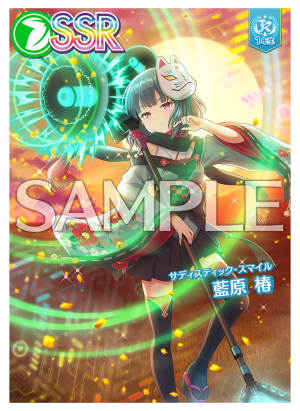
Favourite card: Tsubaki Aihara [Sadistic Smile]
Hello everyone. This is rioN speaking from inside the team.
I couldn’t really think of anything to write, to the point where I even ended up talking about Ongeki on the CHUNITHM side, so I’ve started to worry that I’m running out of things to say in earnest.
This time, I’d like to explain something I previously talked about on CHUNITHM: the “rioN Notes,” using a concrete example from a single song.
The reason is that during a recent casual discussion within the charting team, “chart structure” came up as a topic. However, it seems that it’s surprisingly difficult for newer members of the team to fully grasp what “structure” actually means.
So I thought this would be a good opportunity to leave behind how I personally approach it, while also looking back on one of my own charts. That’s why I decided to put this down in writing.
What follows is of course intended for players reading this now, but at the same time I hope it can serve as a small reference for current and future members of the charting team as well.
With that said, I’d like to move on to the main topic.
The chart I will be using for this explanation is the EXPERT chart of “Yoshiwara Lament,” included in Ongeki.
As some of you may already know, when I create charts, I cannot start working on the chart itself unless I first write out the structure on paper.
If I recreate what I wrote when making “Yoshiwara Lament,” it looks something like this:
At first glance it probably looks completely incomprehensible, but it contains information such as which measure of the song each section begins in, which musical part is playing there, and what kind of charting approach is assigned to each section.
| 小節 | 2 | 10 | 19 | 27 | 35 | 43 | 51 | 55 | 63 | 71 | 80 | 88 | 92 | 100 | 108 |
| パート | イントロ | イントロ | Aメロ | Aメロ | Bメロ | サビA | サビA | サビB | 間奏 | Bメロ | サビA | サビA | サビB | アウトロ | END |
| 構成 | ▽▽ | ▽ | △ | △ | ▽ | ▽▽ | ▽▽ | △ | ▽▽ | ▽ | △△ | △△△ | ▽▽▽ | △ | ▽▽ |
| a e | 4 H | T12 | T12F | 4HT | メロ12 | 4W | Hb | HF | メロ12a | メロ+ | 雨 | メロ | e |
At this stage, I mentally build out what I want to do for each section while also taking a bird’s-eye view to check whether similar elements are being repeated across different parts.
The “a,” “e,” etc. in the structure refer to specific parts I’ll explain later, so here I’ll focus on the overall balance of the song.
First, the most basic point: in most songs, the chorus is the most climactic section. When a song has multiple choruses, I generally adjust the overall difficulty so that the final chorus becomes the peak of intensity.
As for the structure of the song itself, it goes:
Intro → A melody → B melody → Chorus → Interlude → B melody → Chorus → Outro.
What’s especially important here is that after the interlude, the sequence “B melody → Chorus” appears twice. In such cases, the key point is how to differentiate the first and second occurrences. In this chart, the second one is made more developed, but sometimes I intentionally keep them the same, or conversely make them completely different. Some songs repeat three or more times, so the structure must be adapted accordingly.
The triangles and inverted triangles in the structure indicate the “tension” of each section. As mentioned earlier, the final chorus at measure 88 is set as the highest point, with the other choruses also kept relatively high. In contrast, sections before and after the chorus are lowered in tension to create contrast across the entire piece.
Now, let’s look at each section in more detail.
Measures 2–18: Intro
Although labeled as the intro, the melody changes between measures 2–9 and 10–18, so the note design is essentially treated as two different sections.
From 2–9, there is very little sound, so the tension is set quite low. From measure 10 onward, it feels like the song properly begins, so no tapping is introduced yet.
In the structure, “a” and “e” refer to “bullet” and “bell.” (Originally I used “b” for both because both start with B, and thought I’d distinguish them by the second letter, but after thinking about it, “bullet” should actually be “u,” so that was a mistake.)
At measure 10, you see “4” and “H,” which stand for quarter notes and holds. Since this is still the opening stage, the tension is low, and the idea is to get players used to a quarter-note rhythm. Also, since the next A melody section is centered around taps, holds are inserted here to add contrast.
Measures 19–34: A Melody
Each section is generally divided into 8-measure units, so this is treated as two repetitions: 19–26 and 27–34.
In the first half (19 onward), since the A melody is built on a repeating rhythm, the core rhythm is constructed using taps.
A major characteristic of this song is the frequent use of 12-beat rhythms. If you mix 12-beat rhythms into 4- or 8-beat structures without care, the chart becomes very hard to read. So in this chart, I use a “bell placed on top of a 12-beat tap” as a visual marker.
In fact, this rule is already used from the intro: from 2–9, bells are on 12-beat timing, and from 10–18, bells are placed above taps to indicate the 12-beat structure.
In the second half (27 onward), the same rhythm is used, but to avoid monotony, flicks are introduced for the first time.
The 12-beat rule is also relaxed here, but since the underlying rhythm is the same, it should still feel natural.
By the way, in the structure, “T12F” stands for tap, 12-beat, and flick.
Measures 35–42: B Melody
This section sits between the rhythm-heavy A melody and the expressive chorus, so it serves as a transition. I lower the tension here to create contrast. However, if it’s only holds or simple quarter-note taps, it feels lacking, so I introduce a slightly technical element: tapping while holding.
Measures 43–54: Chorus A
As with most songs, the chorus is the main highlight and most intense section. Here, I express that by:
- using a structure centered on 12-beat rhythms to emphasize the song’s identity
- expanding the field with bells, flicks, and walls to increase motion
In particular, the 12-beat double-tap appears here for the first time, using EX taps to make it both easier to read and more visually striking. Normally I would want to place bells on this as well, but I avoided it because it could reduce readability.
Also, I include what I call “kime” moments—accent points at phrase endings or strong beats that feel satisfying to hit and also serve as reset points before the next phrase. These are usually expressed using both walls.
Measures 55–62: Chorus B
Since Chorus A already emphasizes melody heavily, this section is more restrained. The drum rhythm on quarter notes stood out, so I focused on wall-heavy patterns.
In the structure, “W” stands for walls.
Measures 63–70: Interlude
Since this comes after the chorus, I lower the intensity significantly. Because there haven’t been many bullets so far, I create a section where players can safely avoid them.
Since the previous chorus used quarter-note taps, I use holds here instead to create spacing.
Measures 71–79: B Melody
This is the second B melody. While the melody differs slightly, its role as a bridge into the chorus is the same. The first version used “hold + tap,” but since the interlude already uses long holds, I change the approach here.
A pattern using a quarter-note hold followed by flicks that move left and right is very useful for transitions, so I often use it.
Measures 80–87: Chorus A
This is the second Chorus A. The structure is mostly identical to the first, but I add bullets to increase visual information density to represent progression.
Increasing the amount of visual information (especially different types) makes the chart feel more difficult even if the inputs are the same. This is an effective technique for EXPERT and lower difficulties.
However, if too many bullets are placed from early on, it can lead to situations where the A melody looks more intense than the chorus, so careful balance is required.
Measures 88–91: Final Chorus A
While the first chorus used simple repetition, this is the final chorus, so I increase note density to emphasize the melody.
At the same time, I reduce other elements like color variety and bells so that it doesn’t become unfairly difficult.
Measures 92–99: Chorus B
This section is purely for presentation. The use of no-notes was inspired by a technique used in the MASTER chart of the same song in maimai, which left a strong impression on me.
This is also unusual for my EXPERT charts, as I incorporate line-based visual play here. I think the transition from measure 88 into this section is the most memorable part of the entire chart.
Measures 100–107: Outro
This section moves toward the ending in a flowing way, in contrast with the quieter section before it. It contains relatively dense note placement and movement, but I narrow the field so it doesn’t become as intense as the chorus.
Measure 108 onward: END
The final note is often a wall or long hold to close the song, but since this song ends with a single sound, I chose a quiet, simple finish.
So, what did you think?
Writing it out like this turned into a much longer text than I expected myself. I hope it serves as one example of how to think about chart structure.
Well then, see you again somewhere someday (what will I write next time…?).
No.11 -100
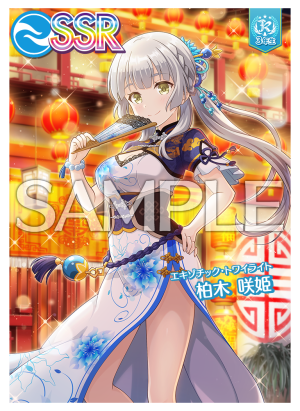
Featured card: Saki Kashiwagi [Exotic Twilight]
Speaking as someone on the programming side, I thought I’d write a bit about what was particularly difficult when building the music game Ongeki.
• Player-aimed bullets
Because the game has a high-speed setting, a rhythm game where note timing varies significantly, many things would break if handled naïvely. For that reason, player-aimed bullets use a special processing system. I’ll leave the exact implementation to your imagination.
In early location tests, these were placed in a relatively casual manner, but when bullet trajectories weren’t visible, players couldn’t judge impact points and were unable to dodge properly. As a result, many test players in the shooter segment “fell” due to this issue.
• Button layout
We solved the issue of handedness by providing identical controls on both sides, allowing either side to be used. However, it is somewhat unusual that simultaneous button presses are counted as multiple inputs.
In the early stages, six-button simultaneous presses on both sides were treated as a fairly special mechanic. Nowadays, ironically, three-lane configurations are considered more difficult.
The fact that buttons are arranged in a straight horizontal line was actually requested by the charting team. The R&D team suggested a curved layout to better match finger positioning, but we decided that allowing freer hand movement would be better. In practice, players do use different techniques such as distinguishing between two-button and three-button simultaneous presses with one hand.
• High-speed adjustment
You may have noticed that in Ongeki, the numerical value of the high-speed setting does not strictly correspond to actual movement speed. During location testing, we discovered that using the same feel as maimai or CHUNITHM would lead to major gameplay issues, so adjustments were made.
In Ongeki, the player must maintain their character within a field while dodging bullets and pressing buttons at precise timings. This means the gameplay is not simply “see → press,” but instead:
- anticipate the situation
- look
- decide whether to align or not
- decide whether hands can be lifted from the lever
- decide which side to use
- judge timing
- then press
Among these, “anticipating the situation” is the key element.
This is an area that the charting team has refined very well, so I hope players enjoy exploring and interpreting that design while playing.
No.12 Rizu Ichinose
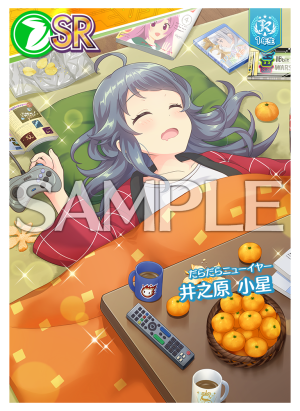
Favourite card: Kosuboshi Inohara [Lazy New Year]
Hey there, I’m Rizu Ichinose.
I make all sorts of charts. Nice to meet you.
Personally, I don’t think I’m doing anything that strange, but apparently I tend to make charts with pretty strong quirks.
Still, I think there are quite a lot of people who actually like that kind of thing, so I plan to keep experimenting with different ideas.
I’d like to try making something like a puzzle-style chart again, similar to the “Arisa theme” kind of thing.
It’s just that there aren’t many opportunities—or songs—that really fit that sort of approach, which is a bit of a shame.
● Probably a difficult topic
In games like Ongeki, which have many different gameplay elements, one of the most important things in chart design is narrowing down your theme or concept.
If you keep narrowing and refining it, you end up with what people call a “concept chart” or a “highly distinctive chart.”
That’s generally how I approach things. Well… sometimes I also just make things on a whim!
The problem is that if you focus too much on restricting elements, the chart can break down as a rhythm game. So the real skill is making sure it still works properly as a game that feels good to play.
This is where people like Happy-san or Technokitchen-san—who are kind of quality leaders—tend to excel. Structure is extremely important. You need to be able to logically understand things like:
- waves of player movement and intensity
- how the screen’s excitement is built up
- whether the tutorial-to-practice-to-execution flow is coherent
If any of that breaks even slightly, the impression of the chart can drop a lot. It’s actually quite hard.
To put it in a slightly harsh way, it’s about how well you can make it so that even when a player misses, they don’t feel like it was the chart’s fault.
That might sound like I’m a bad person, but I’m not. I’m really not.
● Wordplay section
Ongeki is still only a little over two years old, but the charting team has already developed quite a lot of its own internal terminology.
Let me introduce some of it.
• “Osushi”
Going back to the early development days, it seems this originated when Roche-san created the now-standard pattern of placing bells on taps. The visual resemblance apparently reminded someone of sushi, and the term stuck.
But… isn’t sushi rice supposed to be white? And the topping and rice are reversed, aren’t they?
When applied to bullets, it apparently becomes “reverse osushi.” Honestly, I’m not entirely sure anymore.
• “Kishimen”
This refers to a feature introduced around Ongeki PLUS that makes it easier to place fields and the three-colored lanes in the editor.
It can be edited somewhat like CHUNITHM slides, but because it apparently looks like a flat noodle, -100 named it “kishimen lanes.”
Now everyone in the charting team uses “kishimen” naturally in conversation. I still wonder if that’s really okay.
• “Hikkaki”
Normally, when both hands are involved, lever inputs are often handled by pushing, but sometimes you pull instead.
When that motion looks like you’re “scratching,” it’s called “hikkaki,” referring to pull-lever inputs.
For charting terminology, this one is surprisingly normal.
• “Banana”
When a full field is reduced to half a field and drawn with a curve, it apparently resembles a banana in the editor—hence the name.
This shows up quite often, so the term is used frequently as well.
In short, Ongeki is a game full of bananas.
There are probably still many more terms… but I’ll leave it here for now.
If I get the chance, I might write more, but I’m a pretty lazy person like my “oshi card,” so if I feel like it’s too much effort, I might not.
What? That’s not allowed? Well then… please go easy on me.
No.13 Ongeki Charting Club
“Kanzaka Academy Ongeki Charting Club’s Challenge Letter” has appeared repeatedly in the game’s major boss songs up to now.
This represents a work that brings together the technology and passion of the Ongeki charting team at the time.
For all previously released “Challenge Letter” charts, we will now be publishing comments from each contributing author, as well as from the final responsible lead.
By the way:
The name was decided after the completion of Titania, following discussion based on multiple proposals.
There were various reasons involved, including the idea that “boys” does not quite fit Ongeki, among others, and as a result the “Ongeki Charting Club” was established.
We appreciate your continued support of the Ongeki Charting Club going forward.
<Titania>
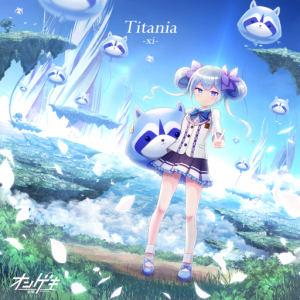
0:00–0:45 Roche@Penguin
0:45–1:06 Monokurok
1:06–1:26 Amaryllis
1:26–1:45 Ryokkai Iinchou (Green Committee Chair)
1:45–2:12 Revo@LC
I’m Monokurok, who acted as the overall coordinator.
In any field, the “first time” is always extremely challenging. With no existing benchmark for the first level 14+ boss song, I struggled a great deal with trial and error over how far we could push things while still making it enjoyable—and appropriately challenging—for players.
At the time, the player base seemed to be split into two types:
those skilled at “Ongeki-like” charts, and those who excel at dense key-heavy patterns.
Even from the development side, we had already clearly decided the concept before production began:
- “Opfer” would be aimed at players who excel at dense key input
- “Titania” would be aimed at players who excel at Ongeki-style chart patterns
Personally, I also wanted to deliver something reminiscent of classic arcade “spicy difficulty,” and with Titania I was quietly aiming to incorporate memorization elements within a reasonable range.
As production progressed, veteran chart designer Roche led the opening section, which helped establish a clear baseline. From there, we were able to fine-tune recognition difficulty, gimmick usability, and the upper limits of density. As expected from a veteran—he really makes a difference.
A large number of meetings were held to adjust the chart as a whole. At times, Amaryllis’s section was modified without their presence, and at one point a sudden “nine-lane” section began appearing in the final segment. Various incidents occurred along the way, but the chart was nearly complete.
We were down to the final note placement decision for reaching 2,500 combo when, thanks to a great suggestion from Revo, a blue note was placed at the end of the nine-lane section—bringing everything to completion.
In the end, I ended up working on this chart for nearly a month. It now seems to be regarded as one of the representative songs and charts of Ongeki, which makes me very happy. The result of the entire charting team pouring their effort and passion into polishing it really shows.
Thank you very much for all the plays.
<ω4>
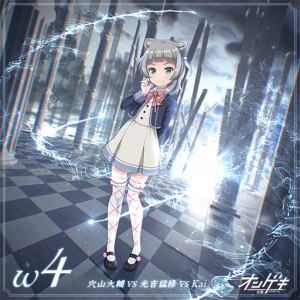
0:00–0:22 Ryokkai Iinchou (Green Committee Chair)
0:22–0:52 Monokurok
0:52–1:13 Revo@LC
1:13–1:33 Usagi Laundry
1:33–1:53 Amaryllis
1:53–2:12 Fumen -100
2:12–2:44 Roche@Penguin
This is Monokurok again, acting as the overall coordinator—part two.
By the time Ongeki PLUS’s major boss song came around, the charting team had gradually become more accustomed to production. Ongeki-specific gimmicks and presentation techniques were becoming much more clearly defined. With new members joining as well, I approached the coordination role with a mix of excitement and a fair amount of anxiety—anticipation on one hand, and fear of “something crazy showing up again” on the other.
After the previous two boss songs, where ALL CRITICAL BREAK had already been achieved, I calmly considered what players would now expect from a chart. When I combined all elements into a single draft, it seemed that by this point the team had already solidified a shared structure for collaboration charts, and the initial version was surprisingly close to preserving all intended concepts.
(That said, Fumen -100 still went completely off the rails as usual, so significant adjustments were required there…)
Under the motto of “anything goes,” the introduction of speed changes and bullet patterns added a strong sense of flavor. The result was a chart that clearly expressed one of Ongeki’s core principles: storytelling within a single chart.
I hope players can imagine the scenery and narrative within the chart while playing.
As a coordinator, I feel this became a very high-quality chart overall. At the same time, I thought, “There probably won’t be a boss harder than this anytime soon”… only to find myself facing the next major boss, “Nouten Chokugeki,” one year later.
(to be continued……)
<Singularity>
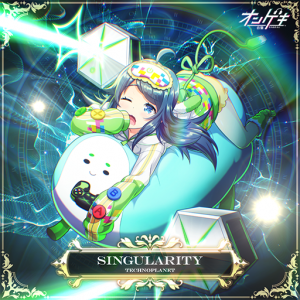
0:00–0:22 Techno Kitchen
0:22–0:42 Ryokkai Iinchou (Green Committee Chair)
0:42–1:15 Roche@Penguin
1:15–1:33 Techno Kitchen
1:33–1:54 Usagi Laundry
1:54–2:24 Takanashi-san
This is Usagi Laundry.
Since this was my first time taking on the role of coordinating and consolidating a collaborative chart (including the adjustment role), I felt a fair amount of pressure—but I also went in with the mindset of “let’s make something really strong,” and started by building my own section.
At the time this chart was being developed, it happened to coincide with the shift to working from home due to external circumstances. Because of that, everyone ended up combining their sections without properly playing each other’s drafts first. As a result, collaborative boss charts—already prone to chaotic first drafts—became even more extreme than usual…
On first test play, there were even genuine screams heard. It was quite something.
The initial version started at a difficulty level arguably even harder than the released version of “Nouten Chokugeki,” so the goal became clear: maintain the boss-level intensity and charisma, but adjust the pacing so that, as a level 14+, it would be somewhat more approachable and readable.
Through repeated exchanges with everyone, adjustments were made, and I eventually refined everything into the current version. Based on player feedback, it seems to have landed in the intended position, which is a relief.
It also took far longer to adjust than it did to create my own section, which made me realize once again just how much work this role actually involves—and how impressive previous coordinators really were.
As a side note:
According to the composer, this piece’s “Singularity” refers to a technological singularity. When I explained this to the team before production began, everyone started interpreting and expressing their own version of “singularity” within their charts.
The result was a chart filled with “singularities” (in every sense), leading to discussions like:
- “Isn’t this not what singularity means?”
- “Maybe this section’s singularity should be adjusted like this…”
- “What even is a singularity…?”
It turned into a probably unnecessary series of meetings while developing the chart.
Where the “singularity” exists in the final playable chart is ultimately up to each player’s interpretation. We hope you continue to enjoy discovering it in your own way.
<Brain Attack>
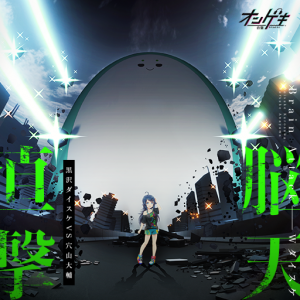
0:00–0:28 Monokurok
0:28–0:40 Ichinose Rizu
0:40–1:11 Amaryllis
1:11–1:58 Roche@Penguin
1:58–2:15 Fumen -100
2:15–2:49 Revo@LC
This is Monokurok again, acting as the overall coordinator—part 3.
By this point, I had become fairly accustomed to the coordination role and was starting to feel like, “Well, this should be manageable…” However, like Singularity, this chart also ended up being developed under a work-from-home setup, which meant we started under very uncertain conditions.
There had been some discussion beforehand—Singularity leaning more toward gimmick-focused design, and Nouten Chokugeki being more power-oriented. But when we combined and played the drafts, the result turned into something that looked like it would make all of humanity unhappy, and it ended up receiving a rank of AA in testing. How does a BPM of 145 become this difficult!?
Previously, with boss charts, the general approach had been:
“Make the playable parts clearly playable, and make the hard parts distinctly stand out as hard sections.”
However, this time, considering the overall submitted structure, we shifted direction. Instead of localized difficulty spikes, we deliberately suppressed individual “wall sections” and instead pushed toward continuous, overall difficulty.
As a result, I think this chart ended up feeling quite different from previous boss songs.
Because of that, balancing the chart was also extremely difficult. I had to make sure it wasn’t one-sidedly punishing, while still ensuring it remained engaging and challenging. I ended up spending my weekends desperately fine-tuning it—honestly, almost in tears at times.
At that point I was thinking, “I’ve had enough of this…”
No.14 Revo@LC
Favorite card: Chinatsu Hinata [ONGEKI Memorial Soundtrack – Himawari]
Hello everyone. I’m Revo@LC, Sub Director of Ongeki.
This countdown has been delivered in the form of a newsletter from the Ongeki Charting Club—how have you found it so far?
At last, Ongeki R.E.D. PLUS begins operation tomorrow!
Is there anything you still haven’t done in Ongeki R.E.D.?
Don’t miss today’s livestream as well! (There will be some brand-new information revealed!)
◆ About KOP 2020
First of all, thank you very much for participating in KING of Performai 2020.
The first-ever Ongeki champion has finally been decided! (There were events like SAC and ZOP before, but this is the first national tournament of this scale.)
From the online qualifiers onward, the level of competition far exceeded our expectations as developers. Initially, we planned for a much larger-scale event with more participants across eastern and western regions. We selected songs with the intention that achieving a perfect Technical Score would be enough to pass the qualifiers.
However, the format ultimately shifted to a more limited regional selection, which resulted in players being forced into an extremely tight battle for Platinum Score optimization. We do feel some regret that this pushed participants into such an intense level of competition.
From the regional finals through to the national finals, matches were effectively already underway before the tournament even began—players were analyzing opponent weaknesses and preparing counter-picks. During the actual event, scores appeared that seemed impossible to achieve in a single-run tournament setting.
As a commentator, I was constantly overwhelmed by the intensity of the battles unfolding right in front of me.
To everyone who participated in the qualifiers, watched the stream, or supported the event in any way, we would like to extend our sincere thanks once again.
The archive is still available, so please do take a look if you haven’t already.
- KING of Performai 2020 National Finals (Held on 2021/3/14)
・[Ongeki] KING of Performai 2020 East/West Regional Tournament – Day 2 (Held on 2020/11/22)
Next year (well, technically this year already), we hope to hold KOP again, so we look forward to everyone’s support and requests!
◆ Self-introduction / example of my work
Let me start with a belated self-introduction.
I’m currently mainly responsible for planning the gameplay side of Ongeki. I’m involved in a wide range of things—basically anything like “I want to do this in Ongeki” or “I want to try that in Ongeki.”
That said, if a proposal gets rejected by Koh-D, it won’t go through, and if Producer Arai says “we don’t have enough budget,” then we have no choice but to give up due to real-world constraints. I just do my best every day within what’s possible.
When Koh-D introduced me, I was called an “otaku”…?
There’s no doubt I’m a rhythm game otaku, but I also love attending live concerts for idol-related content. For collaborations with Ongeki, I’m also a fan of series like Onsen Musume, CUE!, Tokyo 7th Sisters, and Re:Stage!, so I might have actually met some of you at events. I even share hobbies with “Ryokkaka Iinchou-kun,” and we’ve randomly bumped into each other at live venues before (lol).
When creating the game, I try to embed my otaku passions everywhere, so I hope even a little of that enthusiasm comes through.
Now, as an example of my work, here’s a rough breakdown of what happens before charts are actually created in the charting team:
① Working with “Usagi Laundry-kun” on song ordering
We decide things like: what genres to include next, who to commission, which songs should be boss tracks, etc.
When we’re stuck, we consult people like Mitsuyoshi-san or Anayama-san.
② Working with “Ryokkaka Iinchou-kun” on lineup planning
We decide things like: what collaborations to run this month, when to add Vocaloid songs, when to introduce boss tracks, etc.
We make very detailed adjustments alongside promotional planning.
③ Working with “Amaryllis-kun” on parameter design
We decide things like: who the opponents are and their levels, what skills gacha cards should have, what clear rate goals for challenge songs should be, etc.
Ryokkaka Iinchou-kun often joins these discussions as well.
④ Working with “Monoclock-kun” on chart package design
We decide things like: which songs should be more accessible this week, how to make a particular song impactful, whether we can go all-out difficulty-wise here, etc.
When in doubt, we consult Roche-kun or Techno Kitchen-kun.
⑤ Chart creation with the entire chart team
I also work as part of the charting team and create charts myself. Rhythm game skill and chart-making ability don’t necessarily correlate, but I practice quietly during breaks, and I aim to be able to achieve SSS+ on every Ongeki chart in circulation.
That said, the skill level of new member “Misokatsu Samurai-kun” is so absurdly high that I can’t even compare.
By the way, you can probably get a sense of each chart team member’s skill by looking at the results from our annual gatherings:
- Fumen of Performai 2020
https://twitter.com/performai/status/1342453224020660230 - Fumen of Performai 2019
https://twitter.com/performai/status/1159430052175421444
◆ About Ongeki’s development
One day, Koh-D said: “Let’s make a third rhythm game!”
The rhythm game team all pitched ideas.
rioN-kun: “What if we combine bullet-hell shooters and rhythm games?”
Revo@LC: “I want to make a rhythm game where you move the judgment line while playing like a racing game!”
Roche-kun: “I want a rhythm game where you can physically move, like smashing walls on big hits!”
…And that eventually became Ongeki (the rhythm game portion).
This is heavily simplified, but it’s not untrue (lol).
The original Ongeki chart team consisted of Roche@Penguin, rioN, Revo@LC, Monoclock, and Chart-100.
At first, the game only involved moving a fader left and right.
Then it became a lever. Eventually buttons were added. The initial plan had only two buttons per side, but I proposed that three per side would be better for chart design. The “walls” were added later almost by accident (!?).
We then had to design the scoring formula. Since it’s a physical button-press rhythm game, I thought it could support higher accuracy than CHUNITHM, and because Ongeki is a game where you replay songs repeatedly, the idea of gradually improving accuracy fit well. So we went with an accuracy-focused system (roughly, SSS+ exists beyond ALL BREAK).
◆ About chart design
Ongeki, as it was eventually completed, is honestly an incredibly delicate balance—almost like a miracle that it works as a cohesive artistic system.
It combines many elements:
- creating a field
- drawing lanes
- placing notes (TAP/HOLD/SIDE)
- placing enemy bullets, bells, and flicks
Compared to other rhythm games, it has far more mechanics. Choosing how to combine them into something fun is extremely difficult, and even a small imbalance can break the chart’s playability entirely.
During development, the core balance was more focused on dodge-and-evade lever gameplay, but by the time of release it was shifted more toward note-reading gameplay (with clearer “impact moments”), which I think is what ultimately gave Ongeki its current appeal.
Now, I’d like to talk a bit about my own charts. If I was able to move someone emotionally even slightly, that would make me very happy.
【Straight →→→ Stream!】
Because both the character and the song matched my personal taste strongly, this became the chart I put the most energy into in Ongeki.
At first I considered making it very linear (“straight” themed), but considering the song and Chinatsu’s personality, it didn’t feel like she’d stay calm, so I shifted toward a more dynamic design. Only the “Hello!” section after the interlude retains the “straight” concept.
【INDETERMINATE UNIVERSE】
My first draft tried to include everything I wanted, but it ended up unbalanced as a rhythm game. I urgently asked Usagi Laundry-kun to adjust it, preserving the concept while rebalancing around the chorus. I was happy people seemed to enjoy it.
【Hatsune Miku no Gekishou (LUNATIC)】
I was responsible for this chart. At launch, the LUNATIC category was planned as a counterpart to “No Remorse.” The idea was a high-difficulty chart that could still be handled without lever manipulation if your button skill was strong enough.
However, it couldn’t be solved by simply placing six lanes continuously, and I remember struggling a lot with it. I still remember spending a whole day at the office on a holiday with Roche-kun, writing chart ideas on a whiteboard and debating endlessly.
【Mirai no Kanata】
I don’t know how many times this song has supported me emotionally. Please listen to it including the lyrics.
The chart is basically choreography-based. Intro and outro involve large side-to-side arm movements over one measure. The chorus alternates arm swings on quarter notes (large on measures 1 and 3, smaller on 2). I look forward to the day “SPECIAL YUKEMURI FESTA” returns.
【Hoshikuzu☆Seeker】
The opening “Let’s go!” is everything. The chart was designed around the vocal parts of the four singers. Since there was no yellow note type available, CR-TAP was used instead. The movie version was excellent.
【Good bye, Merry-Go-Round.】
A collaboration under the CLoveR name. I roughly designed the structure and my desired sections, then handed it to Al-mi’raj-kun. I had always wanted a floating-field concept (“small islands” as we call them internally). The final 16-beat wall section was something I half expected to get scolded for, but it ended up becoming the boss of Ongeki SUMMER.
◆ Finally
As I was writing, this ended up much longer than expected.
Once again, Ongeki R.E.D. PLUS will begin operation tomorrow.
We are confident this is a latest version we can proudly deliver as the Ongeki team. Even in these times, we hope you’ll take proper precautions and visit arcades to enjoy it.
Thanks to everyone’s support, we’ve been able to continue operating up to this point.
We will continue doing our best to meet those expectations, so we sincerely ask for your continued support.