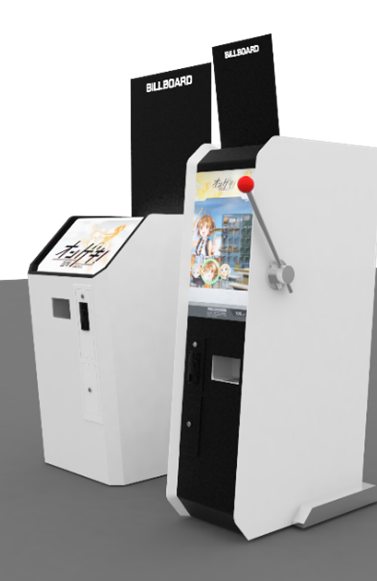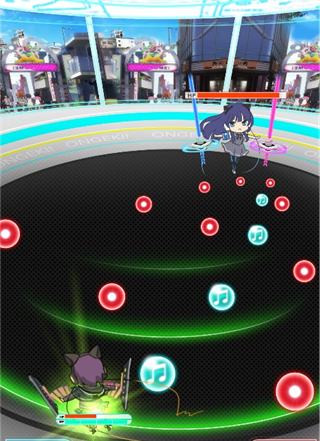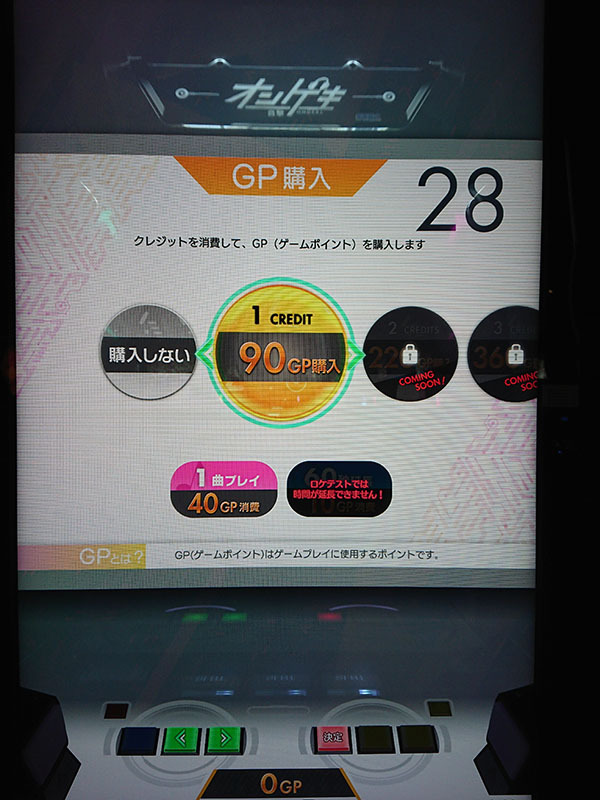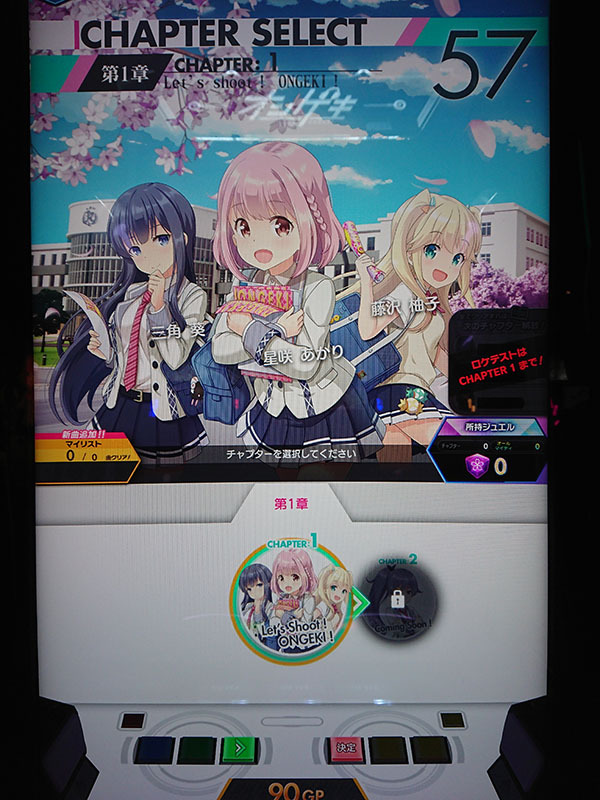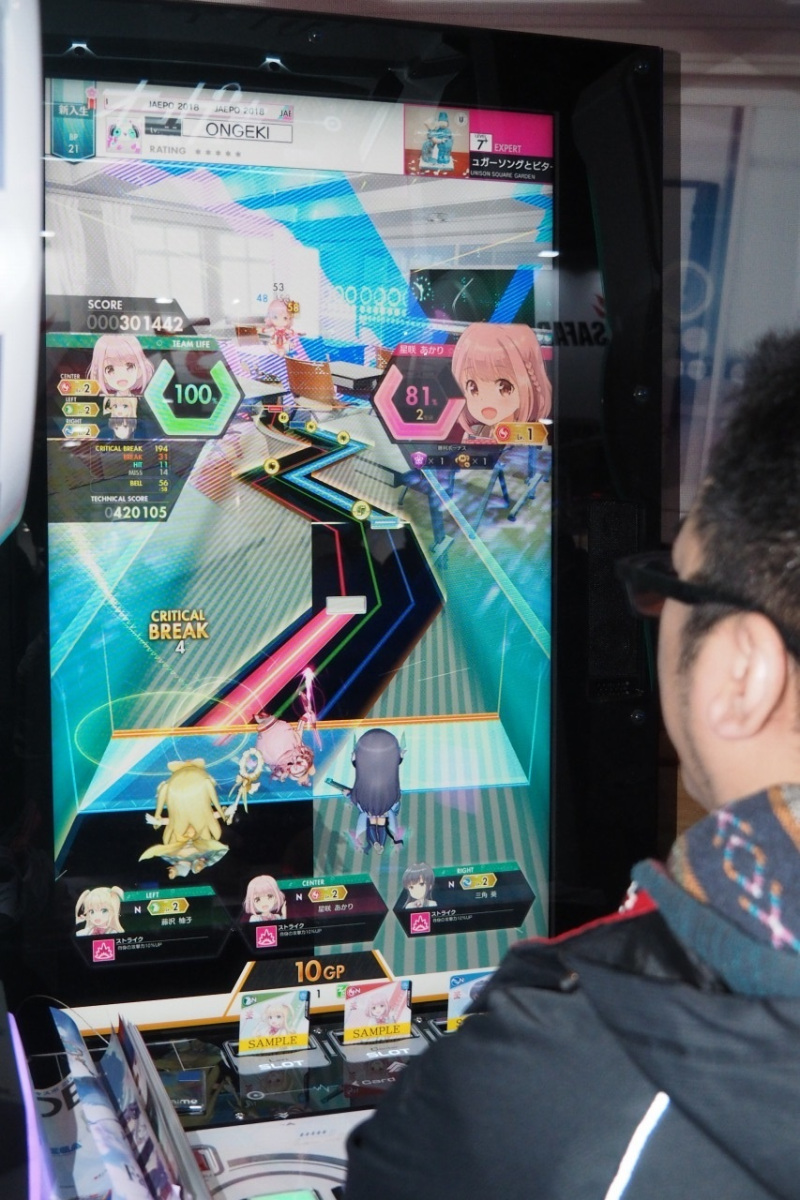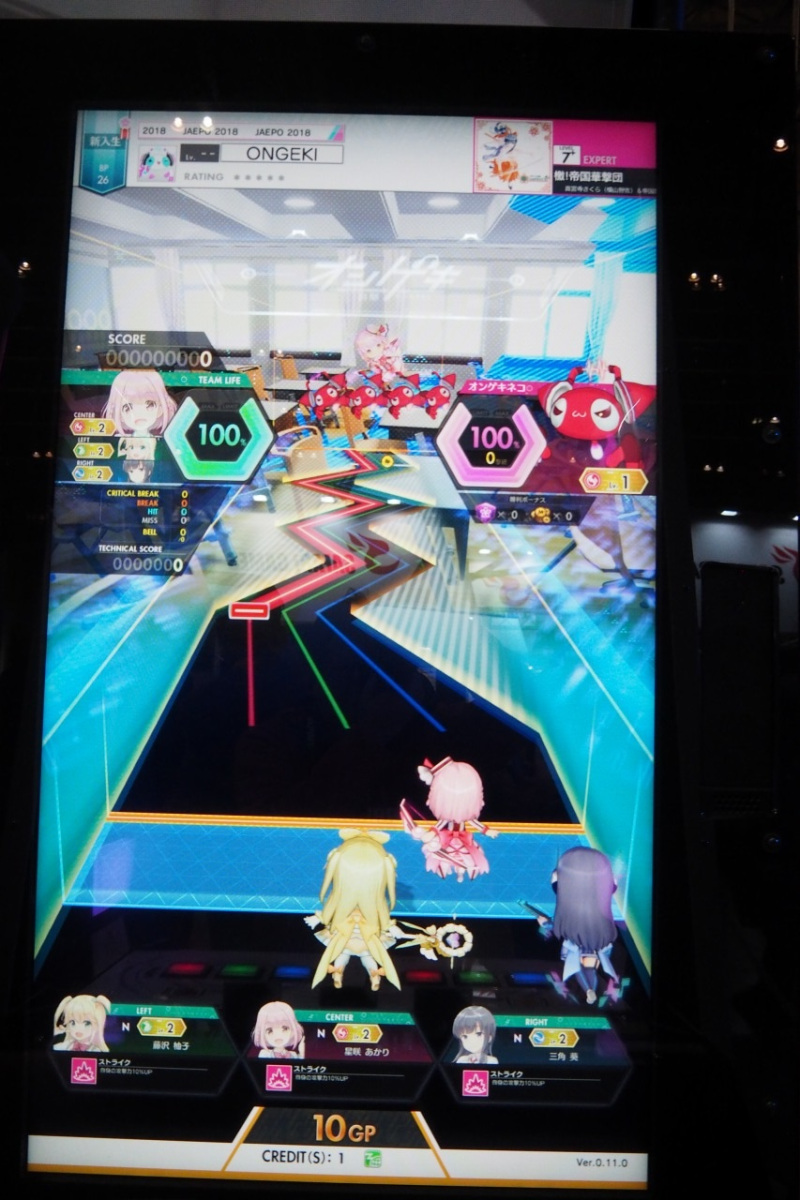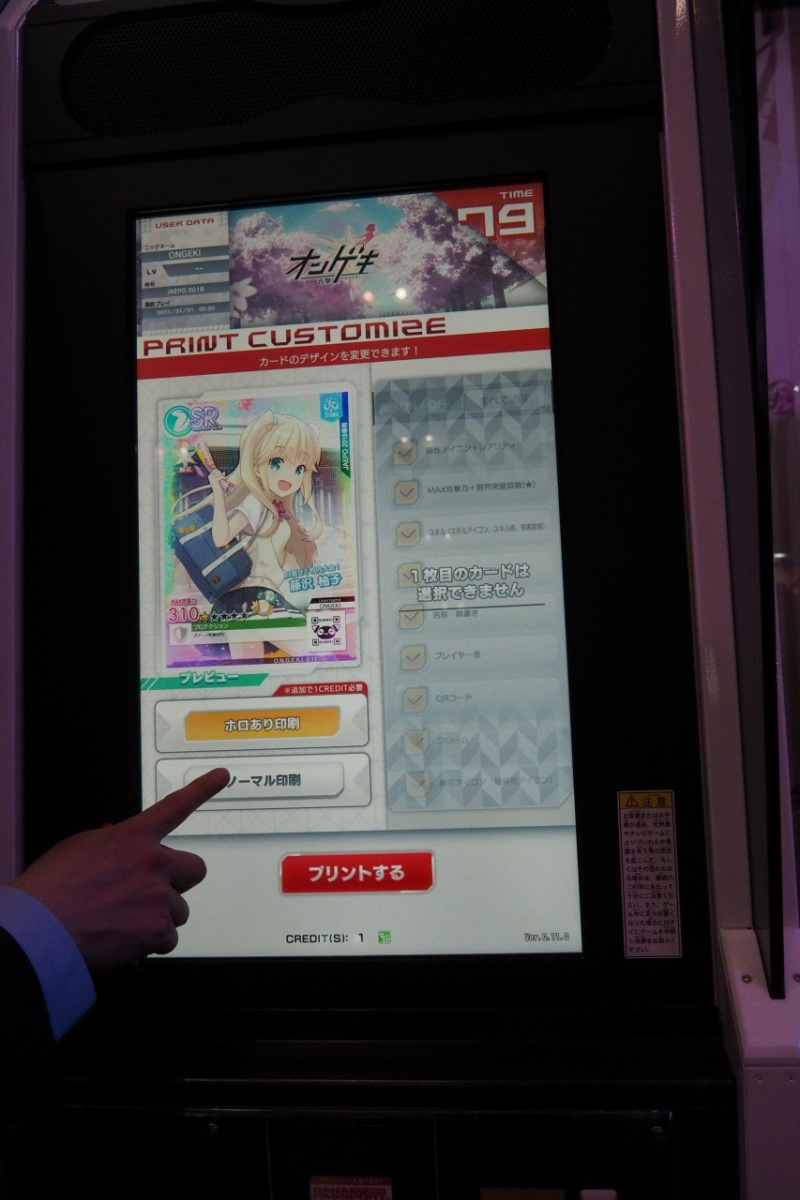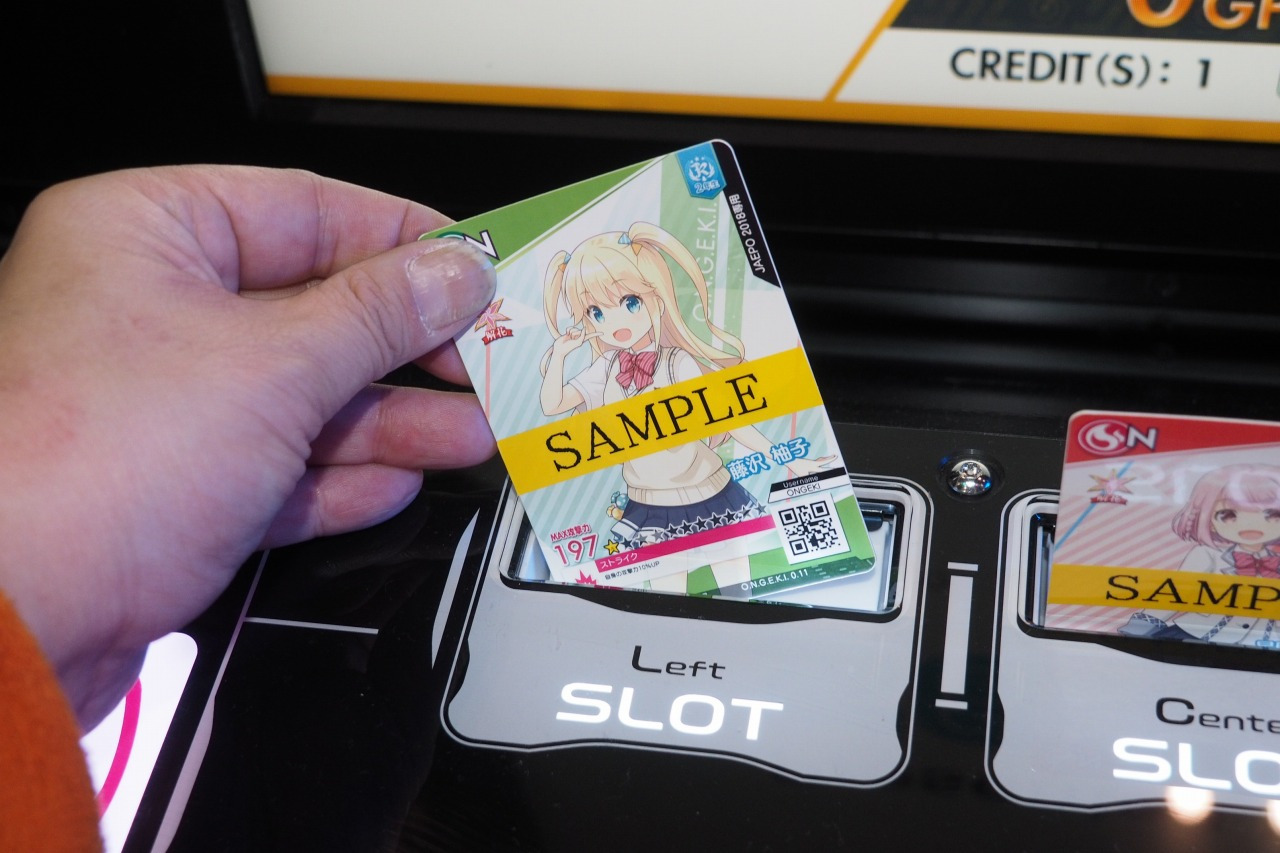
A page detailing the development history of ONGEKI. In this article, we will explore ONGEKI’s original design, the redevelopment after the location test, and progress through from the pre-release version until how the game plays today.
This article is a work in progress! I will continue to find more details and add them here as I have time.
2015 – A Third Music Game
ONGEKI Seems to have started development right after the release of Chunithm, in 2015, as quoted from “Koha-D”, the general director of the game:
“…back in the winter of 2015, after CHUNITHM had just launched, when the company asked me to develop a third rhythm game.”
Koha-D went on to describe the original pitch:
“The concept itself was pretty wild — a fusion of shoot-’em-up, rhythm game, and character game — but at a time when I was starting to feel like I’d hit a ceiling with music games, it genuinely surprised me.”
After several design trials over two years, the game finally came into something closely resembling the final game. Not much is known about these early iterations of ONGEKI, but it is mentioned they tried every combination of buttons and levers they could imagine.
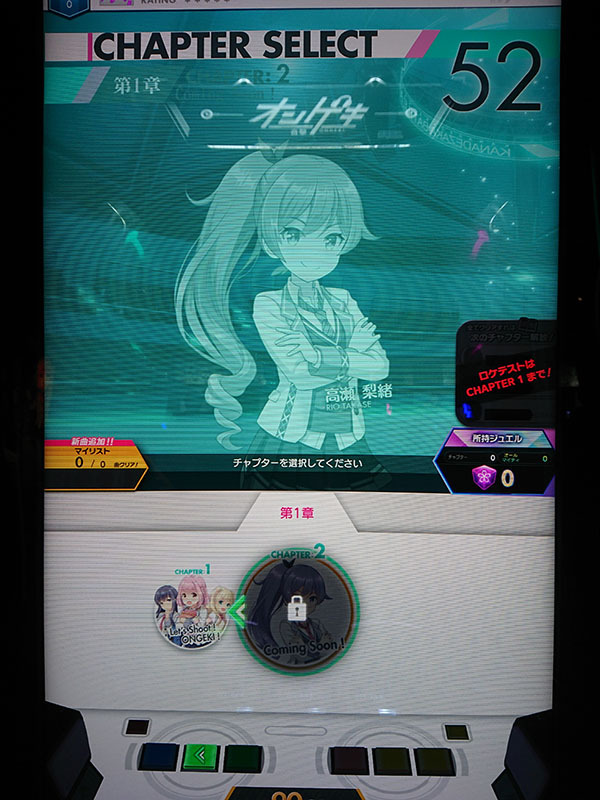
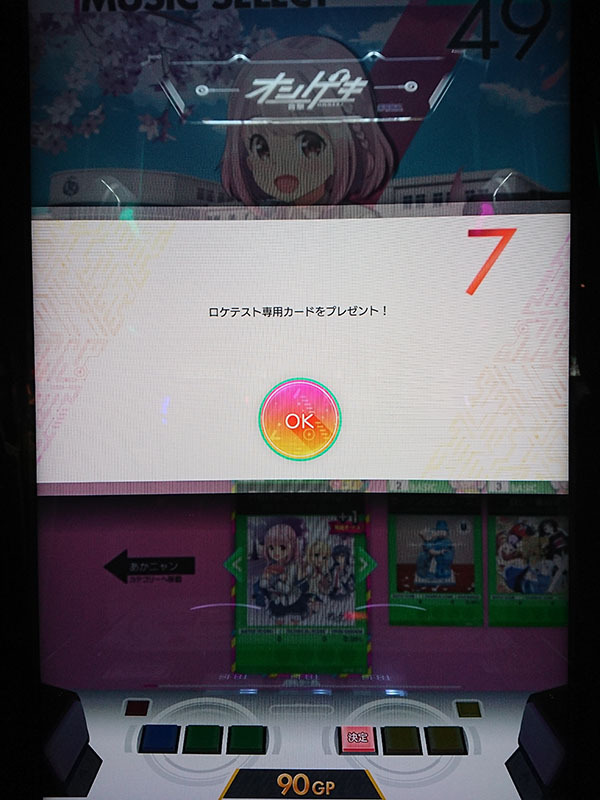
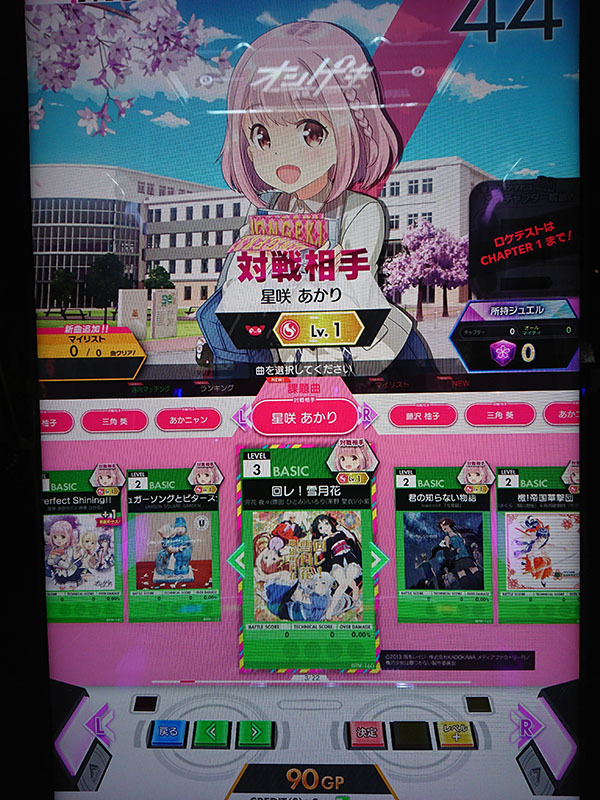
2017 – The December 15th Location Test
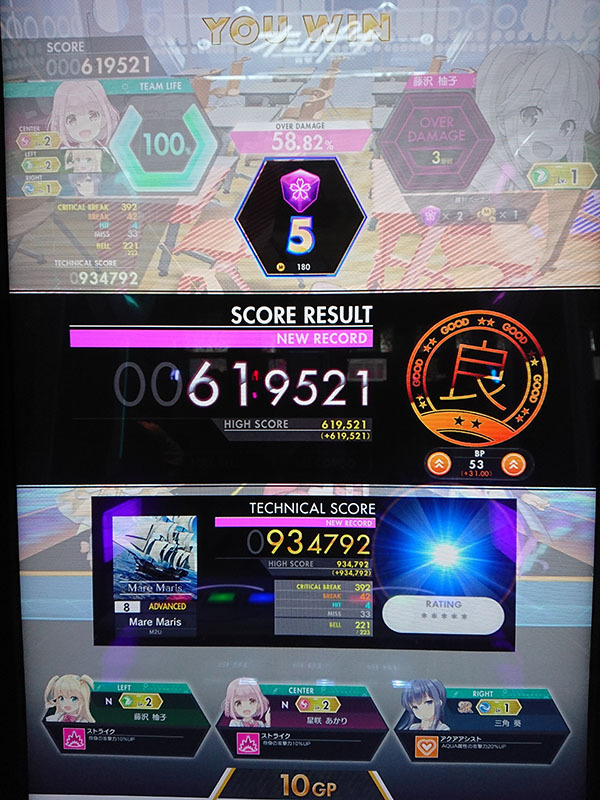
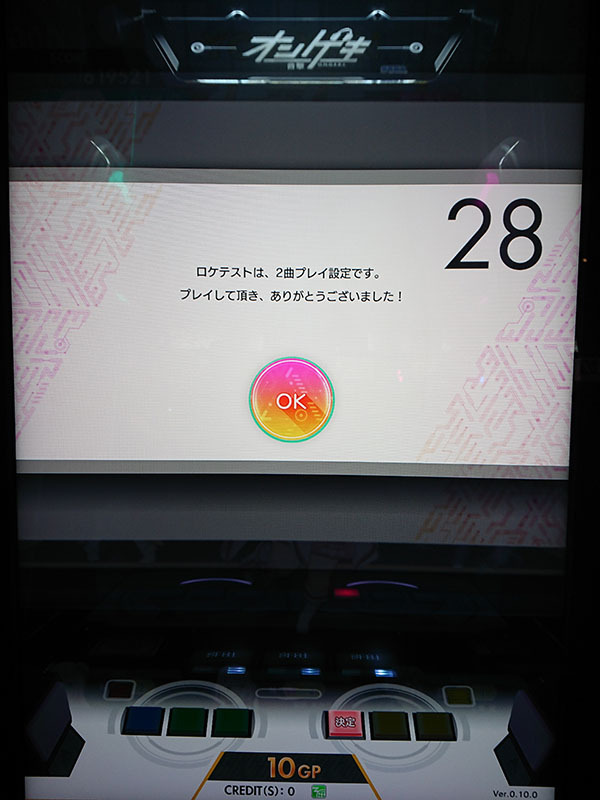
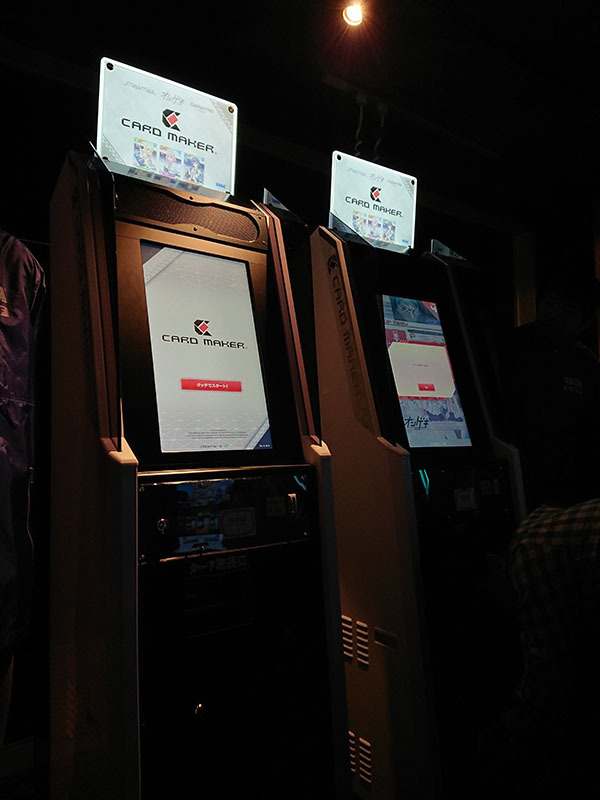
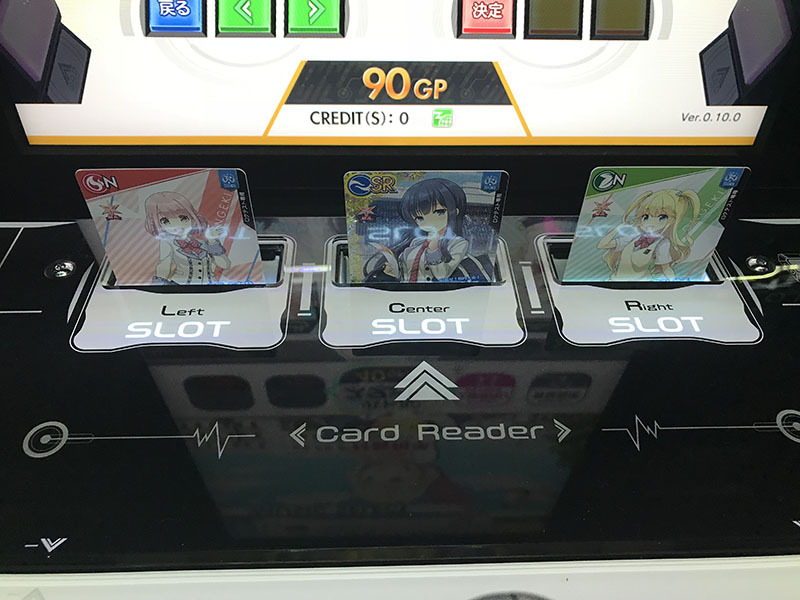
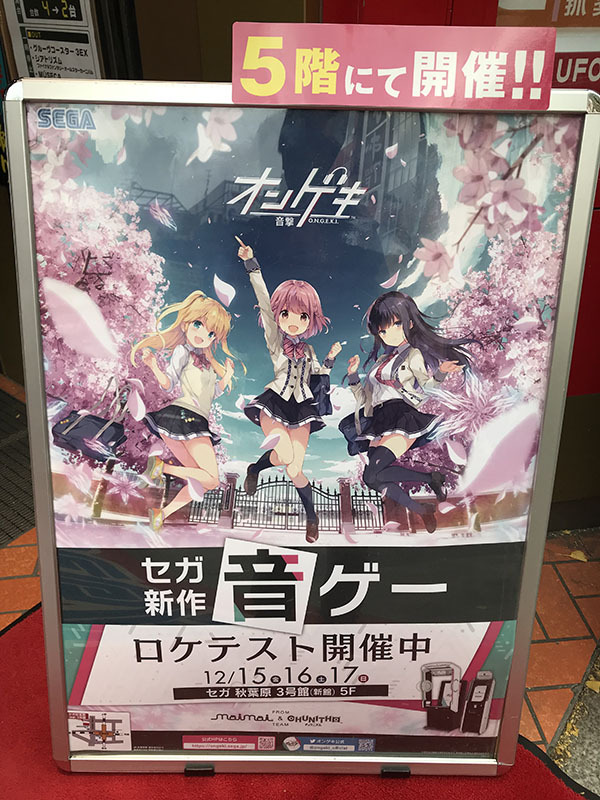
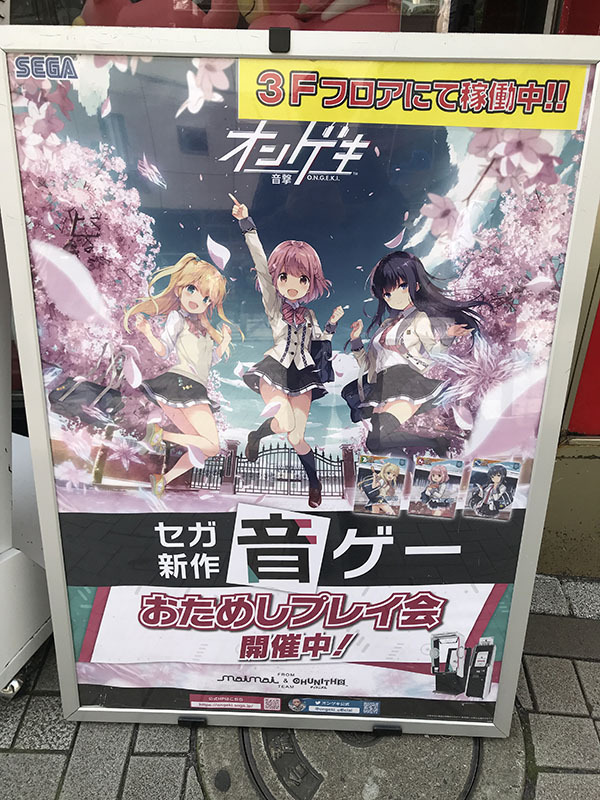
- The location test was held from December 15th to 17th, at Akihabara Sega Building 3 (Which would become GiGO Akihabara Building 3 in 2022)
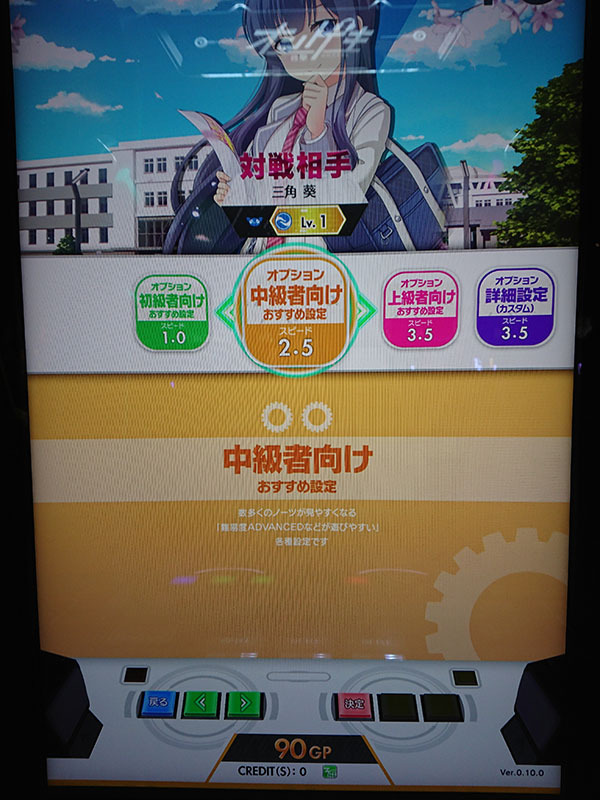
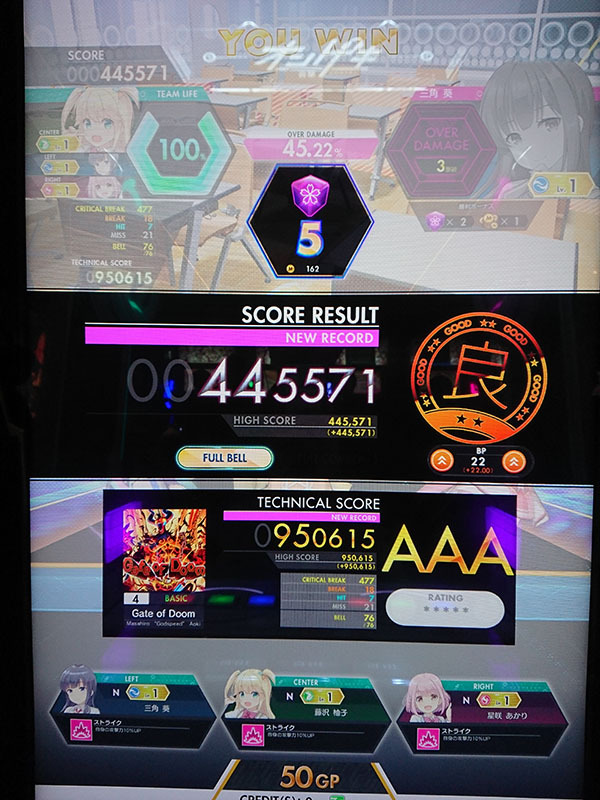
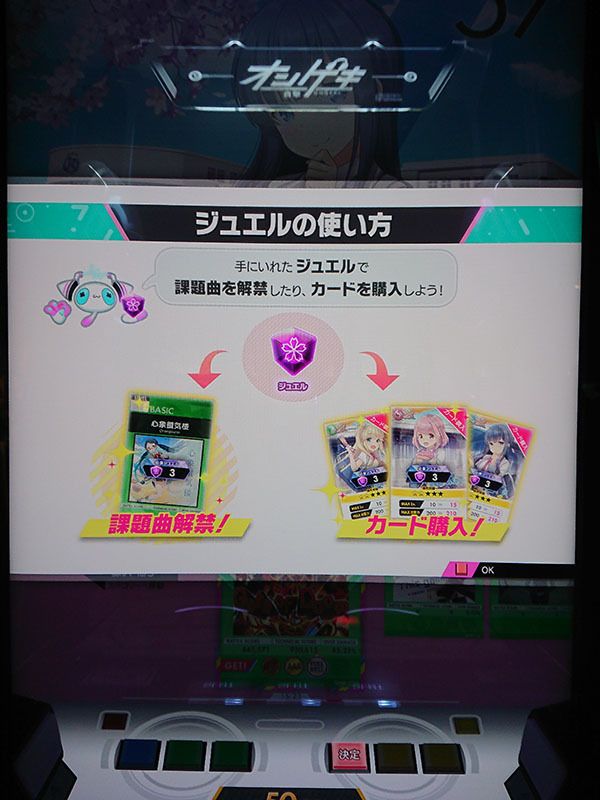
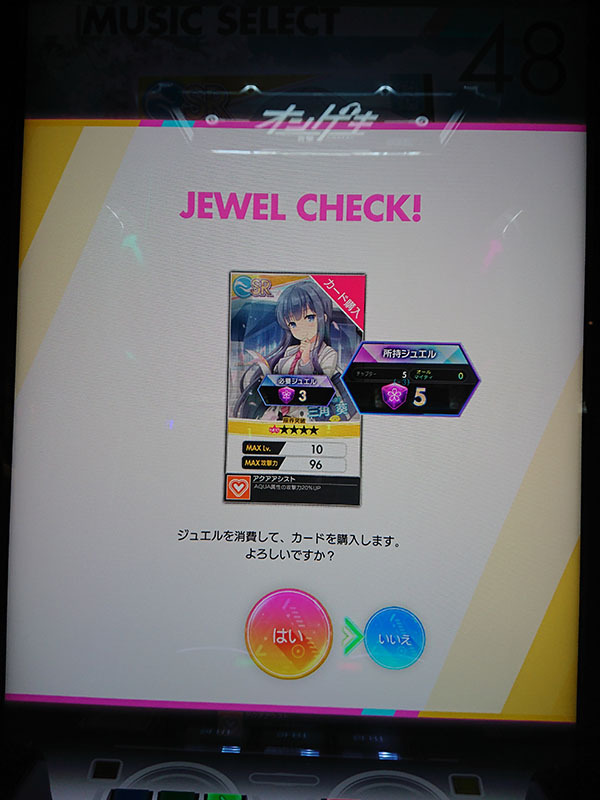
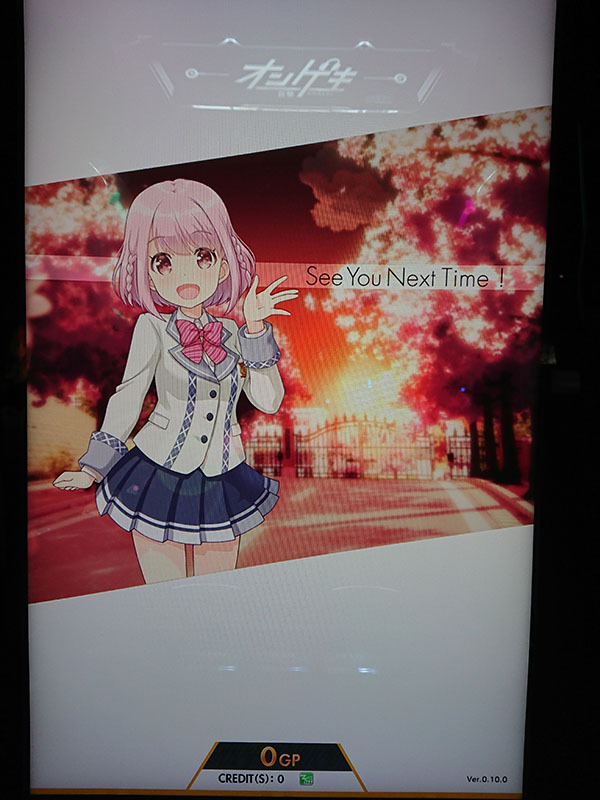
- The game version is seen as Ver.0.10.0
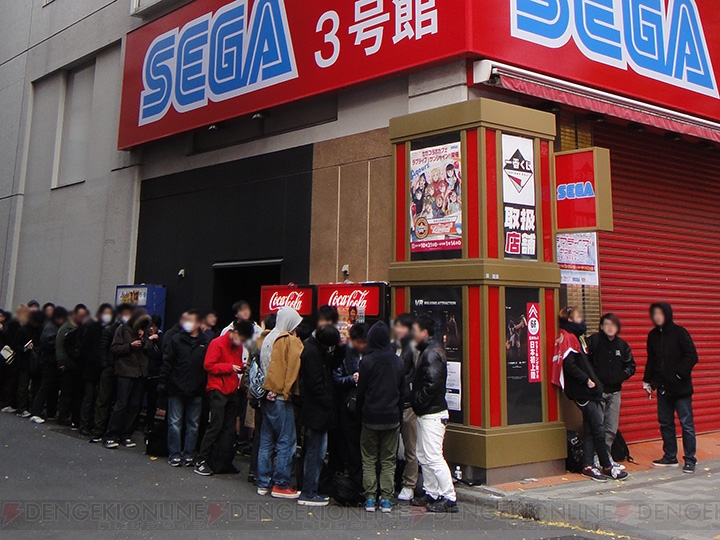
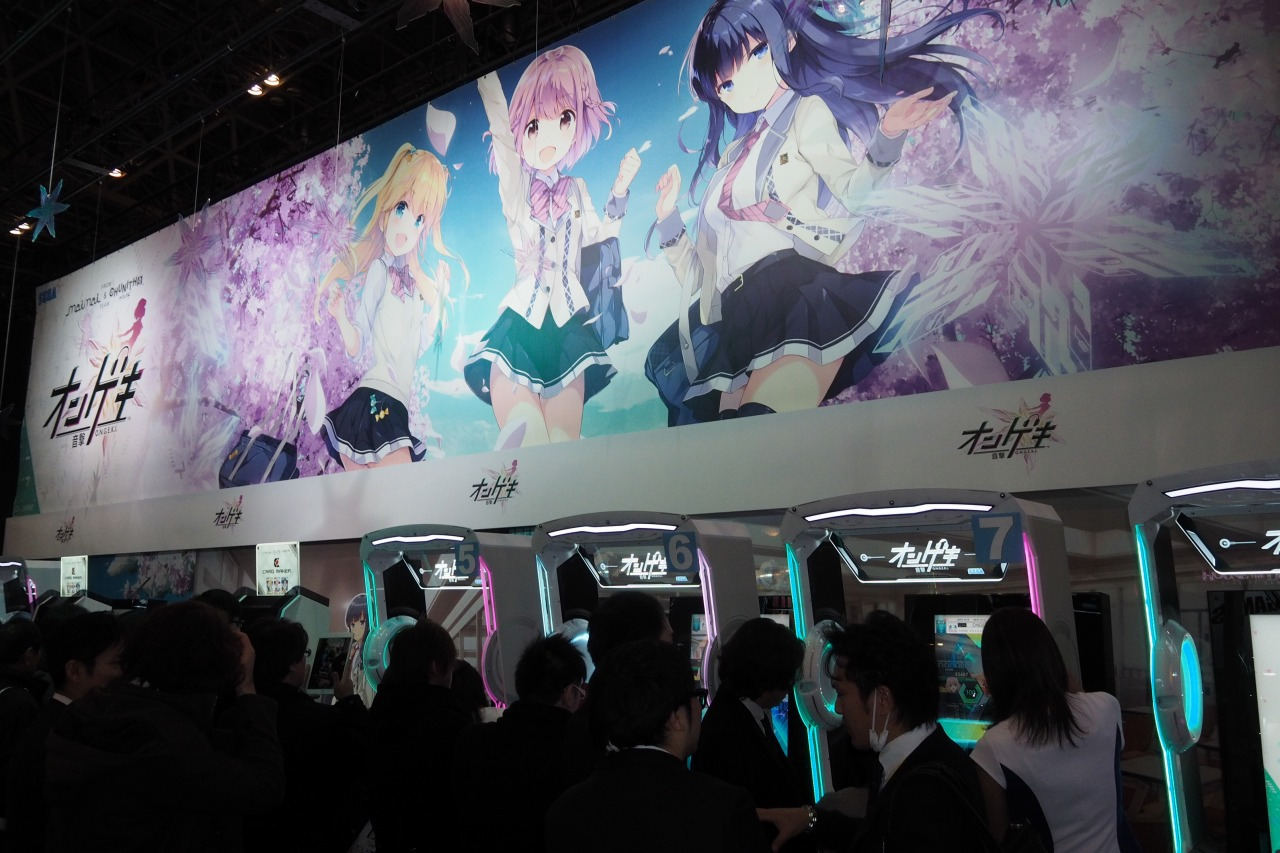
During the location test, people were lined up before the Arcade had opened to get a chance to try Sega’s new game (Source: dengekionline)
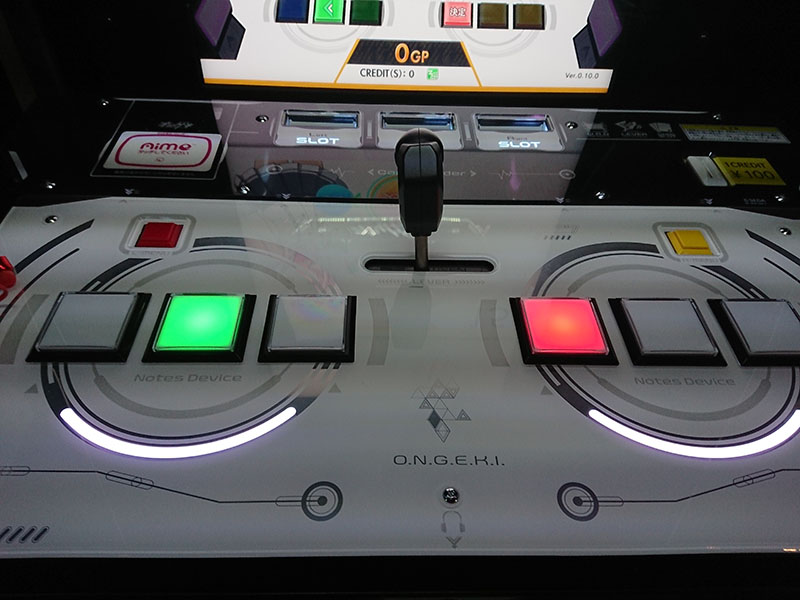
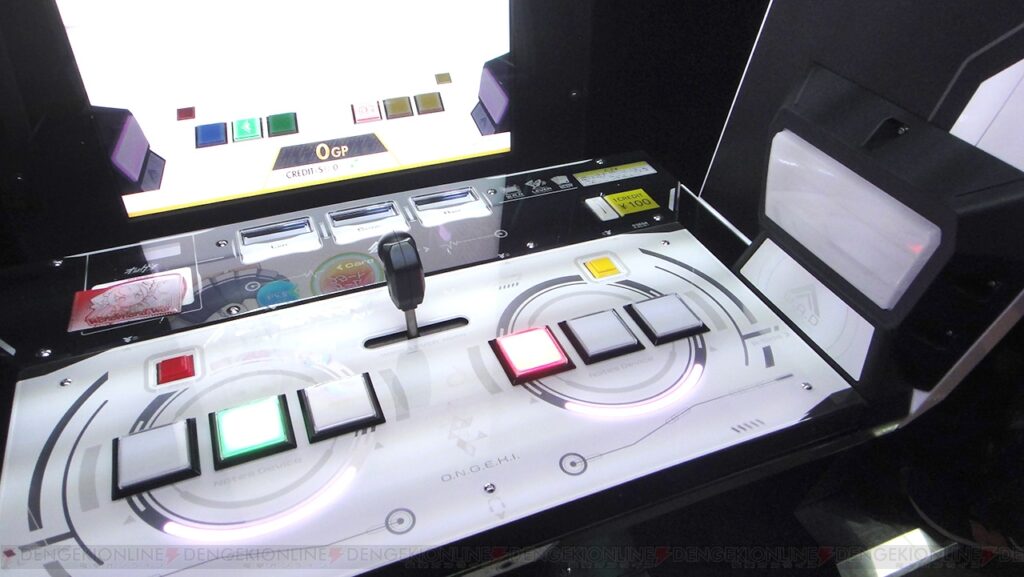
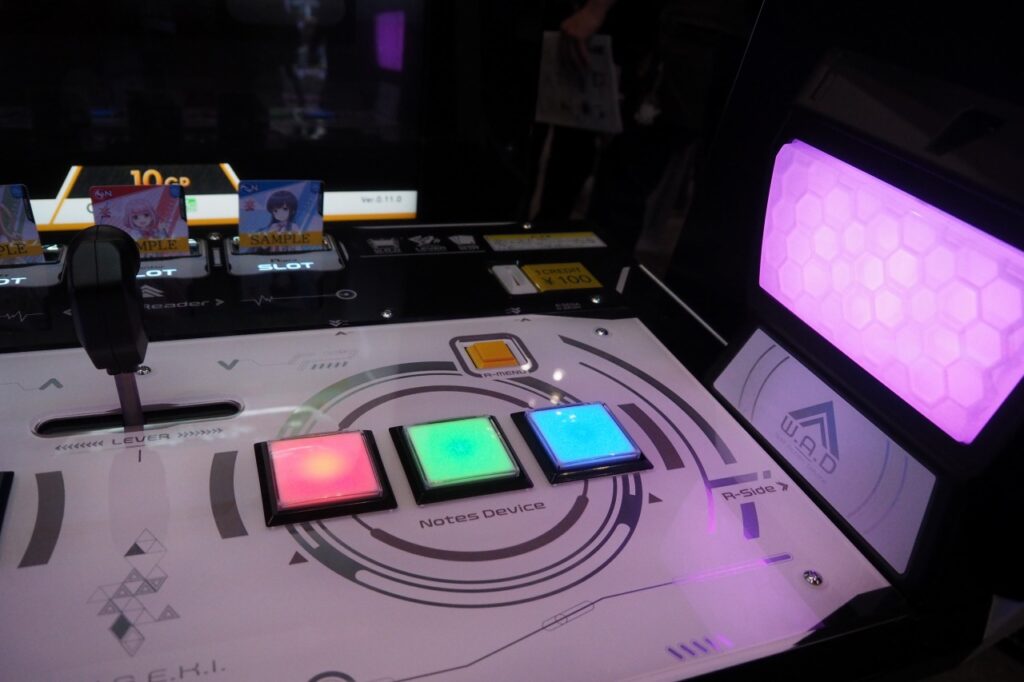
Above, the 2017 location test control panel featured LEDs underneath the TAP buttons. (Source: dengekionline & ariesu)
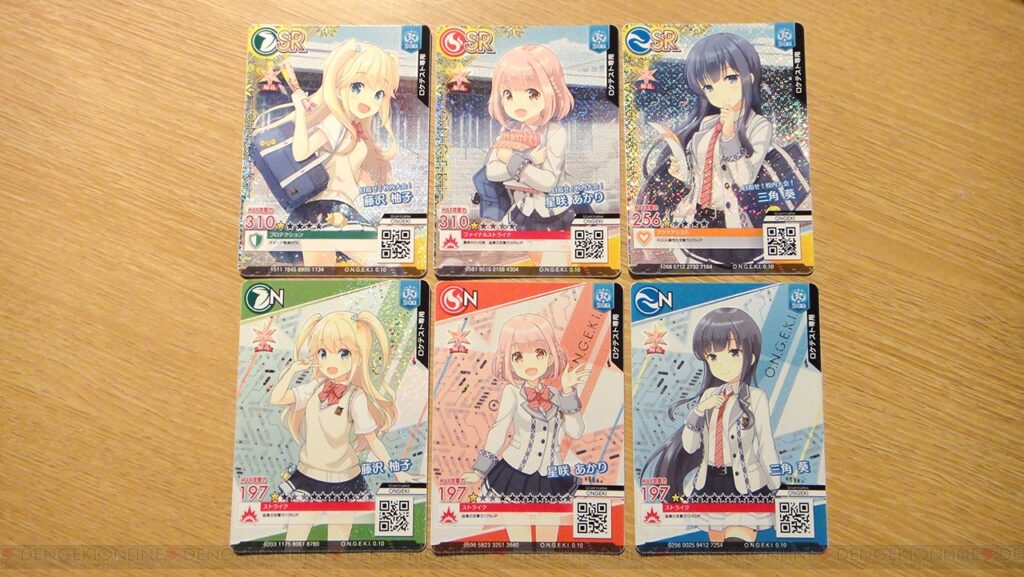
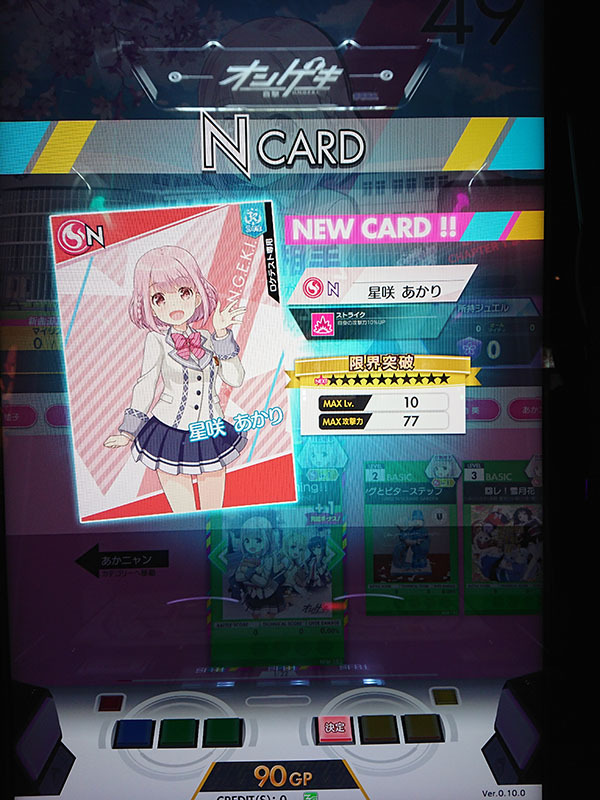
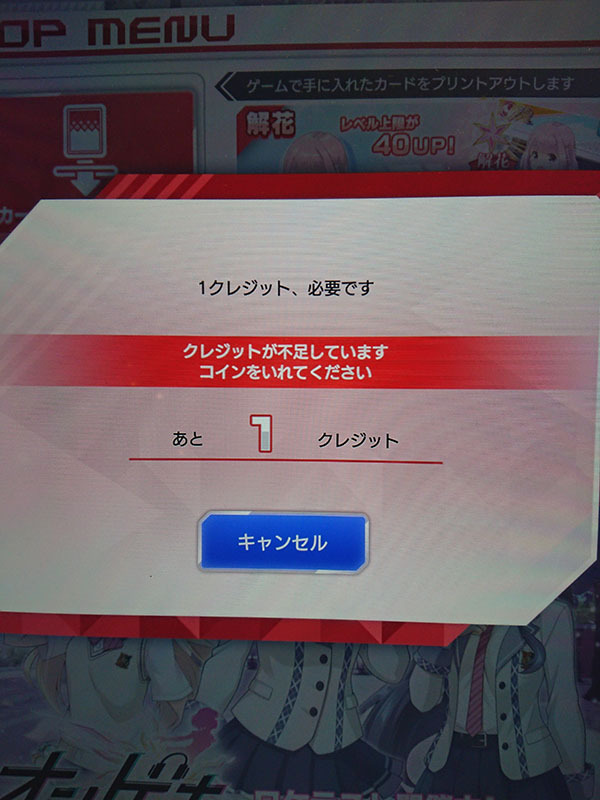
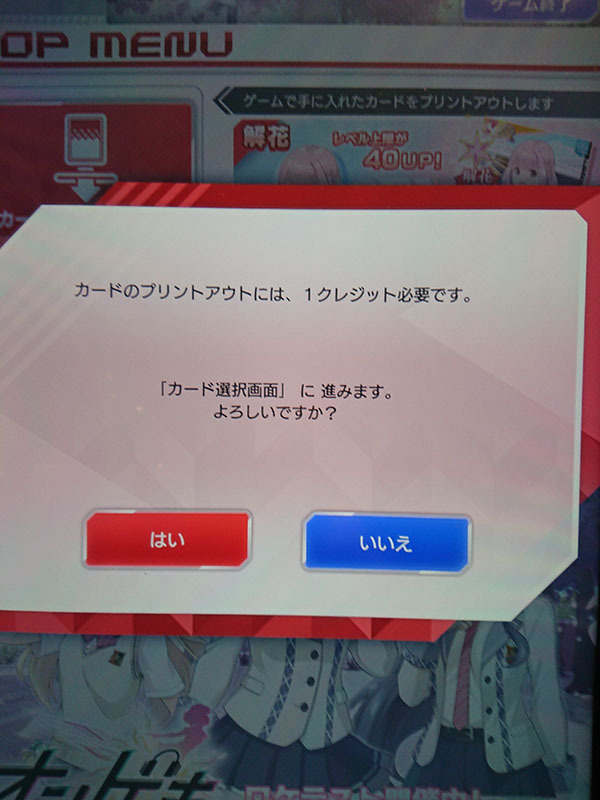
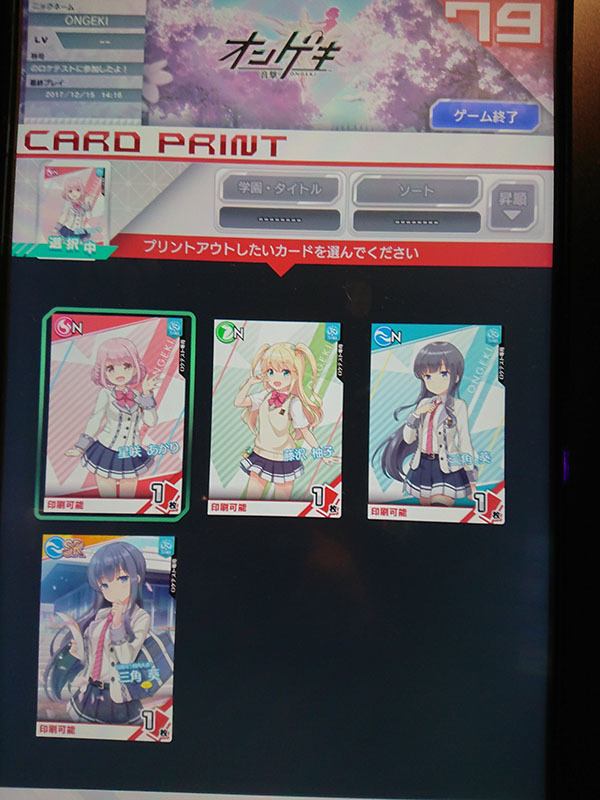
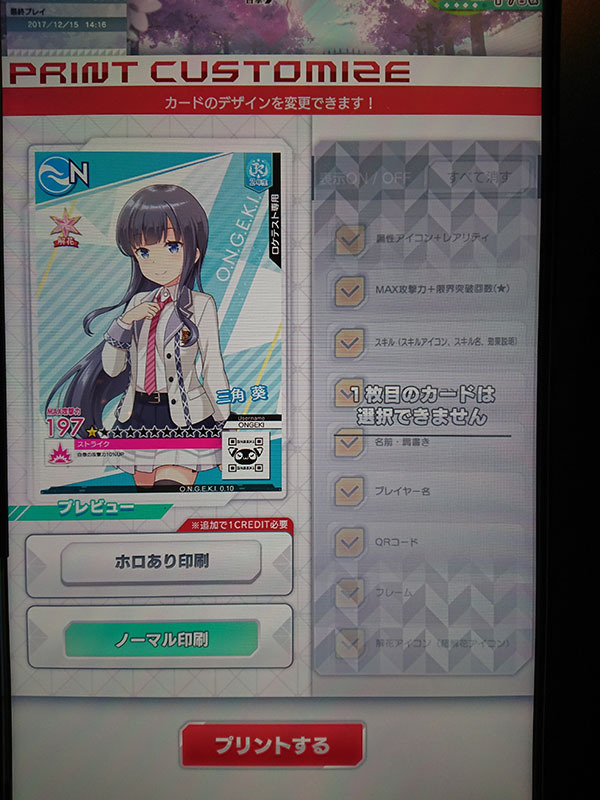
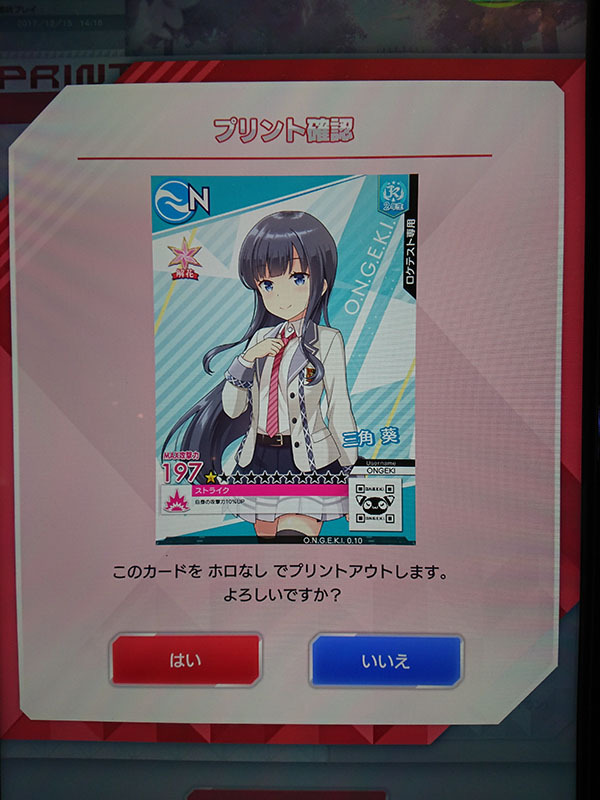
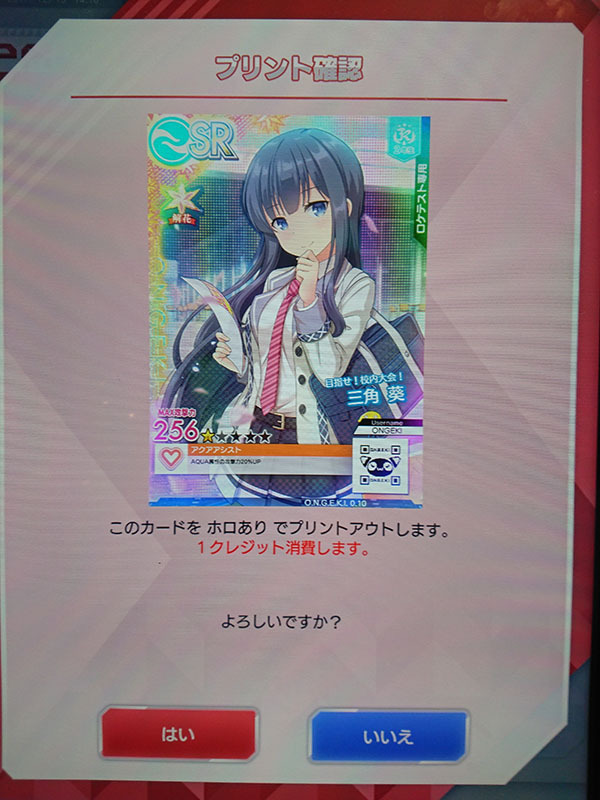
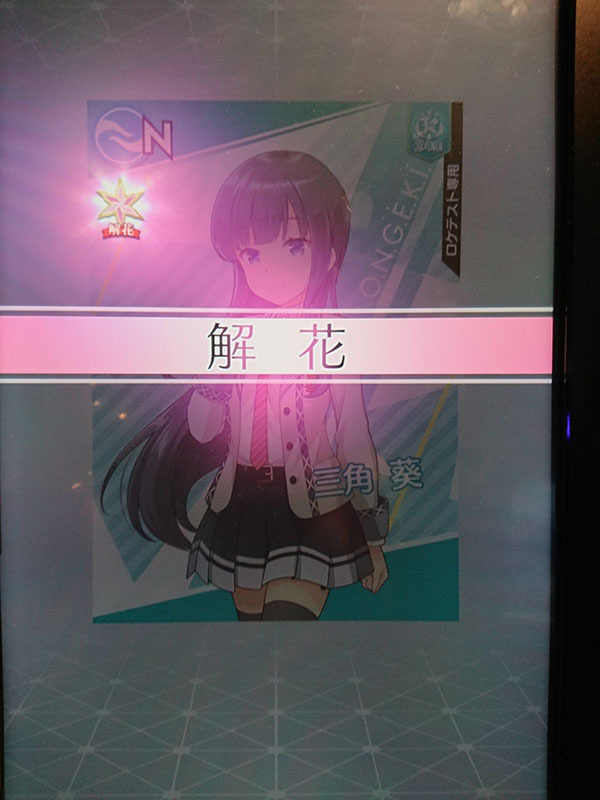
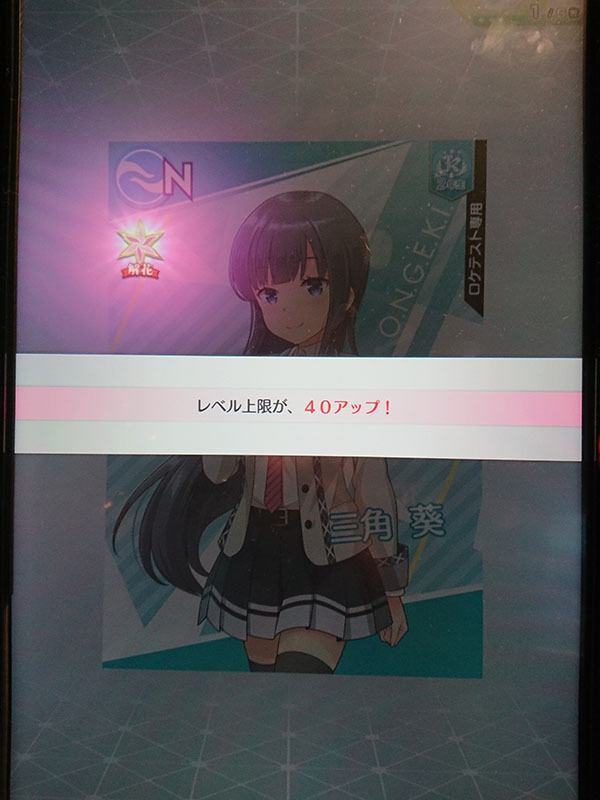
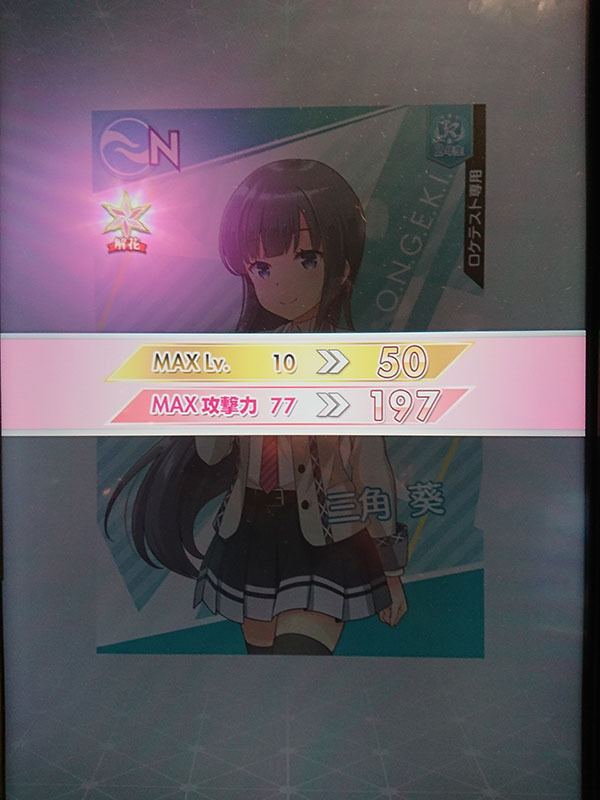
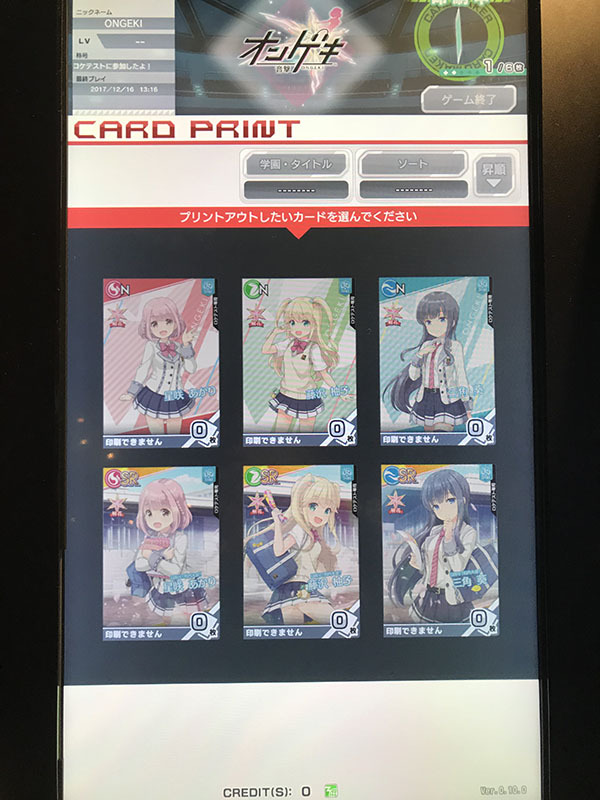
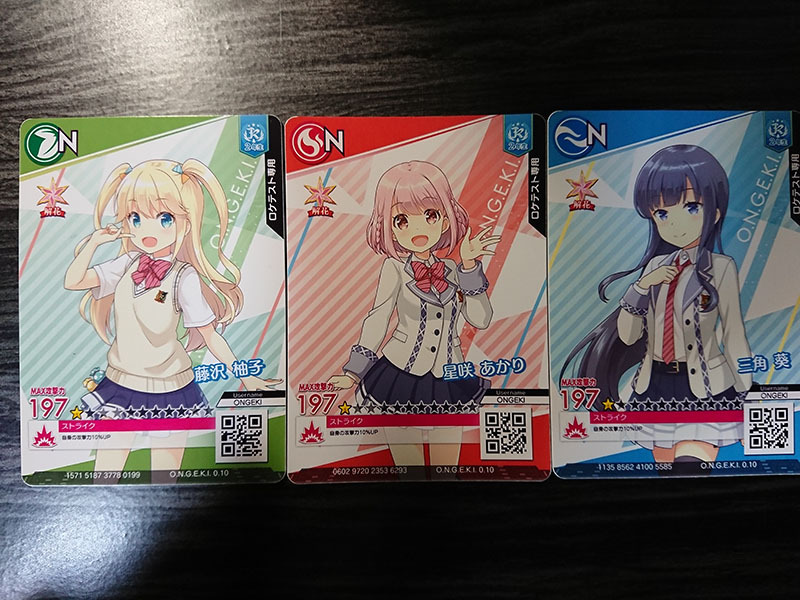
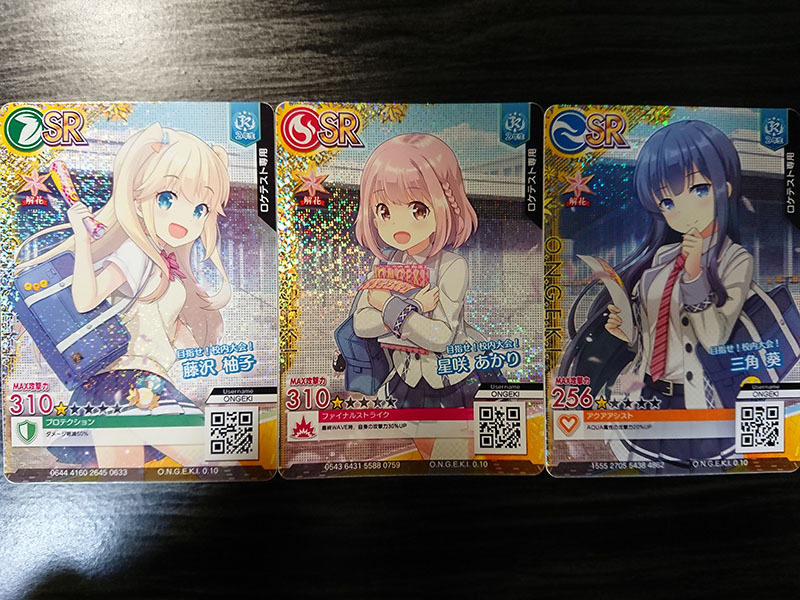
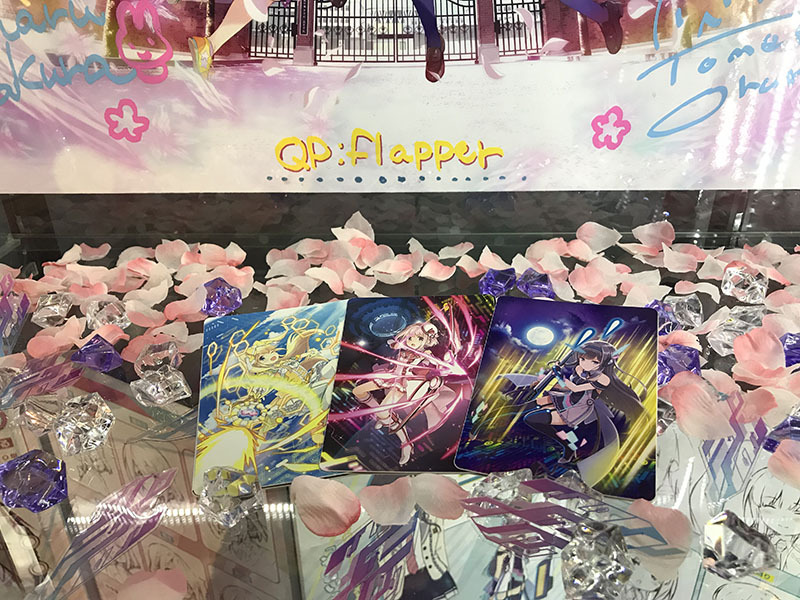
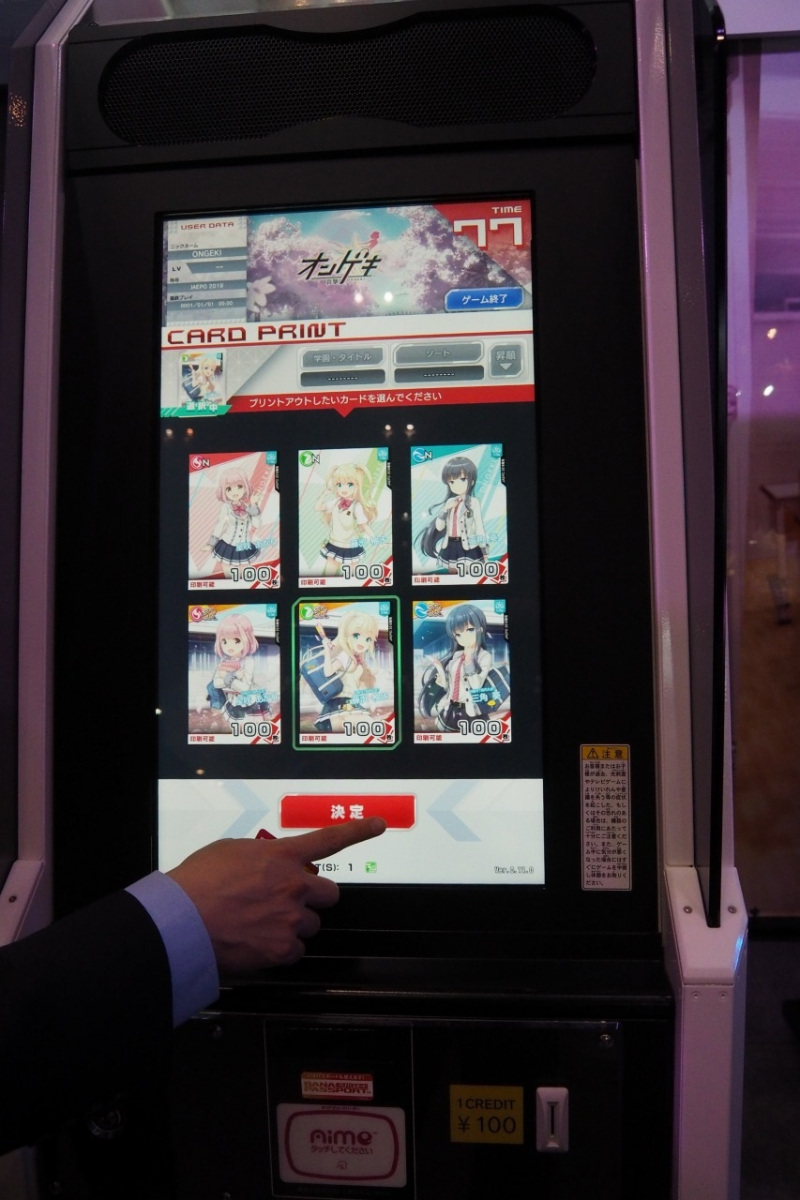
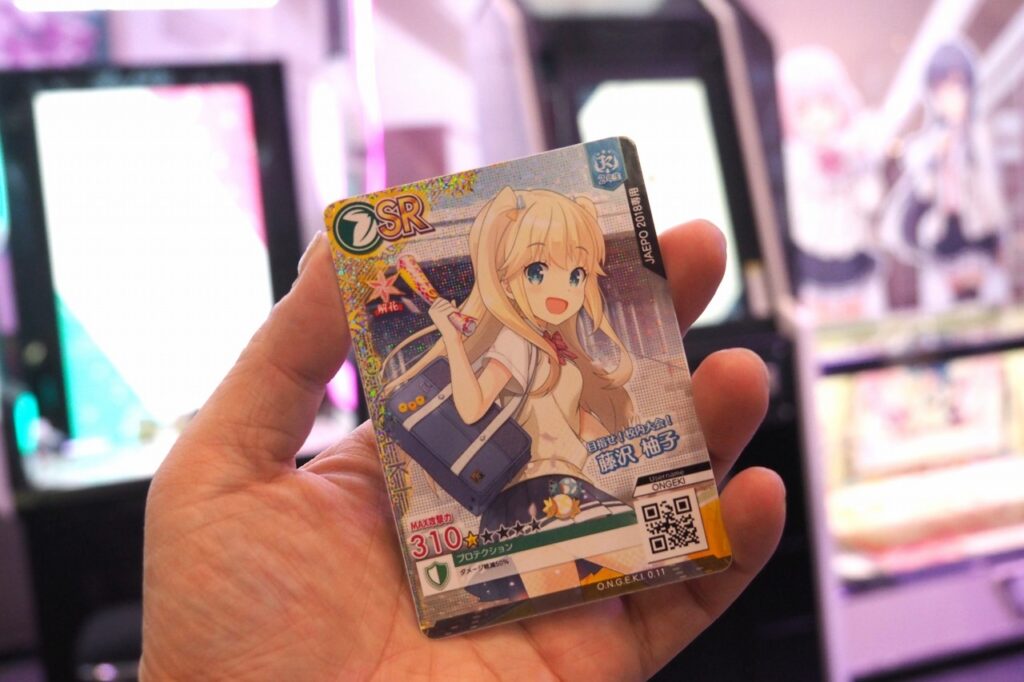
The location test cards, sporting a different holographic pattern, different skill icons and skill amounts, earlier artwork, and “Location test” watermarks on the top right. The cards also show an “O.N.G.E.K.I 0.10” ID on the bottom right, that is formed differently to how the final cards display their version. (Source: dengekionline)
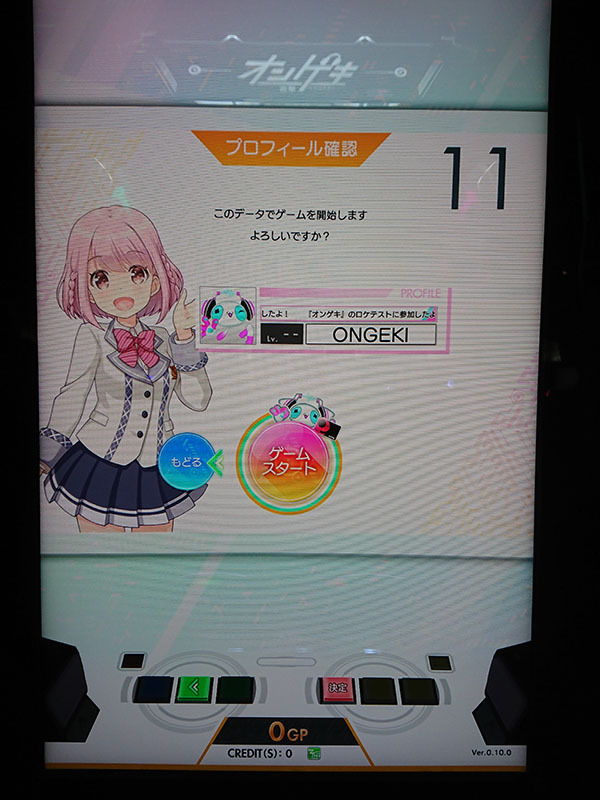
During the location test, something became apparent: The game was clobbering newcomers. Because the development team had focused on the dodging part of the game more heavily than the rhythm game part at the time, even medium-level songs had chaotic, almost bullet-hell like sections that were game-overing players before they could complete a song.
Because the game has such a big wind-up between songs, this means going through the whole game over section, not earning many jewels, and taking the GP from an attempted song from you. The feedback was brutal online. Many players thought the bullet part of the game was too much, and the music part was too little.
A location test is the first real trial every arcade game goes through — the moment you find out whether players actually respond to what you’ve built. When we finally got there, what we realized was just how big the gap was between what we’d been trying to make and what players actually wanted.
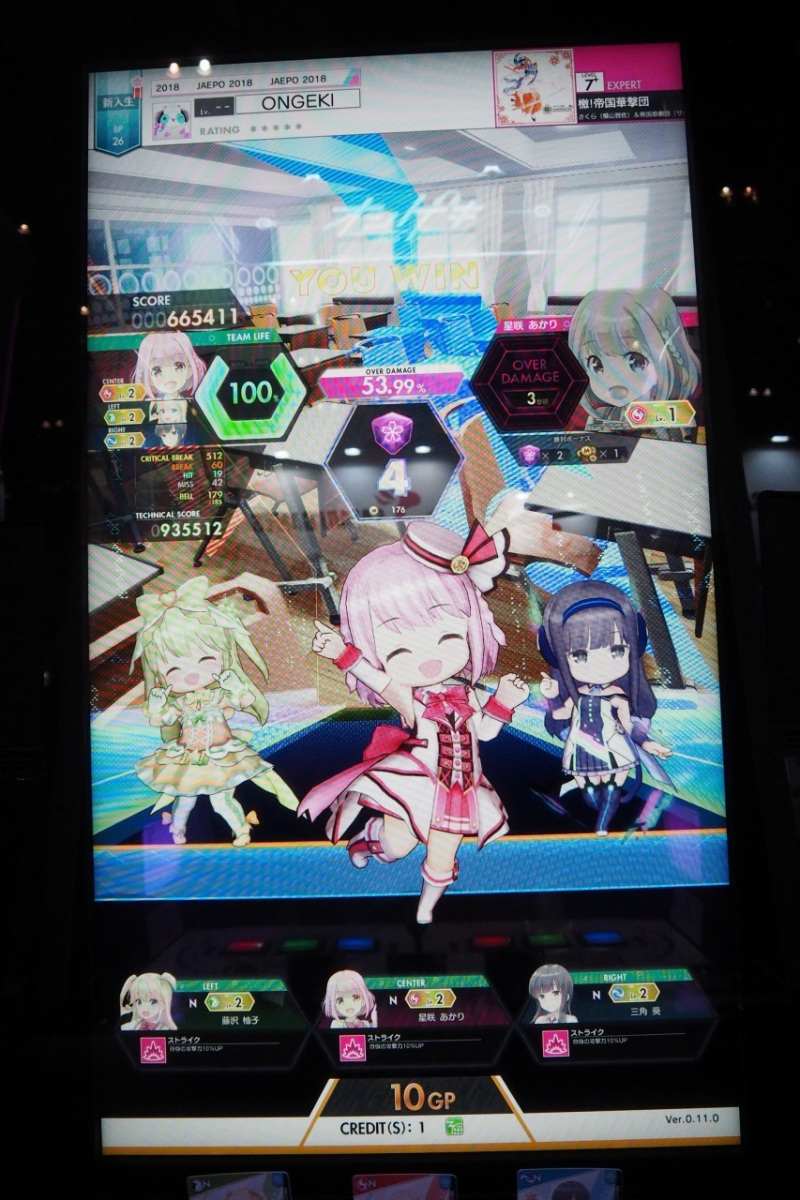
With only a little under two months before JAEPO 2018, the game had to be redesigned to resemble something closer to what rhythm gamers would expect. From what can be seen on videos, the charts had heavy re-designs to be more music-game based, while bullets were mostly moved to the outer boundaries on the lower difficulties. Where bullets used to appear at the end of hold notes or as walls to dodge through quickly, the game started focusing on taps and slides, while keeping the bullets to a minimum, only appearing as obstacles if you missed a flick, or were already outside the black play area.
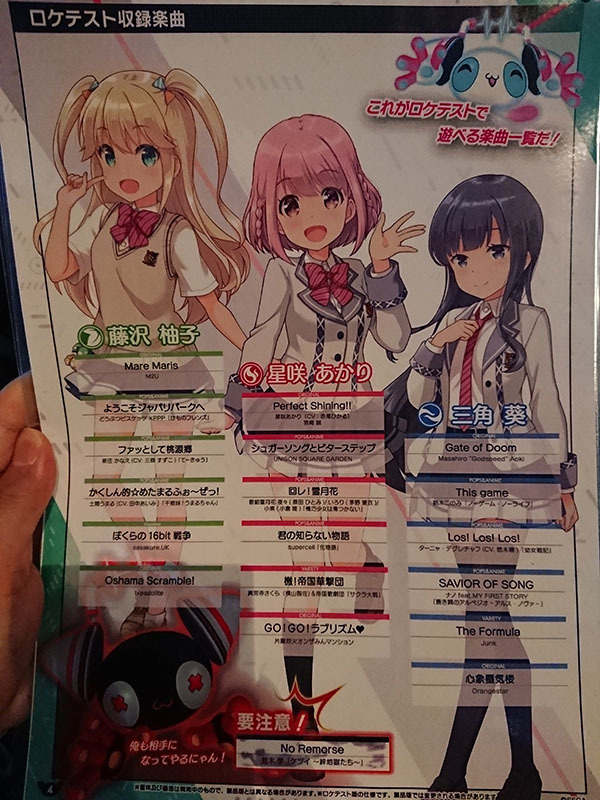
Even the lunatic chart for “No Remorse” saw a huge bullet nerf from the original onslaught in the 2017 location test.
2018 – 9th February JAEPO (Japan Amusement Expo)
- TBA
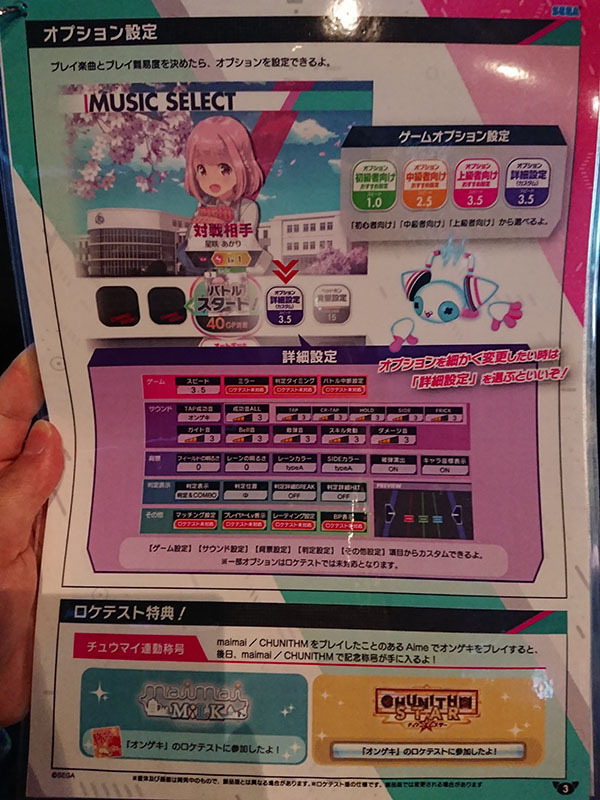
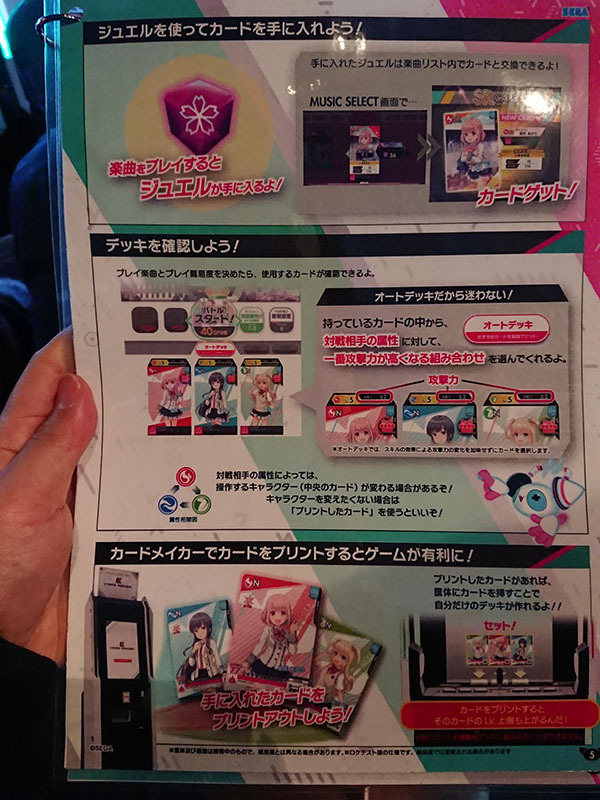
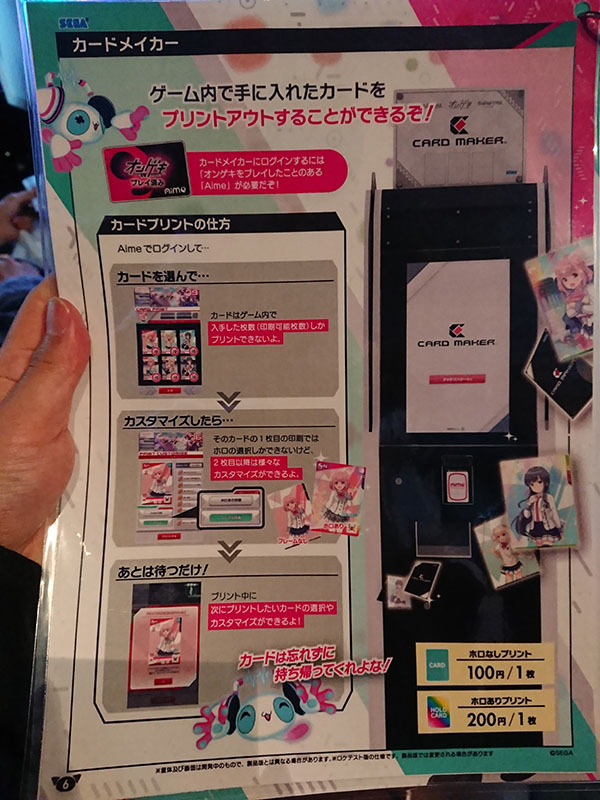
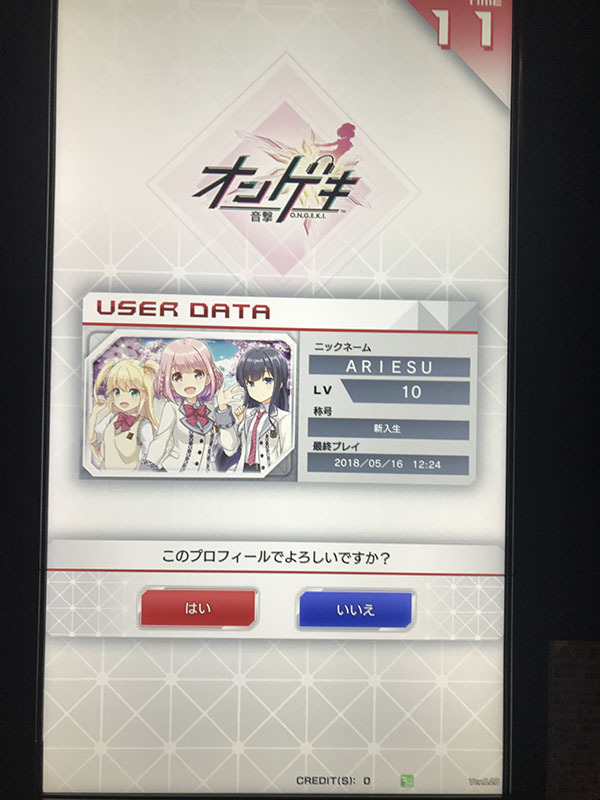
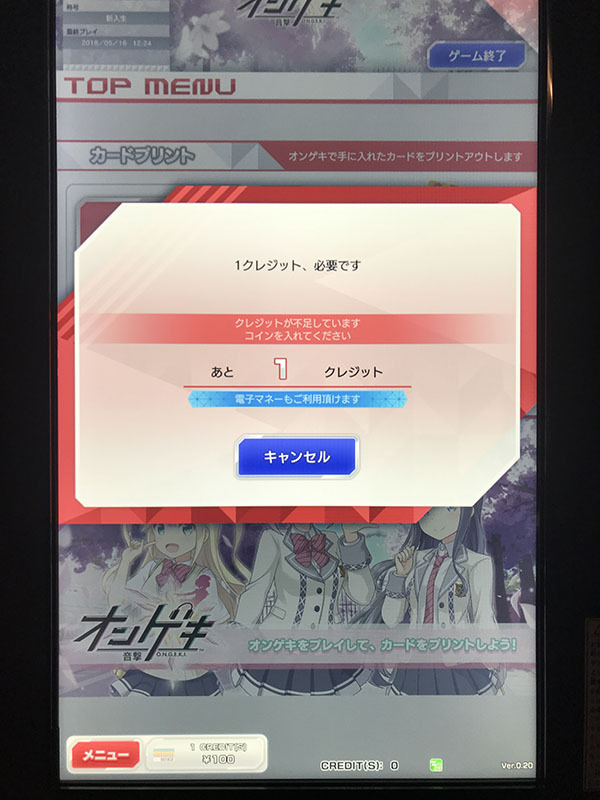
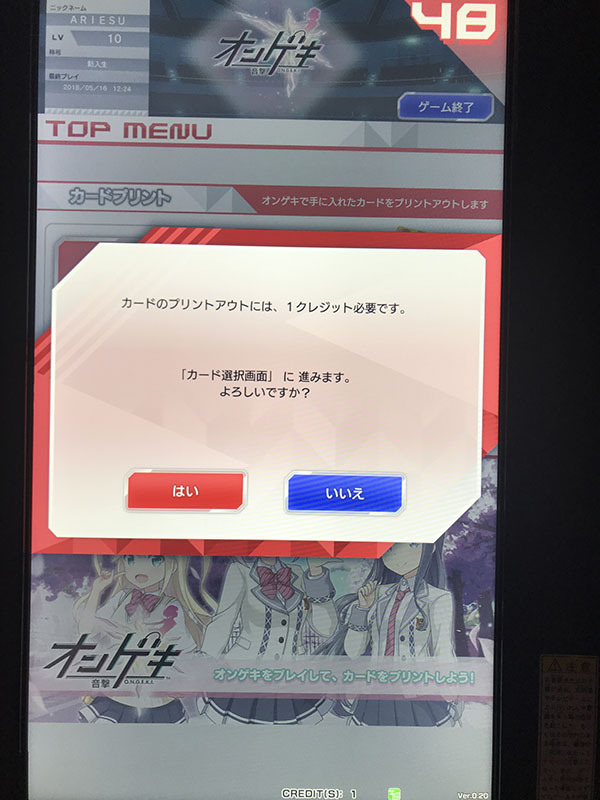
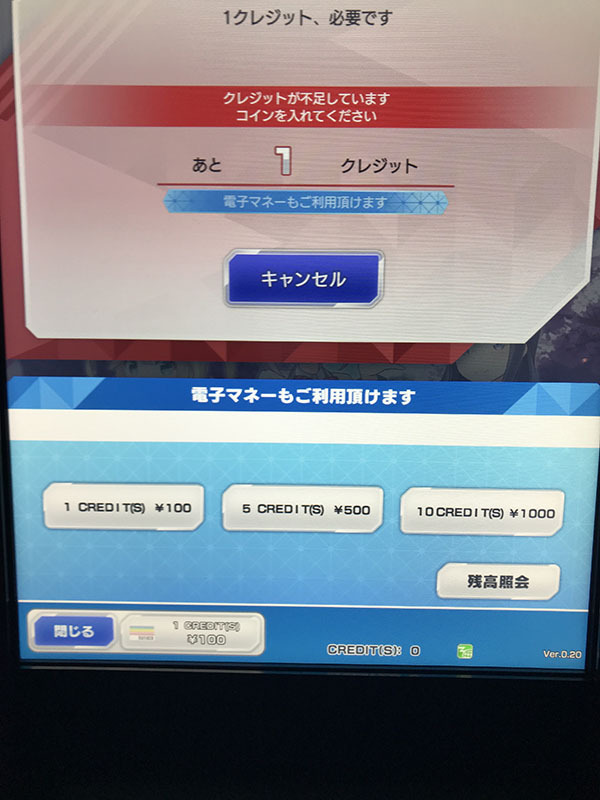
2018 – May 2018 2nd Location Test
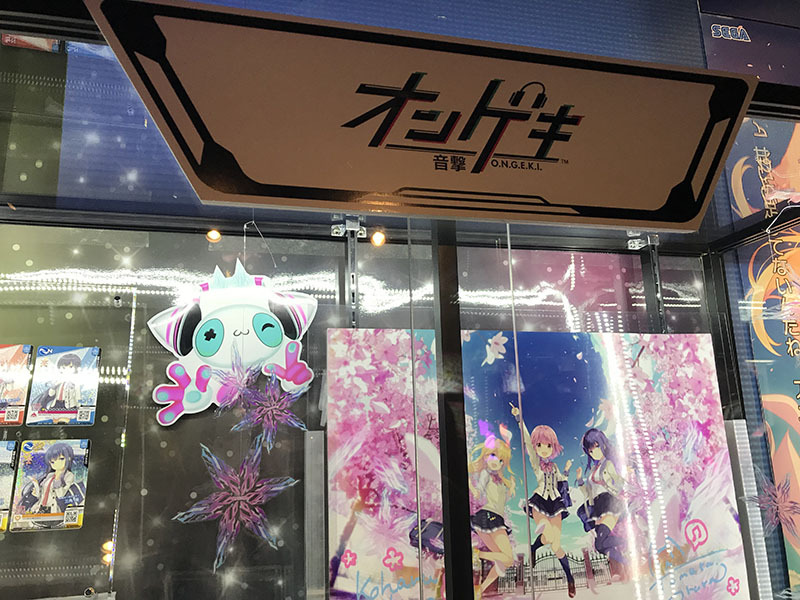
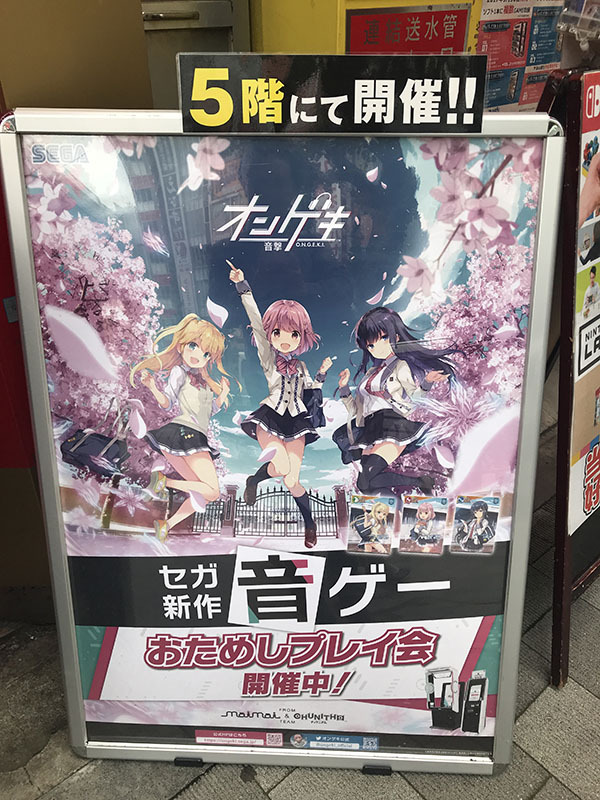
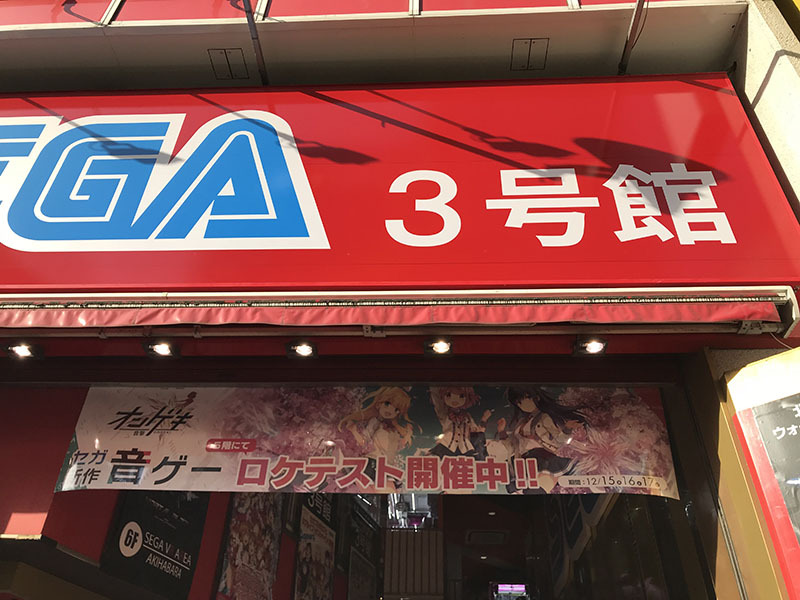
- The 2nd location test was located at Sega Akihabara Building 3 & 4, possibly other locations
- The test was held between at least May 12th until the 20th, but it may have been a little longer.
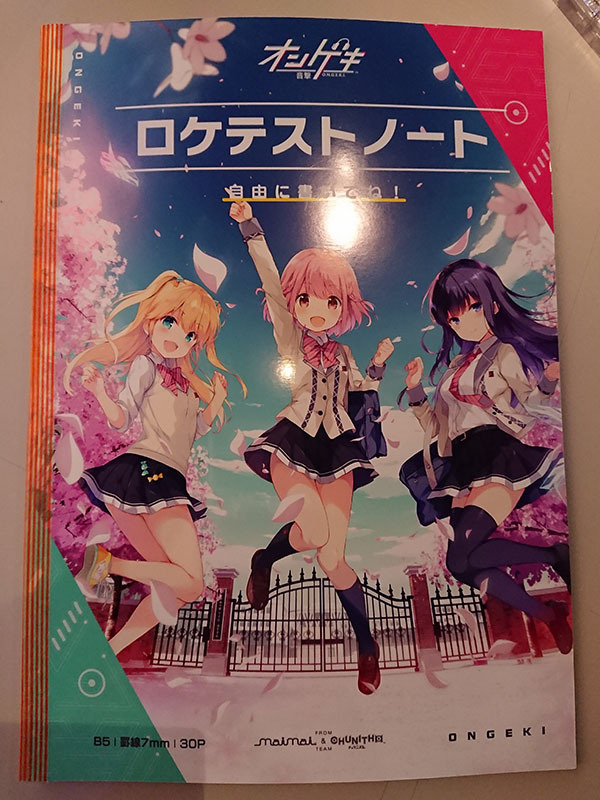
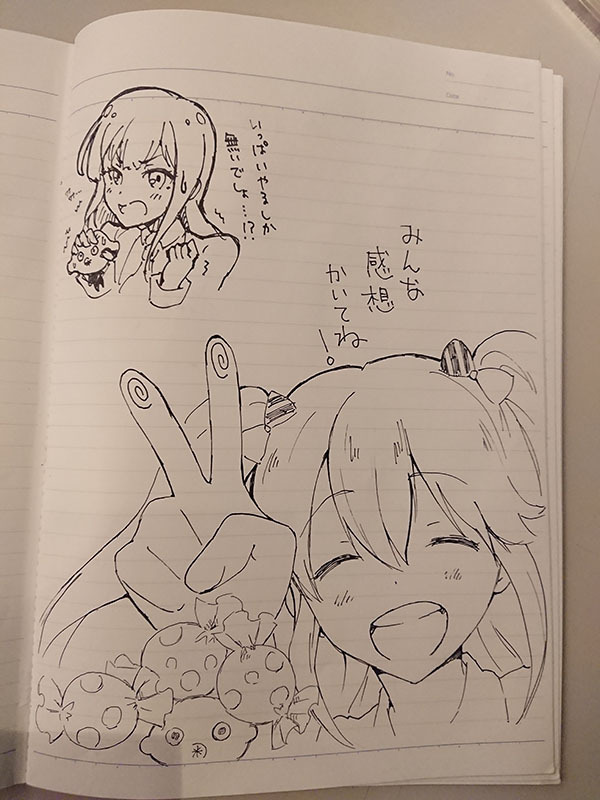
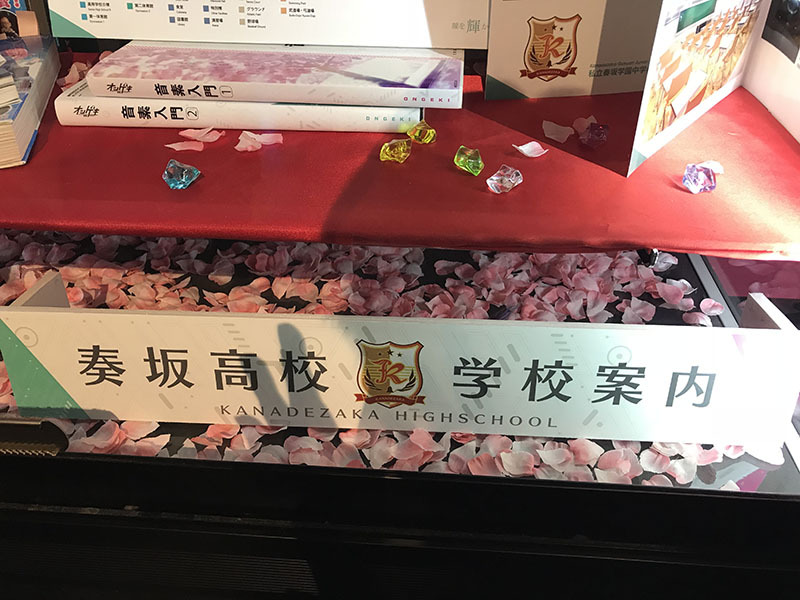
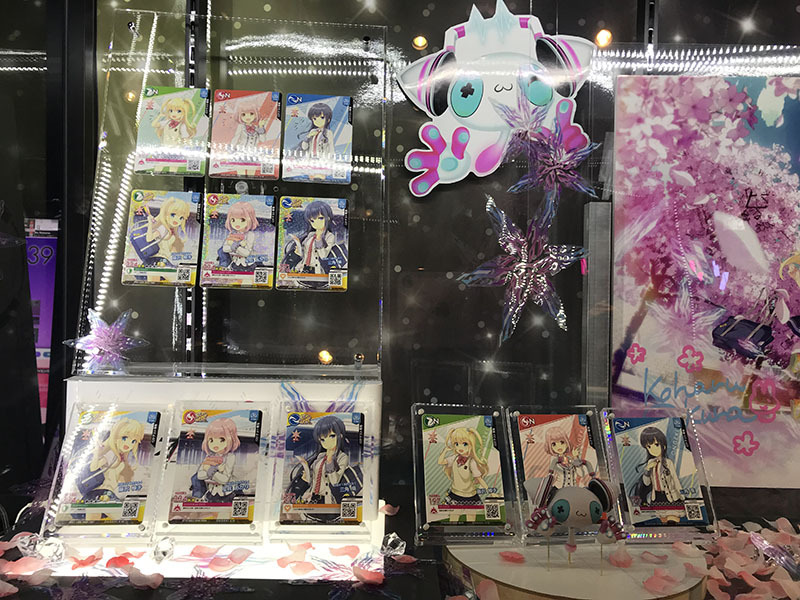
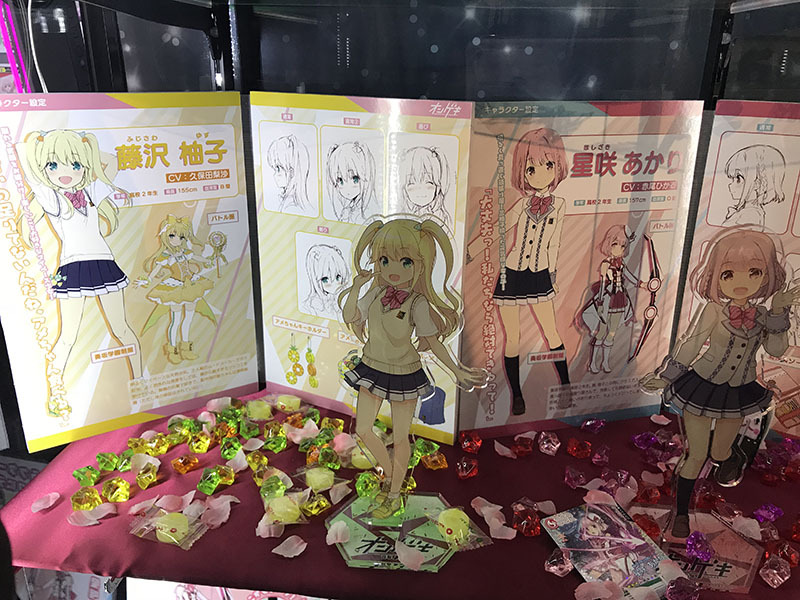
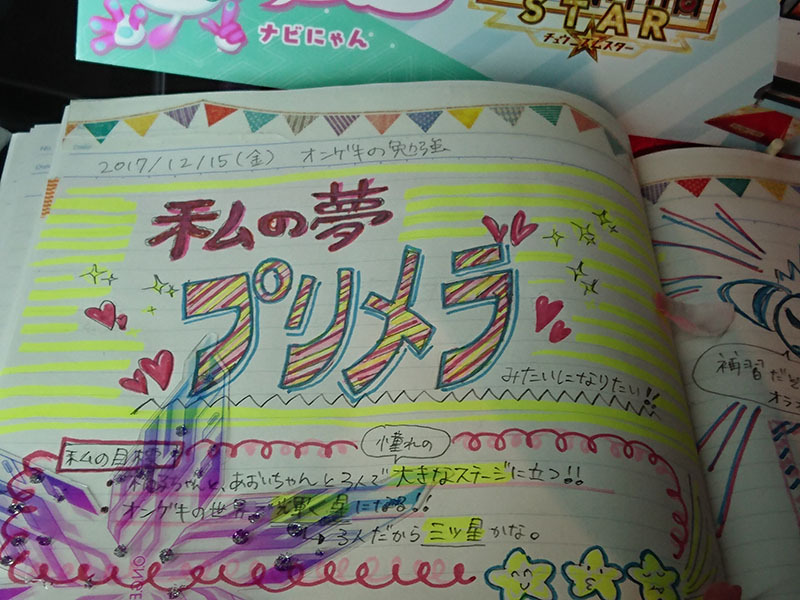
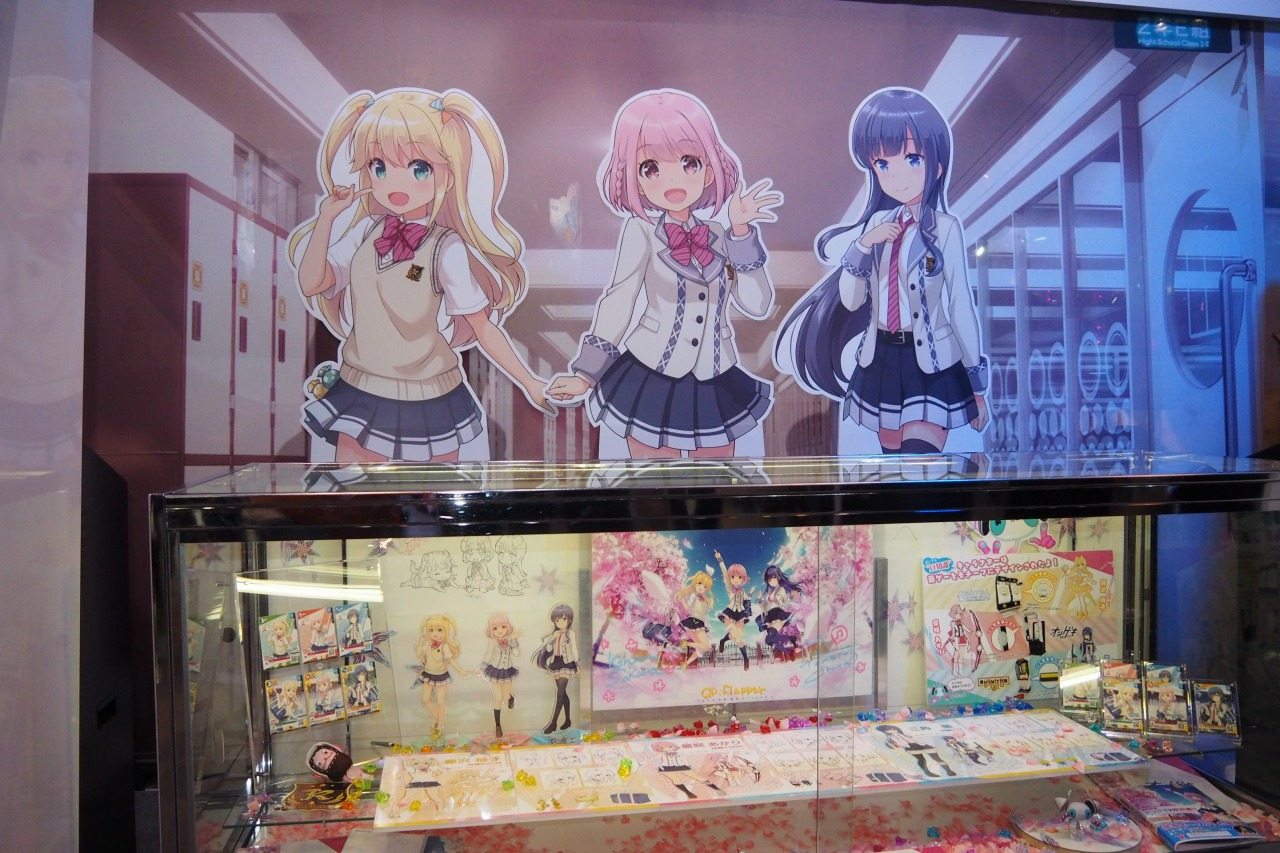
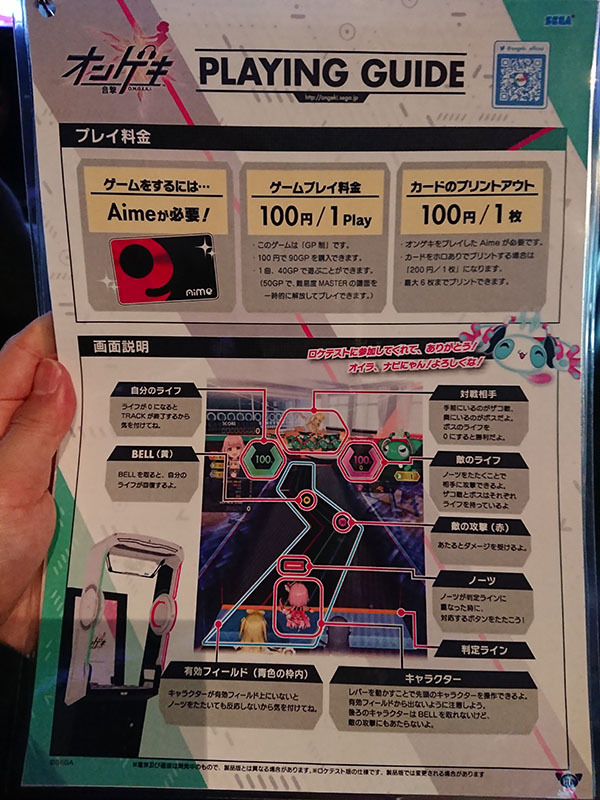
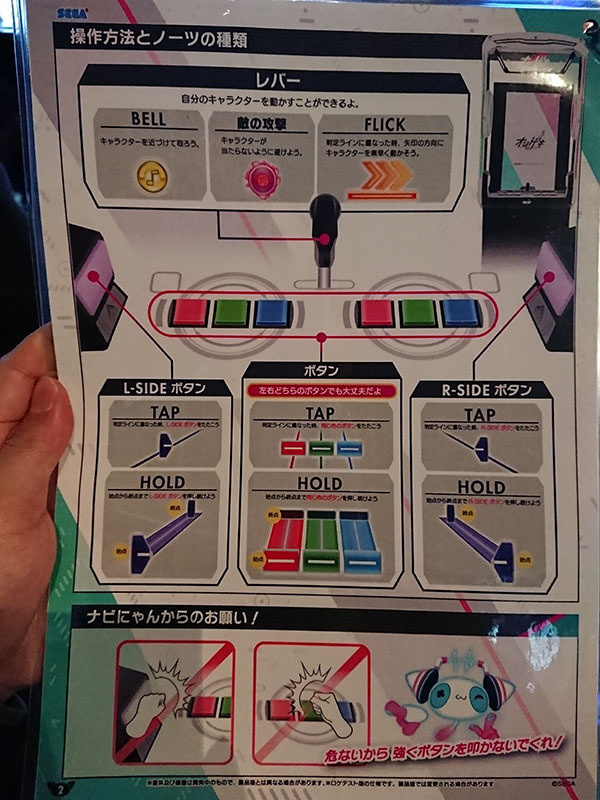
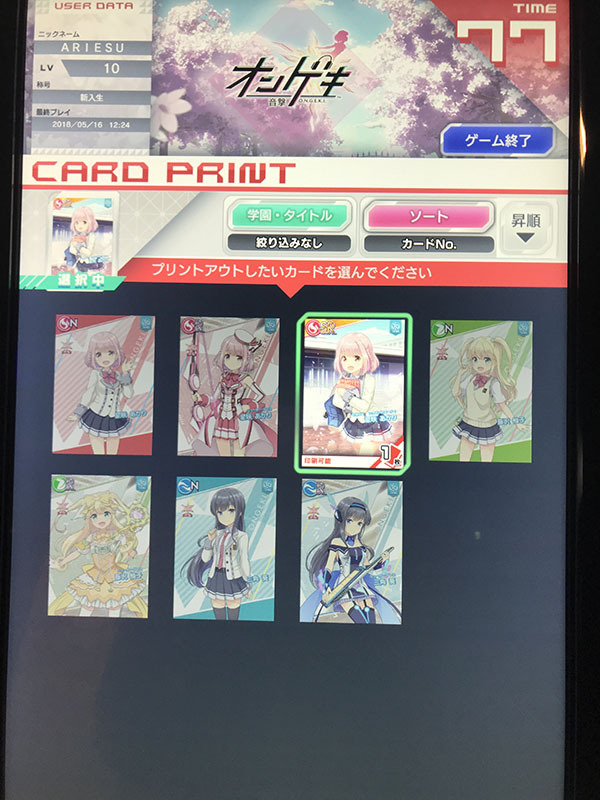
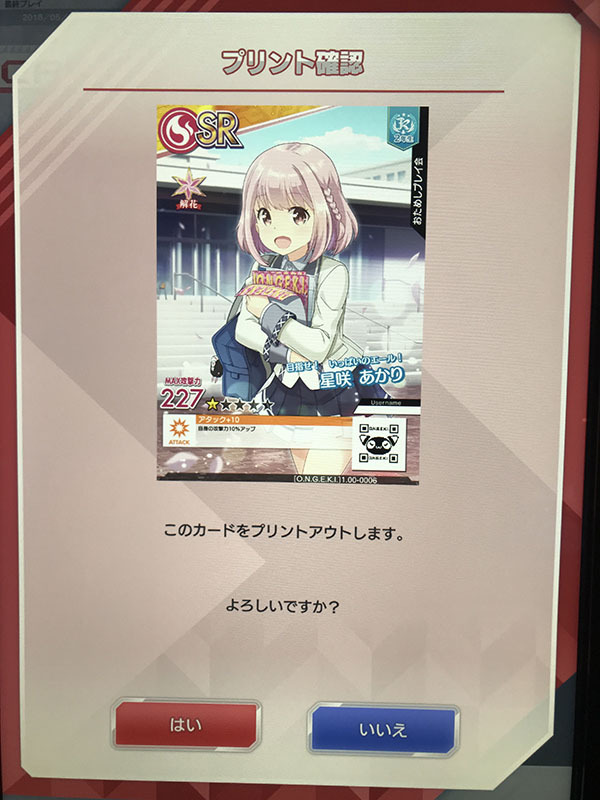
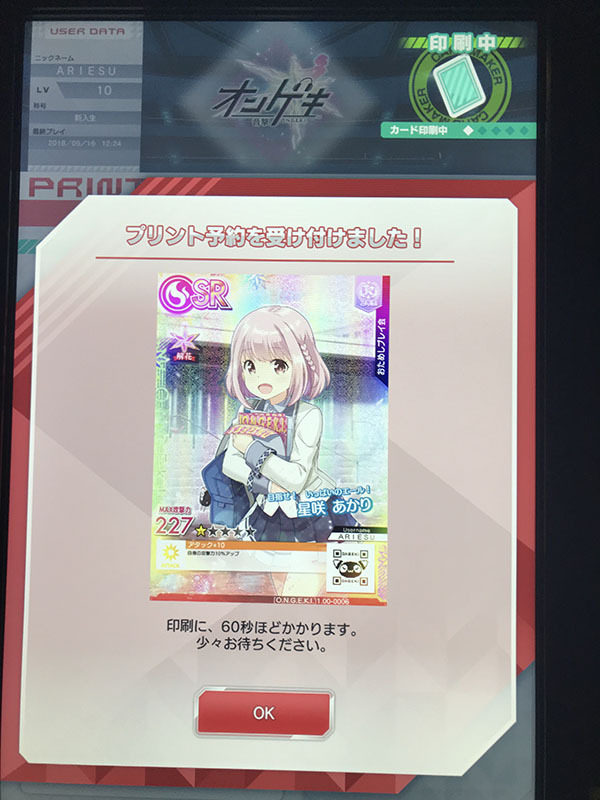
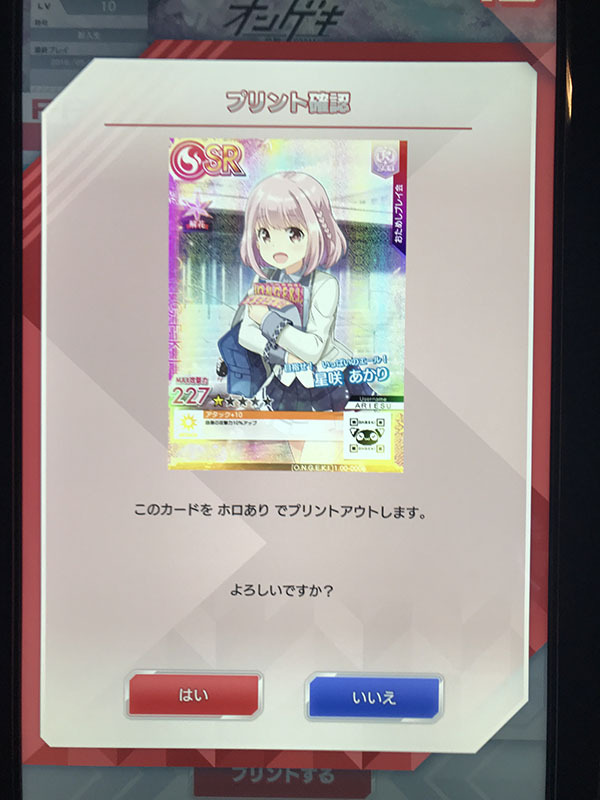
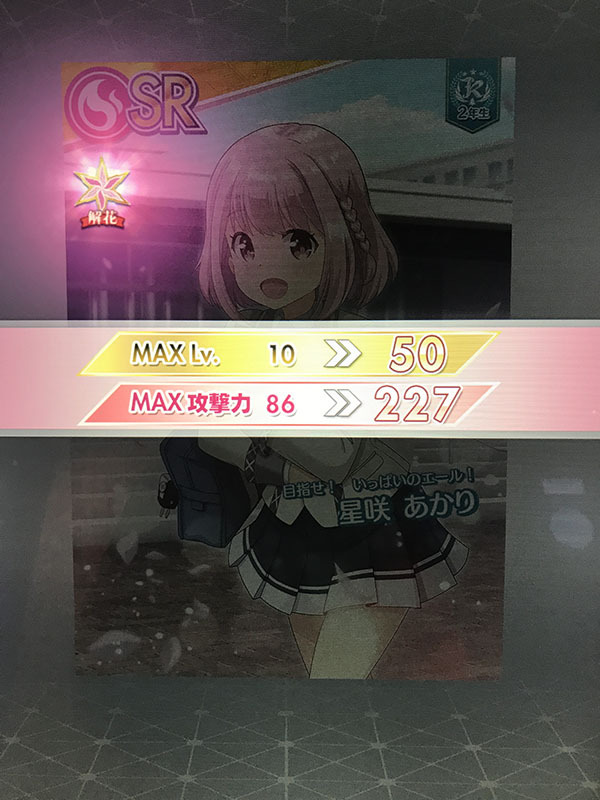
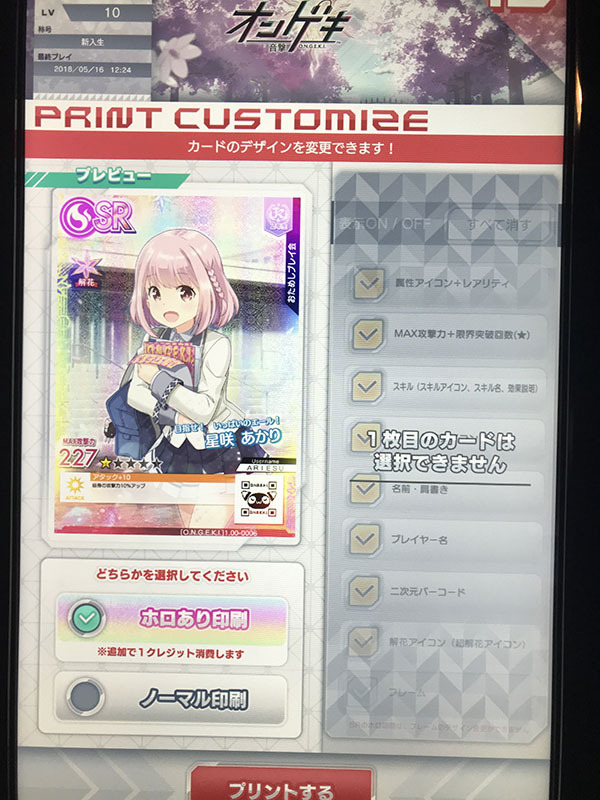
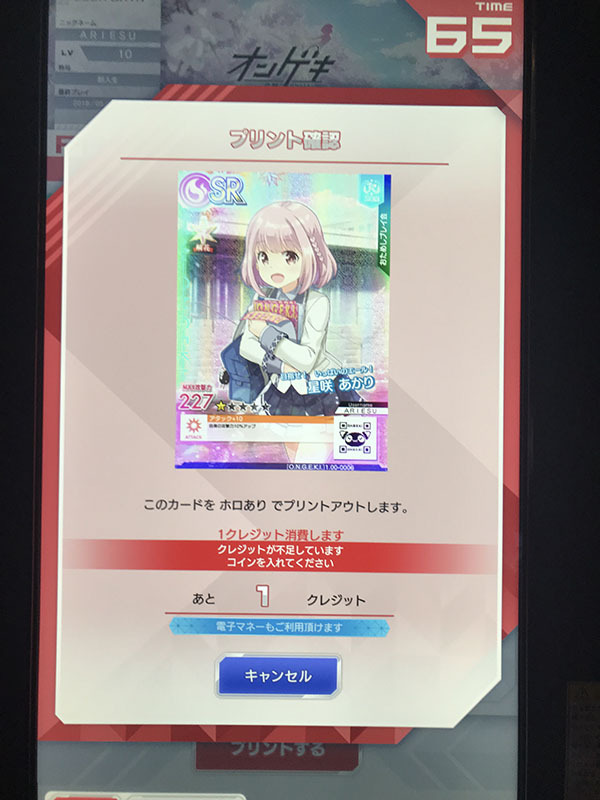
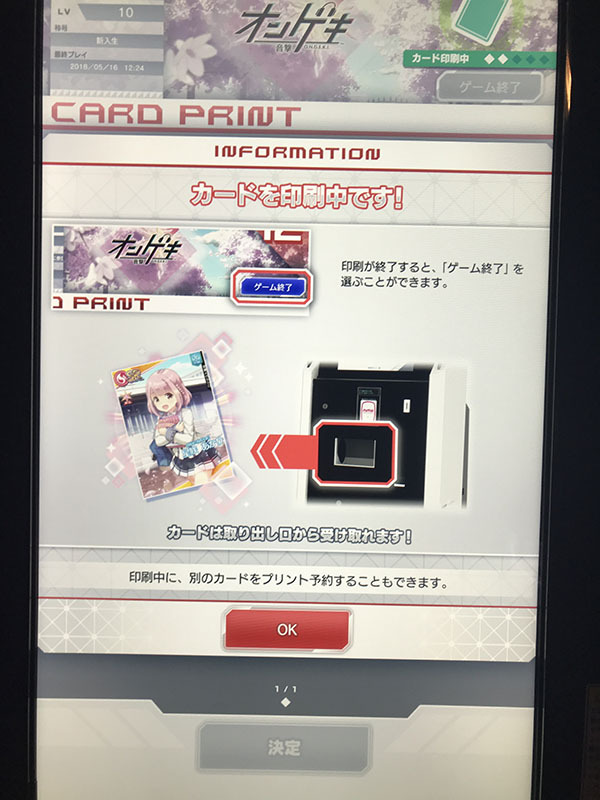
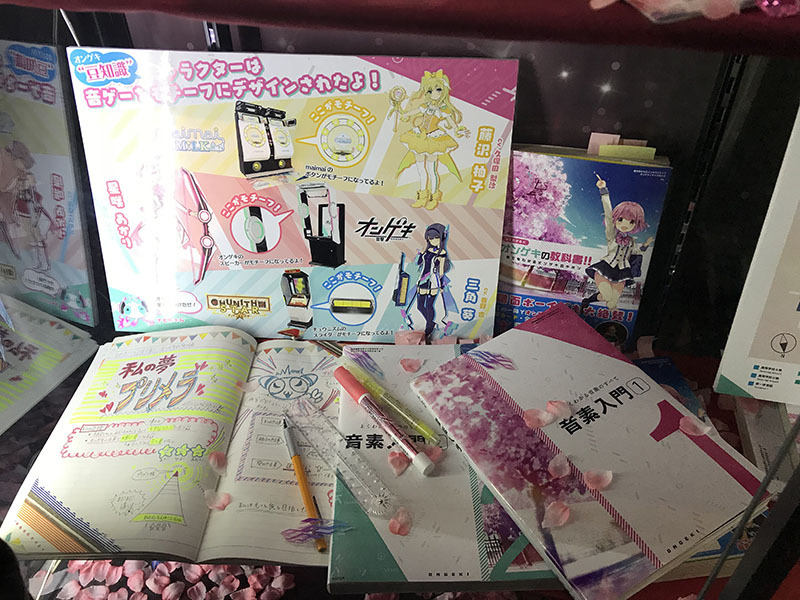
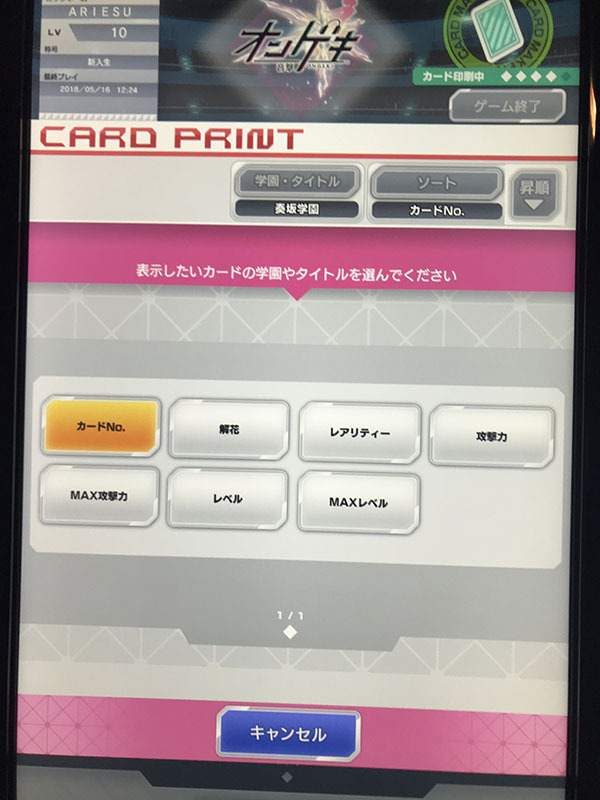
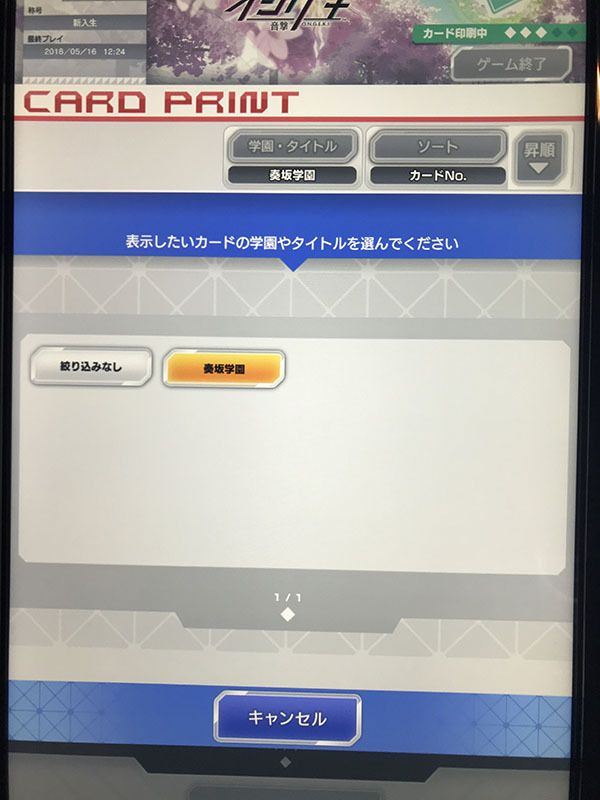
- A blog about the location test (where these images are sourced from) can be found here
The full translation of the article, “4th Anniversary! O.N.G.E.K.I. Staff Message“ is below:
Koha-D (General Director)
~bright MEMORY of O.N.G.E.K.I.~
“How are we supposed to make a music game better than this?”
That was my honest reaction back in the winter of 2015, after CHUNITHM had just launched, when the company asked me to develop a third rhythm game.
CHUNITHM was a title we’d poured everything into — me and the whole staff, with the mindset that we’d never be able to top it. So when that request came, I was genuinely at a loss.
In that state of mind, I stumbled across something through an internal proposal submission: a single concept pitch that would eventually become O.N.G.E.K.I.
It was drafted by rioN, one of our chart designers, with supervision from Akky of Iroha Midori. The concept itself was pretty wild — a fusion of shoot-’em-up, rhythm game, and character game — but at a time when I was starting to feel like I’d hit a ceiling with music games, it genuinely surprised me.
“If we’re doing this, let’s make something nobody else would ever attempt.”
Looking at that rough pitch, I felt the same kind of excitement I had when I first came up with maimai. So I picked it up, gathered the usual crew — Revo, -100, and others — and we started work on a new music game under the codename “MU3,” which stood for our third music game.
Character control, bullet-dodging, social-game-style character progression, and a card printer — this project was stacked with ambition from day one, and the difficulty of pulling it off was sky-high from the very start. Naturally, the road to completion was brutal.
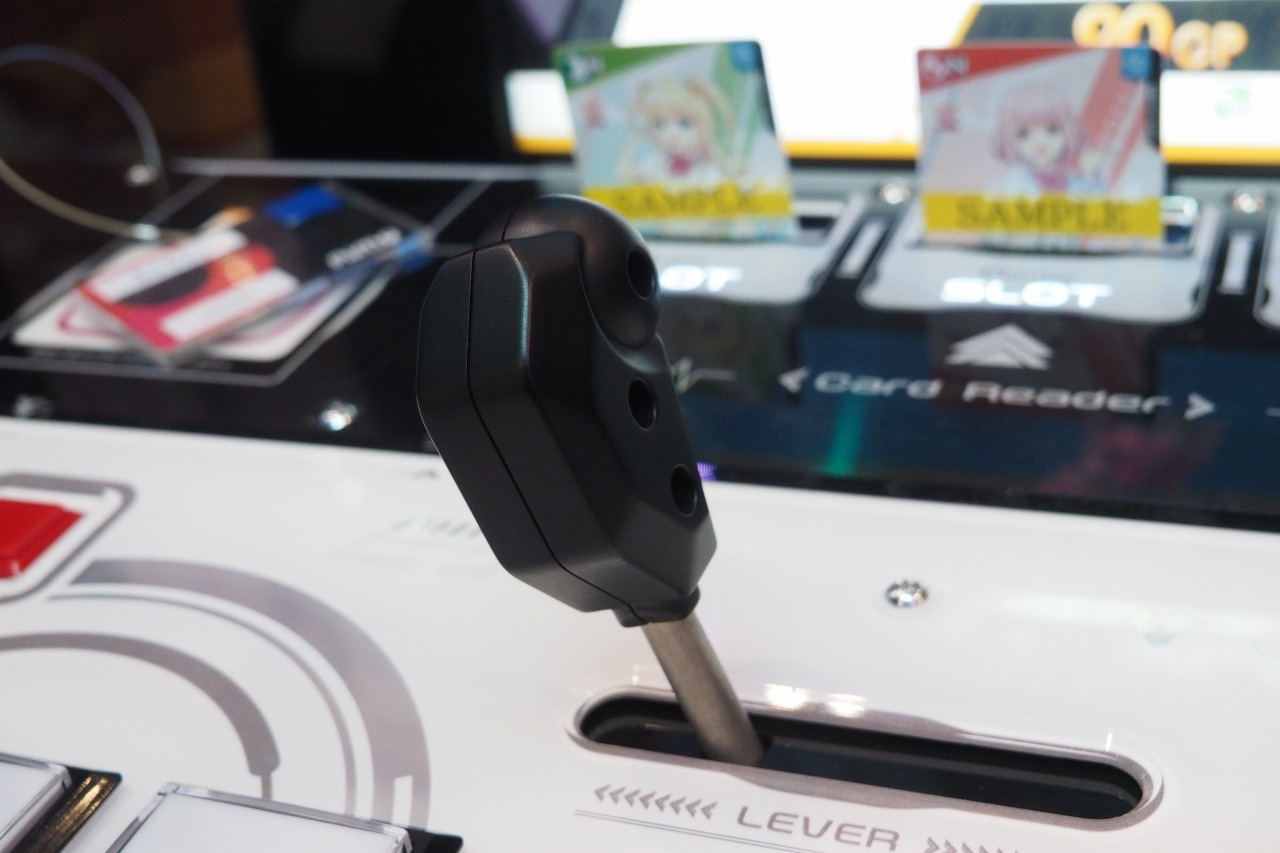
Making it feel good as a rhythm game meant the dodging felt worse. Leaning into the character game side pushed the satisfaction of getting better further away. We tested every button count, every lever shape, piling up hypotheses day after day, building and tearing down over and over. After an almost unimaginable number of trials and errors, something finally started taking shape. Even compared to our previous two games, this one was by far the most difficult birth.
But the struggles didn’t end there.
— The Location Test
A location test is the first real trial every arcade game goes through — the moment you find out whether players actually respond to what you’ve built. When we finally got there, what we realized was just how big the gap was between what we’d been trying to make and what players actually wanted.
At the same time, we also confirmed that our core vision — both as a rhythm game and as a character game — wasn’t wrong.
With just two months until the JAEPO show and not much time left before launch, we went into a complete frenzy. We overhauled our direction entirely, pulled in staff from maimai and CHUNITHM, and in the most literal sense, everyone worked together to finish the game that we unveiled at launch.
— And then came July 26, 2018
After clearing every obstacle, we’d finally made it to launch day. The response was largely warm — people welcomed this new rhythm game and its new style. But not everyone in the market embraced it. GP mechanics, chairs, card printing — this game was, in many ways, a foreign object to the established rhythm game norms, and not every player out there accepted it with open arms.
Players’ honest feedback is something every title has to face eventually. It’s never easy to sit with negative opinions, but by tackling each issue one by one — over many versions, over a long time, walking side by side with our players — I think O.N.G.E.K.I. finally became a completed work over these four years.
But beyond the challenge of game development, there was one more major hurdle: building O.N.G.E.K.I. as a character content franchise.
Our team at the time had members with various character creation experience, but creating a character franchise fully integrated with a game like O.N.G.E.K.I. was entirely new territory. We needed a different kind of design, a different kind of appeal from anything we’d made before. On top of that, with two other titles already running, we were short on people.
So we started by looking for help — reaching out across different industries, companies, and artists, going door to door with a proposal, asking people to join us. Visiting company after company across all kinds of industries with that pitch in hand is honestly a fond memory now.
As a result, KADOKAWA came on board, partnering with us on music production and helping grow the franchise. I’m genuinely grateful they were willing to invest in something that was completely unknown at the time.
Through our conversations with KADOKAWA, we agreed that the core cast for O.N.G.E.K.I. didn’t need to be big names going in — what we wanted were performers with potential, people who would make O.N.G.E.K.I. a priority. We wanted promising newcomers who were ready to grow.
Those are the three cast members we chose for ASTERISM: Akari, Yuzu, and Aoi.
When we approached them, they were still early in their careers. Singing in front of an audience, dancing — it was all new to them. At the O.N.G.E.K.I. reveal at JAEPO 2018, it was their first time performing on a stage, and I remember some of them were in tears backstage before going on, overcome with nerves.
Even so, they worked incredibly hard through their training, encouraging each other, supporting each other — and the bond they built through that mirrors the bonds depicted by the characters they play.
As the cast grew around those three — with seniors who mentored, members who read the room with care, performers who knew how to liven up a crowd — a rich web of relationships formed that genuinely resembled the personalities of the characters themselves.
I think the reason O.N.G.E.K.I.’s characters feel so alive is partly because of the real charm and relationships of the cast behind them.
— And then came the 4th Anniversary Live
This live show was the culmination of four years, and it was a chance to witness how far they’d grown. Transcend Lights was the best performance I’d ever seen from them. The ASTERISM songs in the encore showed us who they are now, built on top of everything from before. And the messages the cast shared before the final song — I was completely overwhelmed. By the time STARTLINER played, I couldn’t see straight.
Those performers who once seemed so uncertain had grown into proper artists, and together with so many teammates and staff, they pulled off something incredible. That, to me, was the whole point of that live.
Their growth was one of the things I loved most about O.N.G.E.K.I.
Though my role was Game Director, I helped out at not just lives but broadcasts and fan events too — always as just another staff member. I watched over them with something like the perspective of a dedicated manager, or maybe more like a proud parent.
Neither the game development nor the content creation were easy roads. But I think that’s exactly why they gave off something so strong, something that hasn’t faded.
Even now, if I close my eyes, I can bring back that shine from those moments. That’s what O.N.G.E.K.I. is to me.
…
Now, about what comes next.
O.N.G.E.K.I. as a rhythm game will continue — but the story of these girls, which began with an encounter and ended with a great battle, is coming to a pause here.
So that you can always meet them again whenever you want, so that you can always bring back those memories and that brightness — we’ve prepared a whole collection of “Memories.”
The way we provide content going forward will change a little, but we’ll be weighing various circumstances and finding various balances as we move ahead. I hope you’ll continue to stick with us.
Thank you, from the bottom of my heart, for loving O.N.G.E.K.I. so much over these four years. Thanks to all of you, O.N.G.E.K.I. became a true work.
From the very first — and one of the Shooters who loves O.N.G.E.K.I. most,
O.N.G.E.K.I. General Director Satoshi Kobayakawa / Koha-D
Fujiwara-D (Director)
I’m Fujiwara, the director primarily in charge of the game design, especially on the systems side.
O.N.G.E.K.I. was a project born with big ambitions — to create “new value” in the rhythm game space. It was the kind of challenge that only the CHUNITHM/maimai development team under Koha-D could realistically take on.
I’d worked on many different kinds of games up to that point, but I was genuinely a newcomer when it came to rhythm games, and the road was anything but smooth.
I got feedback from the chart team — Revo, Roche, rioN, and others — hearing the perspective of actual rhythm game players, and we kept experimenting, trying to weave together the world of Kanade Slope Academy and its characters with card-based gameplay and progression, all as an expression of that “new value.”
During the planning phase, we seriously considered making the “deck-building” side of card play much more central, with far more complex skills than what ended up in the game — things like bomb mechanics, poison resistance, fire resistance, that kind of thing. There was a period where the chapter and song selection screens displayed the enemy’s parameters too. For the card growth system, there were plans (or maybe semi-plans) for evolution items and some mysterious thing called an “Enrollment Form.”
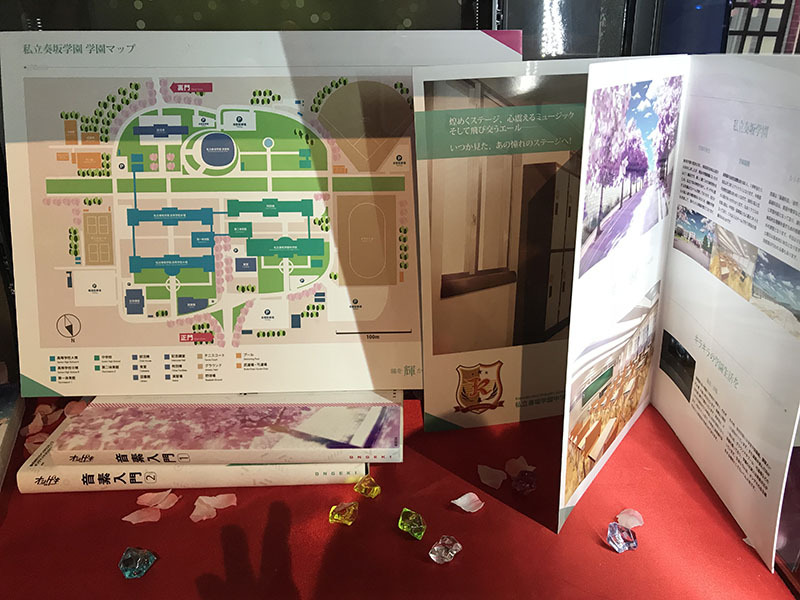
It all eventually settled into the chapter and song selection menus everyone knows — but what we ended up with was the result of engineers who took on some pretty unreasonable demands, character designers and writers who breathed life into 17 Shooters and Kanade Slope Academy, and the chart team — Monokuro-kun, Midori-kaichou-kun, Amaryllis-kun, Usagi Laundry-kun, and everyone else — who masterfully fused the rhythm game and the shoot-’em-up. When that “new value,” something that couldn’t have existed without every single person on that team, finally came together, the emotion was overwhelming. The after-party where my eyes spilled over with gratitude for the team — that has never happened before or since with any other title (///).
That said, the original clear-based chapter structure had its issues. After everything we’d gone through to get there, it took a little time and courage to really face those problems head-on. What gave me that courage was the players — people who loved Akari and the world of O.N.G.E.K.I.
We wanted people who loved O.N.G.E.K.I. to enjoy its world and its new music to the fullest!
The team went back into full gear. In just two months, we reworked the game so that new songs and new stories could be delivered quickly, and the more love you put into O.N.G.E.K.I., the more it gives back. O.N.G.E.K.I. was reborn.
From there, we kept wanting more people to enjoy the world of O.N.G.E.K.I., to feel close to it always. Out of that desire came events and systems for delivering new outfits and new voices — Silver Jewel events (originally called “Petit Jewel”…) and Medals were born from that. And there was nearly a moment when the true meaning of “R.E.D.” was decided by Akari’s panicked cry, timed to Setsuna’s arrival: “(R) Rival!? (E) Ehh~, (D) Doushiyou!?” — that’s almost what it was. Good times, in hindsight. (wistfully)
Just as everyone eventually graduates from school, the time has come for Akari and the others to graduate from O.N.G.E.K.I. Even so, the “new value” and “new world” of O.N.G.E.K.I. — woven together through conversations between creators and players — will keep shining, as a Memory, inside each of you.
O.N.G.E.K.I. Director Akito Fujiwara
Tagawa-D (Director, bright MEMORY)
O.N.G.E.K.I. has finally hit its 4th anniversary! Congratulations! And thank you! I’m Tagawa, the director of bright MEMORY.
I’ve been working on O.N.G.E.K.I. as a planner since the early days of development, alongside Koha-D and Fujiwara. Koha-D built O.N.G.E.K.I., Fujiwara locked in and stabilized the systems, and I ended up taking over as director from there.
There’s a lot I could write about O.N.G.E.K.I. overall, but for my part I’d like to talk specifically about the event “Memories of O.N.G.E.K.I.”
◆ The Concept: “Memories”
So — what did everyone think of “Memories of O.N.G.E.K.I.,” the 4th anniversary capstone event? Once it was decided that O.N.G.E.K.I.’s 4th anniversary would be a “closing of one chapter,” I started planning with the attitude of: let’s make this the biggest moment the rhythm game world has ever seen. That mindset is what drove the bright MEMORY version.
The concept was Memories.
I wanted to give everyone who loves and plays O.N.G.E.K.I. right now something that would really stick with them — a genuine memory. I wanted people who used to play O.N.G.E.K.I. to look back fondly on those times. And my biggest goal was to make an event that would turn heads even among people who’d never played O.N.G.E.K.I. at all.
With all that in mind, I designed the event as a look back across the entire history of O.N.G.E.K.I. And because I wanted those memories to feel bright, I named the version “bright MEMORY.”
◆ The Keywords: “Surprise” and “Emotional Resonance”
Once I actually started planning, it became a long journey in search of the peak of what O.N.G.E.K.I. could be. O.N.G.E.K.I. isn’t just a rhythm game — it has strong character elements and shoot-’em-up elements too. Everything is in a delicate balance, but what players prioritize varies a lot from person to person.
How do you deliver a “Memory” that covers every element of the game?
To hit people emotionally across the board, the two keywords I landed on were Surprise and Emotional Resonance.
I needed to think about what would excite the technical players focused on charts and rhythm game challenge, and what would move the players who were in it for the characters and intimacy — and find something that satisfied both. Every night, I’d pull together the chart team and the planners — sometimes dragging programmers into it too — and we’d hash it out over and over. Figuring out what flavor of Surprise and Emotional Resonance to deliver for each element, and then how to arrange them all across the event as a coherent whole, was genuinely difficult.
◆ The Surprise Beyond the Surprise!
We decided early on that just going one step beyond expectations wasn’t enough — we needed to go two steps beyond.
“Spring Memory,” which anyone could unlock from day one but with a completely secret unlock condition, probably landed as a pretty major surprise. Then there was the surprise of “O.N.G.E.K.I. Memory” appearing after clearing all four Memory chapters — and then one more step beyond that with “END CHAPTER” (for anyone who’s been playing since early in the game’s life, “END CHAPTER” opening at the very end might have itself been a nostalgic Memory).
We also hid a surprise that used the card slot — a very O.N.G.E.K.I.-style touch with the hardware. I remember consulting Jack, who worked on maimai FiNALE, on that one.
And then there was the surprise of 怨撃 (Ongeki)・真 appearing after clearing 怨撃 (Ongeki).
There was actually a mid-development plan where clearing everything up through END CHAPTER would have added LUNATIC (Re:Master) charts and skill-enhanced cards to all five boss songs in the Memory chapters — but it was cut for game balance and chart production reasons.
◆ The Emotional Resonance Just Kept Growing
Once the direction was mostly set, we brought in the design and sound teams too, and from there it was the whole team pushing the emotional resonance further and further together. Everyone involved with O.N.G.E.K.I., inside and outside the company, gave it everything they had.
For the Make UP Future! cards, the design team — already slammed with the 4th anniversary art and Daydream Angels — pushed extra hard to finish them for this event. The theme is growth: each card shows a character’s past and present selves facing each other. Incredibly moving.
We also pushed for the historical group illustrations to be made as landscape-format cards — a lot of work to ask for, but I wanted them as memories. And since the second copy onwards lets you hide the UI, please try printing them out.
The 3D team proposed it themselves: “Wouldn’t it be great to put all the characters in their respective school uniforms?” They made it happen despite the tight schedule. The Konjiki Nyan surprise also wouldn’t have existed without the 3D team.
The presentation for “μ3” was designed to give players a taste of what it feels like to be in the KoP finals. The SECRET MUSIC jacket and presentation movie were polished right up to the deadline and came out beautifully.
For scenario and music, we were in everyone’s debt. When we explained what we were going for — the 4th anniversary capstone — people said “if that’s what this is, then count us in,” and they delivered. I think we pulled off the maximum emotional resonance possible for the O.N.G.E.K.I. team at this point in time.
“HEADLINER” was developed as a kind of answer song to “STARTLINER.” It’s a memorial song with a feeling of grand conclusion. Where STARTLINER says “we’re beginning to play our music,” HEADLINER says “we’re going to keep playing our music.”
An ending is a new beginning.
◆ To All O.N.G.E.K.I. Players
“Memories of O.N.G.E.K.I.” is only complete because you played it. Did you find anything in it that surprised you, or moved you? If you did, hold onto those memories — and please keep being a part of O.N.G.E.K.I. going forward.
I read your feedback and reactions to bright MEMORY and Memories of O.N.G.E.K.I. every day. Thank you so much for playing.
The last half year or so, O.N.G.E.K.I. has been moving fast for various reasons. Not just this event — I’ve tried to pack every element of O.N.G.E.K.I. with more than you could clear in one sitting. The Memory chapters at least are planned to stay up permanently, and O.N.G.E.K.I. will keep going — so set your own goals and keep enjoying the challenge at your own pace.
O.N.G.E.K.I. will keep playing alongside all of you. Always. In this world full of brightness.
O.N.G.E.K.I. bright MEMORY Director Hiroaki Tagawa
Takeda Madoka (Character Team)
Hi, I’m Takeda, and I handle the character side of things. I work on character settings, system voice scripts, character songs, card illustration planning, and more. I don’t appear publicly very often, so most of you are probably meeting me for the first time!
First things first — O.N.G.E.K.I.’s 4th anniversary! Congrats! This is all thanks to the support of every single one of you players. Truly, thank you so much!! Seeing all of your love for your favorite characters come through on social media warms my heart as the character person.
Since I have this opportunity, I’d love to talk a little about O.N.G.E.K.I.’s characters. I’ll keep it casual with a Q&A format, so please stick around if you’re interested!
— The O.N.G.E.K.I. characters are pretty distinctive, aren’t they?
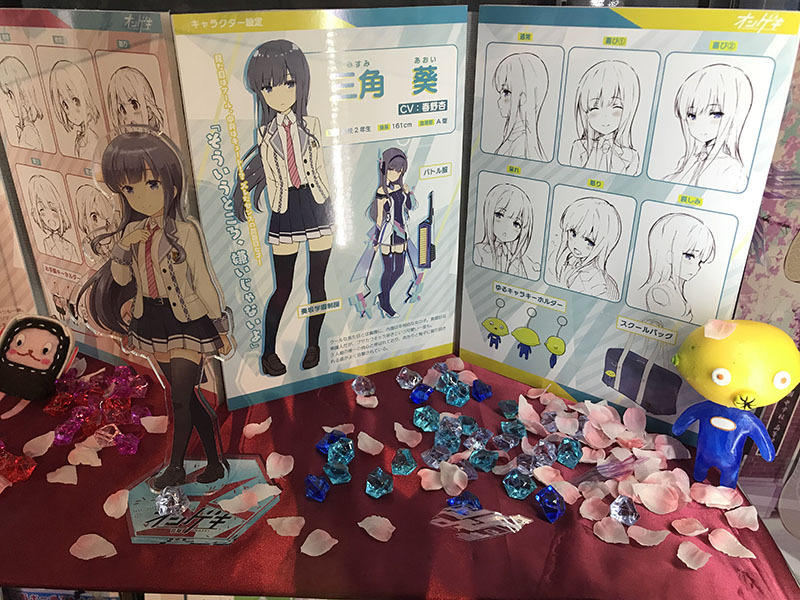
O.N.G.E.K.I.’s characters are designed with clear, readable personalities as a priority. Rather than exploring their inner lives through rich story, I chose to make personalities so distinct that players’ imaginations could fill in the gaps even with limited information. Being an arcade rhythm game was a big factor in that decision. There are deeper character settings behind the scenes that don’t show up publicly — I think they peek out a little through the “Important Things” field in the profiles.
— Speaking of profiles, there are a lot of fields…
Tell me about it…! I think it landed at that number due to two goals: supplementing character info outside of the story, and in-game functional needs. For the profile content, I try to balance “elements that feel true to the character” (deepening the character) with “elements that feel unexpected” (expanding the character’s range). Some things are also set in relation to other characters — like Koboshi’s special skill being “never getting lost.”
— How do you decide a character’s traits and personality type?
It varies by game, but for O.N.G.E.K.I. there were two patterns: “game-driven” and “story-driven.” For example, Riku was born from a game-driven need: “we want a character who can carry band songs.” Setsuna, on the other hand, came from a story-driven need: “we need an antagonist for the story progression.”
— Is there a naming rule? I heard all the names have a plant somewhere in them!
I’m sorry to say… there’s no deep meaning or rule behind them. It’s purely my feeling. I pay attention to how the name looks written out, how it flows as text, and how it sounds when you say it aloud. And since characters tend to be called by their first names, I make sure those are easy to read. By the way, before official names were set, characters were given placeholder names. For example, there was one called “Seze-nobiko” (the “stretching-on-tiptoe kid”)… can you guess who that is?
— Finally, who’s your favorite character?
I love the whole box!!!
Hope you enjoyed that! This time I focused on character creation, but the story behind character design and Shooter Dresses, the behind-the-scenes of the character song projects, and the early brainstorming battles for Ichigeki could all be fun topics too — I’ll save those for another time.
That’s it from me! Thank you for reading this far. It’s been four years since launch, and I hope you’ll keep loving these characters going forward.
See you next time!
SEE YOU NEXT TIME
Izumi Beru (Concept Art & Art Direction)
~Toward the Future Ahead~
I’m Izumi Beru, credited in O.N.G.E.K.I. for Concept Art and Art Settings.
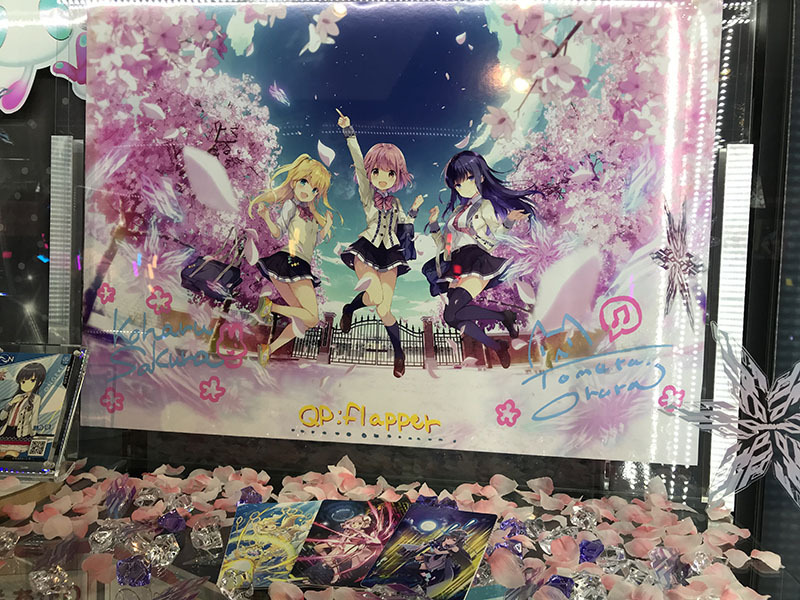
Beyond what’s in the credits, I helped with early casting and live setlists, and I worked on the key visuals and Daydream Fairies art, primarily together with QP:flapper. I was also mainly responsible for the background art and final touches on live visuals and anniversary illustrations.
Since this is a 4th anniversary message, I’d like to share a little of my own memories alongside my thoughts.
Going back thirty years — my school days were spent living and breathing arcades. Just like the rhythm game players reading this, I was a totally ordinary student who got completely absorbed in chasing high scores and national rankings at the arcade.
The friendships I still call my closest, the spark that lit up a period of my life when I was just drifting through it, the push that led me toward the career I have now — all of it came from the arcade community and the arcade games in my hometown. My arcade years are still some of my best memories.
In 2017, when I was approached by Sega to help develop O.N.G.E.K.I., I was 20 years into my career as a creator, and taking on O.N.G.E.K.I. meant stepping into a completely new environment. I remember really wrestling with whether to take it. But what I kept coming back to was the idea that if my skills were genuinely needed, maybe this was a chance to give something back to the arcade games that had given me so much. And so I walked through the gates of Sega, which was still in Otori back then.
With those memories of my youth in my heart, I poured everything I had into O.N.G.E.K.I.’s concept art, art settings, and visuals — beyond just the job, I put in every bit of knowledge, technique, and experience I had.
At the Sega booth at JAEPO in February 2018, when O.N.G.E.K.I. was unveiled for the first time, the concept art I’d worked on was front and center, and the key visual QP:flapper and I had created together filled the whole booth. I can still see it clearly.
My career as a creator has passed its halfway point, but getting to work on an arcade game at that moment — it felt like I’d managed to give a little something back to this industry, and I’m full of both joy and gratitude for it.
I’ve been going on a bit about my own memories, but O.N.G.E.K.I. is a title packed with the heartfelt feelings of every person on the development team, not just me.
To all the fans who have loved O.N.G.E.K.I. — this game that all of us on the development side love so deeply — thank you so much.
The main story is reaching a pause for now, but O.N.G.E.K.I. itself will keep going.
To everyone who’s played so much of it, and to everyone who might pick it up fresh — I hope O.N.G.E.K.I.’s charm finds its way to you.
Until we meet again at Kanade Slope Academy.
Izumi Beru
Kudou Yurie (Character Illustrations)
I’m Kudou, and I handle character illustration-related work. Some of you might know me from CD jacket artwork too. My main work is illustration supervision and composition, as well as chibi character art and Twitter illustrations, and for the three members of Marching Pockets I was also involved in their character designs.
O.N.G.E.K.I. launched in spring, SUMMER came in summer… I thought we’d finally gone through all four seasons, and somehow it’s already the 4th anniversary! I’ve been on the team for about four years now, and honestly it all feels like it happened in about a year. Time flies.
Before I got involved with O.N.G.E.K.I.’s development, rhythm games were firmly in the category of “games I’m bad at” — but O.N.G.E.K.I. is the game that showed me what rhythm games can be. Every time a new song gets added, I find myself genuinely shocked as a player: “Charts can do things this creative?!” Especially with Memories of O.N.G.E.K.I. (EXPERT) — memories of each title came flashing back and I got a little teary… It’s incredible that simple lines and symbols and timing can stir up this much emotion.
Also, O.N.G.E.K.I.’s thing where even if you can’t hit everything right, just catching bells gives you that satisfying streak — I think that’s the best, and I genuinely think people who are bad at rhythm games should give it a try.
…That turned into a total fan tangent, but that’s just how much I love O.N.G.E.K.I. as a player too, and I’m genuinely happy to be working on a game I can love from the heart like this.
I’ve given everything I had over these four years to help make this fun game even more exciting.
Of course, making character illustrations involves a huge number of staff — my contribution is just a small part. But to give one recent example: for the Make UP Future! card series, I pushed for an idea that was honestly pretty unreasonable — drawing two characters per card, for every single character — which doubled both the cost and the workload. I asked a lot of people to accommodate that, but we managed to get every character’s card out within bright MEMORY and bring things to a close. So much thought went into making them, and I hope the characters’ appeal reaches all of you just as much as the fun of the rhythm game itself.
Four years since launch, and O.N.G.E.K.I.’s Shooters are now 17 strong before you know it. In times like these, every one of you who has gone out to an arcade and supported O.N.G.E.K.I. — I can’t thank you enough…!
Thank you so much for four wonderful years. And please keep supporting O.N.G.E.K.I. going forward!